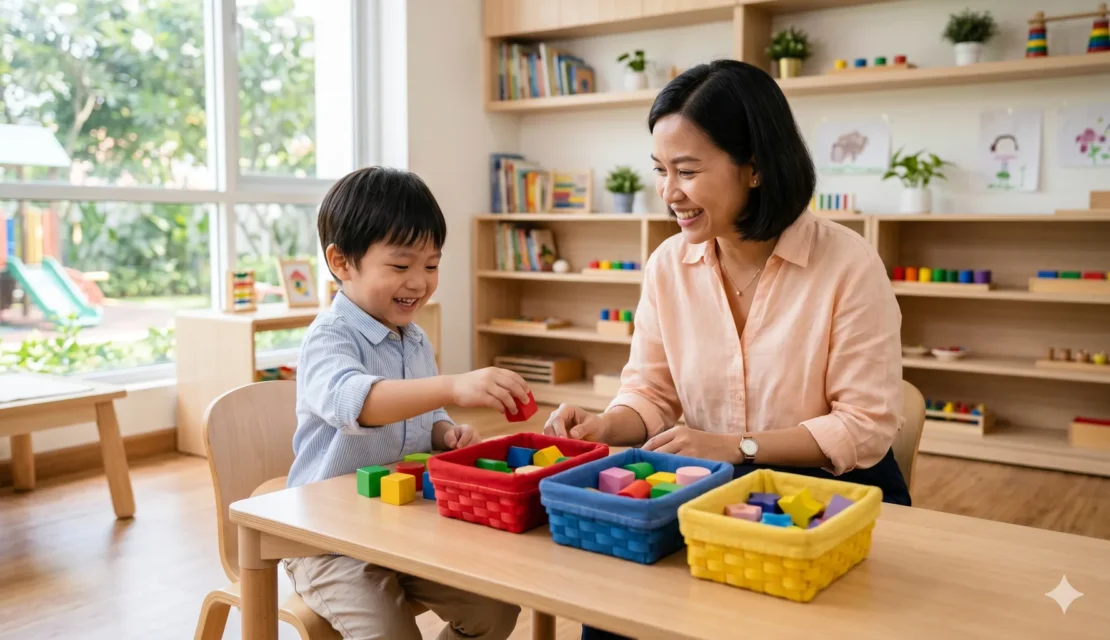
Sorting and classifying may sound like a simple playtime activity, but if you have ever watched a child proudly separate red blocks from blue ones like they are managing a tiny logistics company, you already know there is more going on. At Apple Tree Preschool BSD, located in the Educenter BSD Building, we see every day how small, playful habits can build big learning skills. When you invite your child to sort toys by color and size, you are not just tidying up the living room, which honestly is already a heroic achievement, you are helping them develop focus, language, reasoning, and early math understanding.
Many parents are surprised by how much learning can happen during such a simple activity. We often think real learning needs flashcards, worksheets, or some dramatic Pinterest setup that looks amazing and takes ninety minutes to prepare. In reality, some of the best early learning happens when children are playing with familiar objects in a relaxed and meaningful way.
Sorting and Classifying Helps Children Make Sense of the World
Young children are natural pattern seekers. They notice which cup is bigger, which ball is blue, and which toy somehow always ends up under the sofa. Sorting and classifying gives them a way to organize what they see and understand how objects are similar or different.
This skill matters because early childhood learning is all about building connections. When children group objects by color, size, shape, or type, they begin to see order in the world around them. That makes learning feel less random and much more manageable.
Why sorting by color is an important first step
Color is usually one of the easiest categories for young children to notice. A child may not yet explain why two items belong together in full sentences, but they can often spot that two cars are both yellow or that all the green blocks should go in one basket.
When we guide children through sorting by color, we help them strengthen visual discrimination and vocabulary at the same time. They are not just matching objects. They are learning to observe, compare, name, and remember. It is a lot of thinking packed into one very cheerful pile of toys.
Why sorting by size builds early math thinking
Sorting by size adds another layer of learning. Now children are comparing big and small, long and short, tall and tiny. These are early math concepts, and they become much easier to understand when children can touch and move real objects.
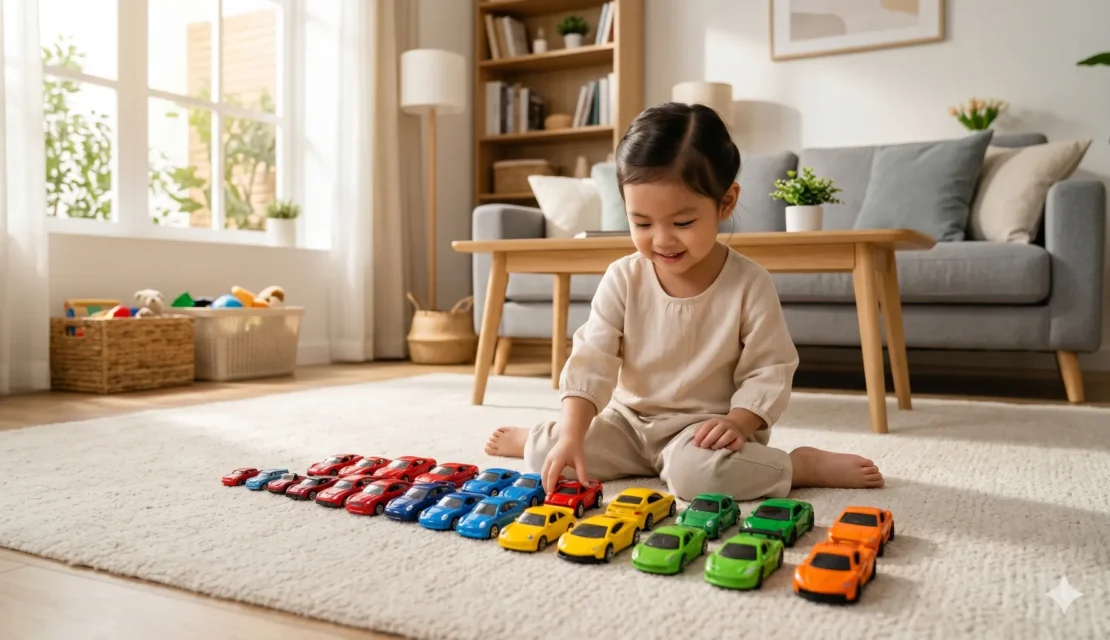
We often see children light up when they realize they can line up toys from smallest to biggest. It feels like a game, but it is also the beginning of sequencing, measuring, and logical thinking. Not bad for an afternoon activity that starts with, “Can you help us put these away?”
Sorting and Classifying Supports More Than Academic Skills
One of the things we love most about sorting and classifying is that it supports whole child development. Yes, it helps with early academics, but it also builds independence, patience, and confidence. Those are huge wins in the preschool years.
Children feel successful when they can complete a clear task. Putting similar things together gives them a sense of control and achievement, which is very important at this age. Also, let us be honest, young children absolutely love being in charge of tiny important jobs.
It improves attention and concentration
Sorting activities encourage children to slow down and pay attention. They need to look carefully, make a decision, and stay with the task long enough to finish it. That may not sound dramatic, but for a young child, this is excellent brain work.
If your child usually bounces from one activity to another like a very enthusiastic ping pong ball, sorting can be a gentle way to build focus. The task is simple enough to feel doable, but interesting enough to keep them engaged.
It builds language in a natural way
Sorting and classifying is also full of language opportunities. As you talk through the activity, your child hears useful words like same, different, bigger, smaller, round, red, soft, and hard. These words become easier to understand because they are connected to real objects and actions.
We have found that children often talk more during hands on activities than during direct instruction. They point, compare, ask questions, and proudly explain their choices. Sometimes the explanation is extremely serious, even when the category is “all the dinosaurs that look grumpy,” and we respect that completely.
Easy Ways You Can Practice Sorting and Classifying at Home
The good news is that you do not need special materials. You probably already have everything you need at home. Toys, socks, blocks, spoons, crayons, and snack containers can all become learning tools.
Here are a few simple ways you can try sorting and classifying with your child:
- Sort blocks by color, then count how many are in each group
- Arrange stuffed animals from smallest to biggest
- Group toy cars by color, size, or type
- Sort crayons or markers into matching shades
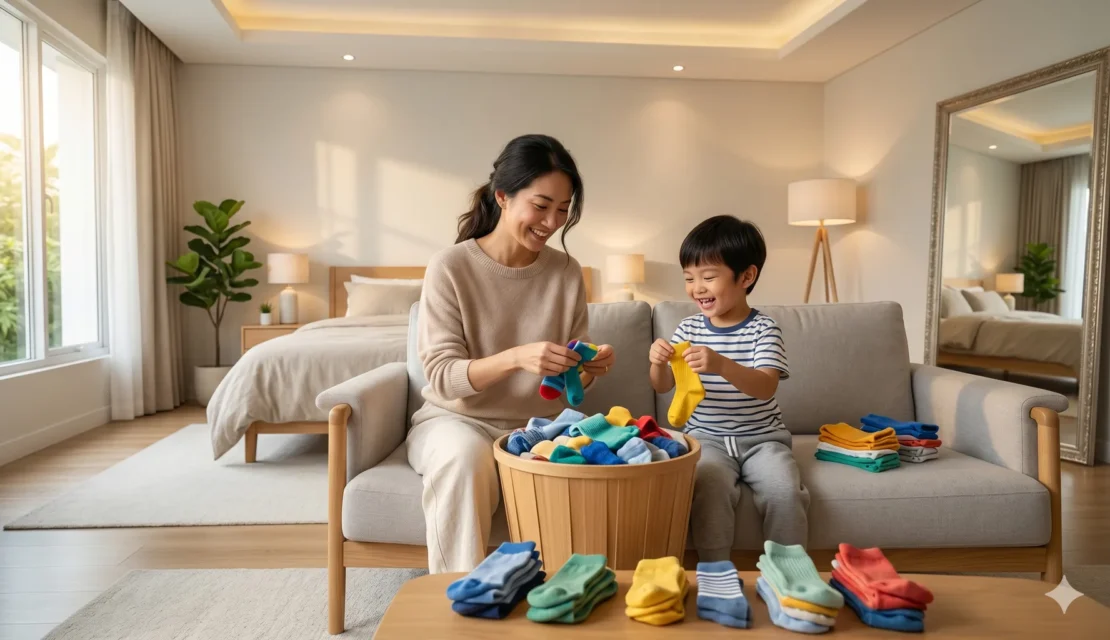
- Organize laundry by color or family member
- Separate kitchen items by size, shape, or use
These activities work best when they feel playful and low pressure. You do not need to turn every moment into a lesson. A few minutes of guided play can do a lot.
Keep it simple and let your child lead
When you first start, choose just one category. Too many directions at once can make the activity feel confusing. If you say, “Sort these by color and size and type,” your child may look at you like you just assigned tax paperwork.
Instead, begin with one clear idea, such as “Let’s put all the blue toys here.” Once your child is comfortable, you can add more challenges. The goal is to build confidence, not to create a sorting championship in the living room.
Use everyday conversation to extend learning
You do not need a formal lesson voice. In fact, please do not use one unless you enjoy sounding like a documentary narrator in your own home. Casual conversation works beautifully.
You can say things like, “Which one is bigger?” or “Can you find another toy that matches this color?” These little prompts encourage thinking without making the activity feel heavy. Children learn best when they feel relaxed and included.
Why This Matters in Preschool Readiness
Sorting and classifying is closely connected to school readiness because it teaches children how to observe, compare, and organize information. These are foundational skills for math, science, reading, and problem solving. In other words, this simple activity quietly prepares children for much bigger learning later on.
At Apple Tree Preschool BSD, we use hands on learning experiences to help children build these skills in a joyful and age appropriate way. Our Singapore based curriculum supports children across subjects such as mathematics, science, language, creativity, and more, all while keeping learning meaningful and fun.
It encourages independence and responsibility
There is another lovely benefit here that parents often appreciate right away. When children learn to sort toys, they also begin to understand how to tidy and organize their belongings. Learning and helping out at home can happen at the same time, which feels a bit like winning the parenting lottery.
Children enjoy tasks that make them feel capable. When you say, “Can you put all the small cars in this basket?” you are giving your child a job they can succeed in. That sense of responsibility grows over time and supports independence in other daily routines too.
It fits beautifully into structured early learning
In preschool, children thrive when learning is active, social, and connected to real experiences. Sorting and classifying fits perfectly into that kind of environment. It allows children to move, talk, observe, and make choices while building important foundational skills.
If you are looking for a warm and thoughtful place where your child can learn through play and purposeful routines, you can explore our programs. We offer classes from toddler to kindergarten, designed to help children grow smart and happy together with parents.
Little Sorting Games, Big Learning Moments
Sorting and classifying may begin with a few toys on the floor, but the benefits reach much further. When you encourage your child to sort by color and size, you are helping them strengthen early math thinking, vocabulary, concentration, confidence, and independence. It is one of those wonderfully simple activities that does a lot of heavy lifting without looking complicated.
If you would like your child to experience joyful, meaningful learning in a nurturing preschool environment, we would love to welcome your family. You can Chat with us on WhatsApp or call us at +62 888-1800-900 to learn more about Apple Tree Preschool BSD. Come play and learn with other children, and let us grow those little skills together, one colorful toy at a time.




Be the first to write a comment.