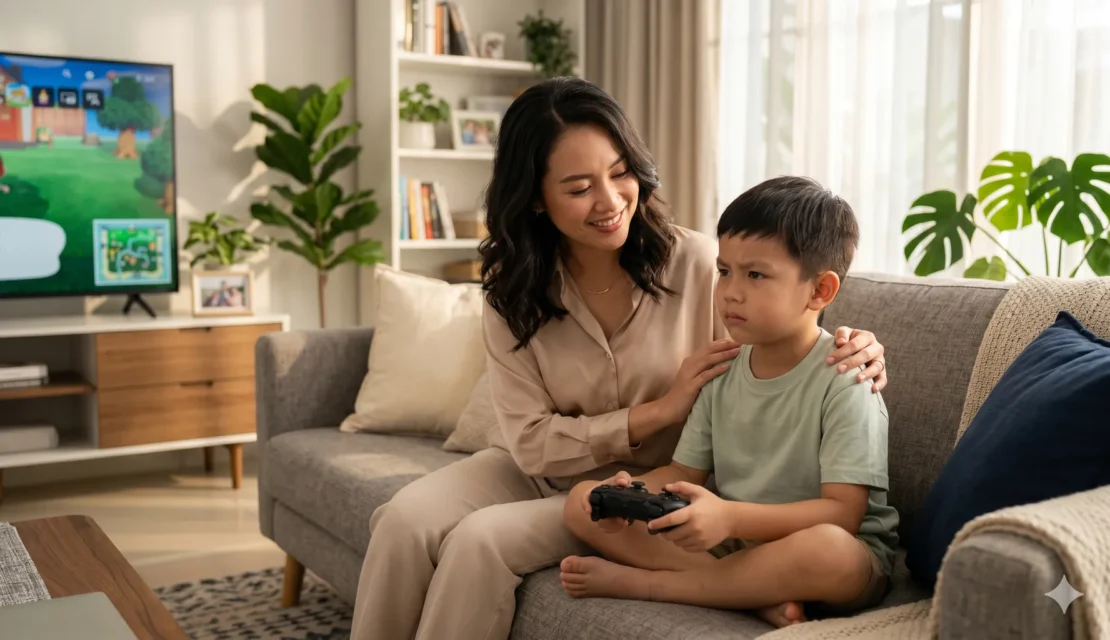
One moment everything is fine. Your child is sitting on the couch, controller in hand, apparently having a perfectly good time. Then something happens in the game, a loss, a missed level, an opponent who beats them for the third time in a row, and the volume in your house goes from zero to absolutely not in about four seconds flat.
The controller gets slammed. The yelling starts. Tears, possibly. A declaration that the game is stupid, the game is unfair, and everyone in the game is terrible. You’re standing in the doorway wondering what on earth just happened and whether you should intervene or quietly back away.
If your household has been visited by a child raging at video games, welcome to one of the most common parenting experiences of the digital age. It is loud, it is unsettling, and it is far more understandable than it looks in the moment. Here at Apple Tree Preschool BSD, we hear about this regularly from parents, and we want to help you make sense of it properly.
Why Child Raging at Video Games Happens More Than You Think
A child raging at video games isn’t simply being dramatic or poorly behaved, though it certainly looks that way from the outside. There is a specific combination of developmental factors, game design elements, and emotional regulation challenges that make gaming one of the most emotionally intense experiences in a young child’s day. Understanding all three is the key to responding effectively.
The Brain Chemistry Behind Gaming Rage
When your child is playing a video game they enjoy, their brain is releasing dopamine at a steady, satisfying rate. Every successful move, every level completed, every reward collected triggers a small flood of this feel-good chemical. The brain gets genuinely hooked on this cycle, not in a clinical sense necessarily, but in the way that any pleasurable, stimulating activity creates an expectation of continued reward.
When that cycle gets suddenly interrupted, by a loss, a failed attempt, or an unexpected obstacle, the drop is sharp. The brain was expecting more dopamine and got the opposite. For an adult with a fully developed prefrontal cortex, this is disappointing but manageable. For a young child whose emotional regulation systems are still very much a work in progress, that drop can feel genuinely overwhelming, more like grief or physical pain than simple frustration.
This is why child raging at video games looks so out of proportion to the situation. From the outside, it is just a lost game. From inside your child’s brain, it is a neurochemical cliff edge.
Games Are Specifically Designed to Be Frustrating
This might seem counterintuitive, but it is absolutely true and worth understanding. Game designers know that a game that is too easy becomes boring within minutes. They deliberately build in difficulty curves, failure states, and competitive elements that keep players in a state of tension between success and failure. This is called the “flow state,” and it is what makes games so compelling.
The problem is that this design works almost too well on young brains. The same features that make a game engaging, the near-misses, the “just one more try” mechanics, the competitive ranking systems, are the exact features that most reliably produce intense frustration in children who haven’t yet developed strong emotional coping tools.
Your child isn’t losing their mind over nothing. They are responding exactly as the game was designed to make them respond. The issue is that their emotional toolkit hasn’t caught up with the intensity of the experience.
Young Children Are Still Learning to Lose
Here is a developmental truth that is easy to forget: losing gracefully is a learned skill, not an innate one. It requires impulse control, perspective-taking, delayed gratification, and the ability to separate your sense of self-worth from your performance in a game. These are all executive function skills that develop gradually throughout childhood and aren’t fully formed until early adulthood.
When we see a child raging at video games, we are often watching a child who genuinely doesn’t yet have the internal resources to handle the emotional weight of repeated failure in a high-stimulation environment. They are not choosing to fall apart. They are falling apart because the situation exceeds their current capacity to manage it.
This doesn’t make the behaviour acceptable. It makes it something you can actually work with.
How to Help a Child Who Rages at Video Games
Now that we understand what’s actually happening, let’s talk about what you can do. These strategies work best when you think of them as long-term investments in emotional development rather than quick fixes for tonight’s meltdown.
Stay Calm When the Storm Hits
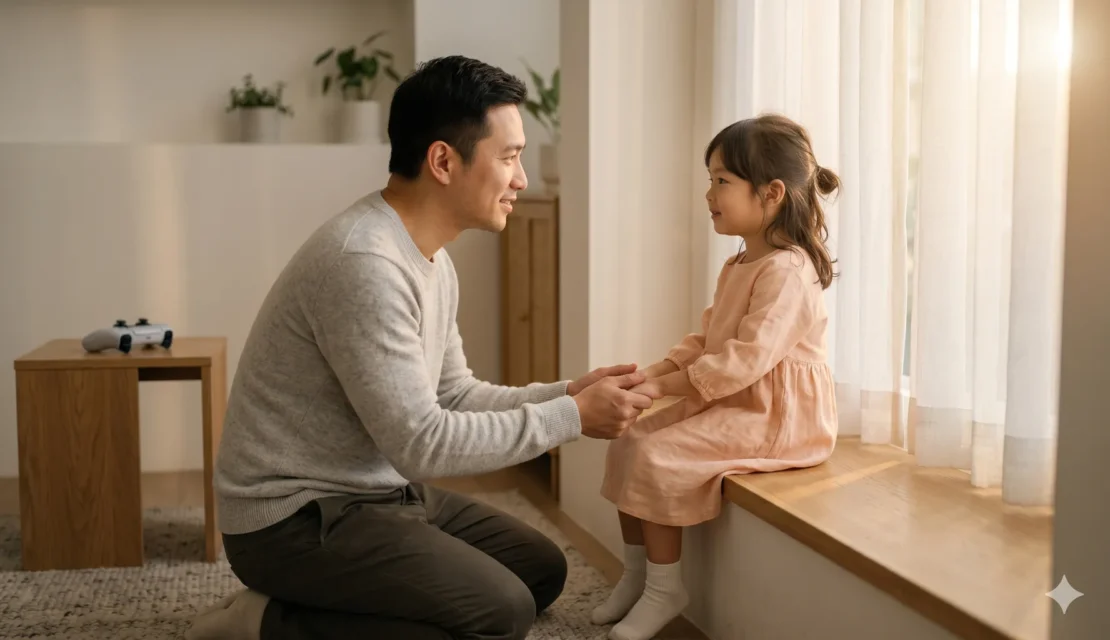
We know this is easier said than done, especially when your child is mid-meltdown and the controller has just narrowly missed the television. But your nervous system is the most powerful regulating tool available to your child right now. When you come in calm, firm, and warm, you give their dysregulated brain something external to co-regulate with.
Matching their energy, raising your voice, or issuing threats in the moment will escalate the situation almost every time. A quiet, steady presence, “I can see you’re really frustrated. Take a breath. I’m right here,” is genuinely more effective than any consequence you can deliver in that moment.
Introduce the Concept of the Cool-Down Before It’s Needed
Talk about emotional regulation strategies during calm moments, not in the middle of a rage. For younger children, keep it very simple and very physical: teach them that when they feel the hot angry feeling in their chest, they can squeeze a cushion, take three big belly breaths, or walk to a specific spot in the house that you call the “calm corner.”
For slightly older children, you can introduce the language of “big feelings” around gaming specifically. “Sometimes games make us feel really frustrated, and that is totally normal. The rule in our house is that big feelings mean we take a break, not that we throw things.” Rehearsing this during quiet times means they actually have access to it when they need it.
Set Clear and Consistent Expectations Before the Controller Goes On
Prevention is significantly more effective than intervention. Before your child picks up the controller, establish the ground rules in a calm, matter-of-fact way. Make them specific and behavioural rather than general.
A simple pre-gaming agreement might include:
- If you lose, you can say “that’s frustrating” but not throw or hit anything.
- If you feel yourself getting too angry, you put the controller down and take a five-minute break.
- If there is a meltdown, the game goes off for the rest of the day, no exceptions.
Write these down if your child responds well to visual reminders. The key is that these rules exist before the session begins, not as a reaction to the rage after it has already happened.
Use the Aftermath as a Teaching Moment
Once the storm has passed and everyone is calm again, which may take thirty minutes or a few hours depending on your child, that is your window. Come back to what happened with curiosity rather than accusation.
“What were you feeling when you lost that level? Where did you feel it in your body? What do you think would help next time?” These questions build emotional vocabulary and self-awareness, the very skills that will eventually allow your child to manage gaming frustration independently.
Avoid the lecture. Keep it conversational, short, and forward-looking. “What could we try differently next time?” is always more productive than “you should not have done that.”
Consider Whether the Game Is Age-Appropriate
Not all games are created equal in terms of emotional demand. Many games popular with children, particularly competitive online games and battle royale formats, are designed for older players with more developed frustration tolerance. A five-year-old playing a highly competitive game designed for teenagers is at a significant mismatch between their developmental stage and the game’s emotional requirements.
It is entirely reasonable to put age-appropriateness filters on game selection, not just for content but for emotional complexity. A game with gentler failure states, cooperative rather than competitive mechanics, or turn-based play tends to produce dramatically less rage than fast-paced, highly competitive formats.
Build Emotional Resilience Outside of Gaming
Ultimately, the best long-term solution to child raging at video games is building a child who has stronger emotional regulation skills across the board. This happens through physical play, creative activities, face-to-face socialising, and experiences of manageable failure in low-stakes environments.
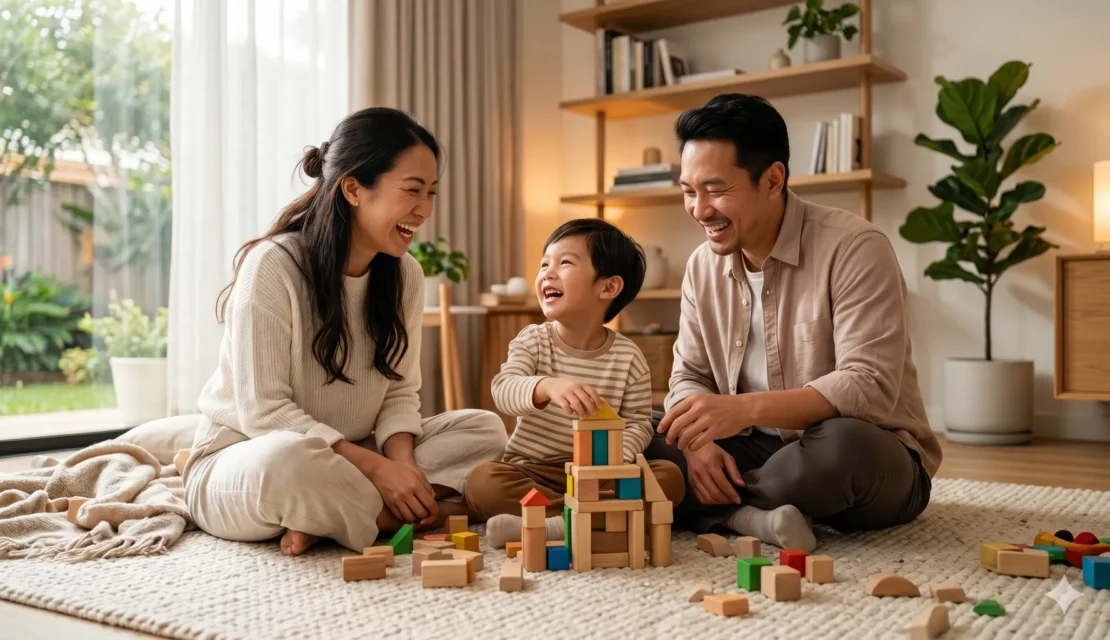
A child who regularly experiences the satisfying discomfort of trying something hard and eventually succeeding, whether in building blocks, drawing, or learning to ride a bike, develops a relationship with frustration that is more workable. They learn that the awful feeling before success is temporary and survivable. That lesson, learned in many small ways over many years, is what eventually shows up in better behaviour in front of a screen.
Building Emotional Strength From the Ground Up
Everything we’ve talked about here, impulse control, emotional vocabulary, frustration tolerance, and the ability to lose gracefully, is not just about gaming. These are life skills that begin developing in the very earliest years of childhood and are shaped by every environment a child spends time in.
At Apple Tree Preschool BSD, located in the Educenter BSD Building, we build these skills intentionally every single day. Through our Singapore curriculum, our children develop emotional intelligence alongside academic foundations, learning to navigate big feelings, work through challenges, collaborate with peers, and experience the genuine satisfaction of persistence paying off.
Our programmes, from Toddler right through to Kindergarten 2, are designed to produce children who are not just academically ready but emotionally equipped for everything ahead of them. Explore our full range of classes and programmes to find the right fit for your child.
Help Your Child Find Their Calm, On Screen and Off
A child raging at video games is telling you something important about where their emotional development is right now and what skills they still need to build. With the right approach, consistent expectations, calm responses, good conversations, and plenty of real-world experience with manageable challenge, that rage gradually transforms into frustration, and frustration into resilience.
It takes time. It takes consistency. And it is absolutely one of the most worthwhile things you can invest in as a parent.
We are here to help you every step of the way.Register now and come grow, play, and build resilience together at Apple Tree Preschool BSD! Chat with us on WhatsApp or call us directly at +62 888-1800-900. We would love to welcome your family!



Be the first to write a comment.