

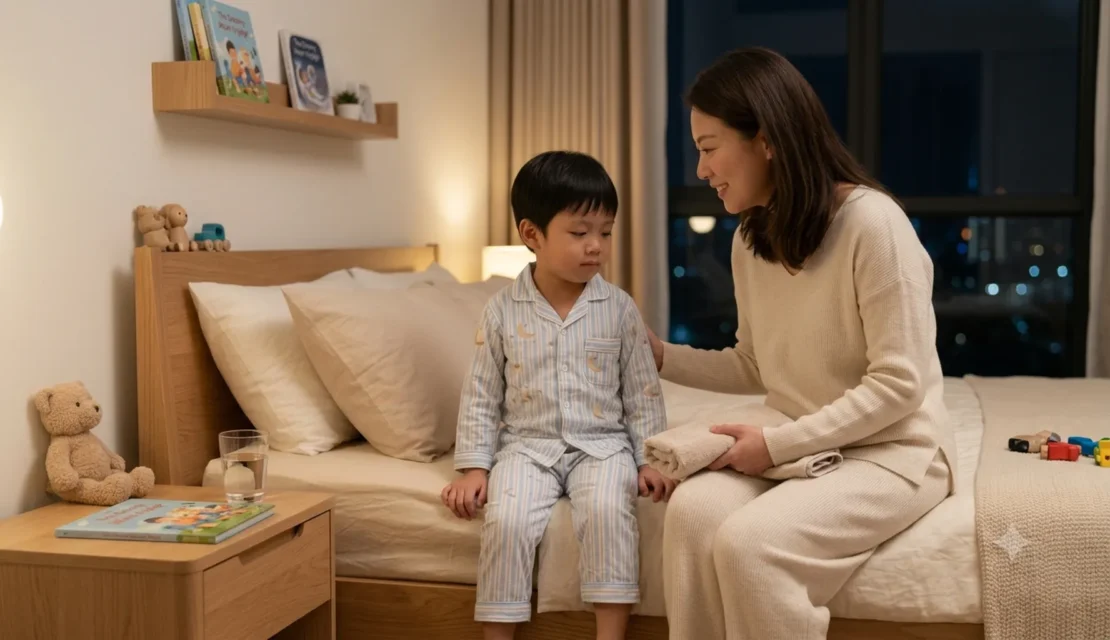
If you are dealing with a child bedwetting at night, you probably know the emotional mix that comes with it. There is concern for your child, a bit of laundry fatigue, and that quiet worry in the back of your mind asking, “Is this normal?” At Apple Tree Pre-School BSD, close to Educenter bsd, we hear questions like this more often than you might think, because many loving, capable parents are trying to support children through this stage without making it feel bigger or scarier than it already does.
The good news is that bedwetting is common, and in many cases, it improves with time, consistency, and the right support. Most importantly, it is not a sign that your child is lazy, naughty, or somehow failing at growing up. Quite honestly, children already have enough big feelings to manage without carrying shame to bed too.
Understanding Child Bedwetting at Night
A child bedwetting at night is often experiencing something far more common than most families realise. Nighttime dryness develops at different ages for different children, and some children simply take longer for their brain and bladder to coordinate during sleep.
This means bedwetting is usually not about choice. Your child is not deciding to do this, and that distinction matters a lot. When parents understand that bedwetting is largely involuntary, the whole tone of support becomes gentler and more effective.
Why bedwetting happens
There are several common reasons bedwetting continues into the school years:
- The bladder may still be developing and may not yet hold urine through the night.
- Some children sleep so deeply that they do not wake when their bladder is full.
- The body may not be producing enough of the hormone that reduces urine production at night.
- Stress, routine changes, constipation, or family history can also play a part.
If you were hoping for one simple reason, we completely understand. Parenting would be much tidier that way. Unfortunately, children prefer to keep things interesting.

Child Bedwetting at Night Is Not a Behaviour Problem
One of the most important things we can say is this, bedwetting is not a discipline issue. When a child bedwetting at night wakes up in wet sheets, they usually feel embarrassed long before any adult says a word.
Children need reassurance, not blame. A frustrated reaction may stop nothing, but it can easily add shame, anxiety, and secrecy. That emotional layer often makes the whole situation feel heavier for everyone.
What your child may be feeling
Even if your child does not say much, they may be carrying some difficult emotions:
- Embarrassment, especially if siblings know or sleepovers are coming up.
- Worry that something is wrong with them.
- Fear of disappointing you.
- Frustration because they cannot seem to control it.
A calm response helps your child feel safe. And safety is where progress usually begins.
Practical Ways to Manage Bedwetting More Effectively
When you are living with frequent wet nights, it helps to focus on practical strategies that reduce stress at home. You are not trying to create perfection overnight. You are trying to make the process manageable, respectful, and a little less exhausting.
Build a simple bedtime routine
A predictable evening routine supports better bladder habits and lowers bedtime anxiety. Keep it calm and repeatable so your child knows exactly what happens before sleep.
A useful routine might include:
- Toilet before pajamas.
- A calm, screen free wind down.
- One final toilet trip right before lights out.
- Reassurance that accidents can happen and that they are still safe and loved.
This routine will not magically fix everything in one night, but it gives the body and mind helpful structure.
Be thoughtful about drinks, not extreme
It can help to reduce large drinks right before bed, but avoid making your child feel deprived or punished. Children still need healthy hydration during the day.
A balanced approach works best:
- Encourage more water earlier in the day.
- Keep dinner and evening drinks reasonable.
- Avoid lots of sugary drinks late in the evening.
- Offer a final toilet trip before sleep.
This is about rhythm, not rigid rules. Nobody wants bedtime to feel like a tiny hydration tribunal.
Make Nighttime Accidents Easier to Handle
Sometimes the best support is simply making accidents less disruptive. If a wet bed creates a giant midnight production, everyone ends up more tired, upset, and overwhelmed.
Prepare the bed in advance
Layering the bed can be a lifesaver for tired parents. Try a mattress protector, then a fitted sheet, then another protector and sheet underneath. If there is an accident, you can remove one layer quickly and get everyone back to sleep faster.
You can also keep these nearby:
- Clean pajamas.
- Spare underwear.
- A small towel.
- Wipes or a washcloth.
- A laundry basket within easy reach.
It is not glamorous, but neither is changing sheets at 2 AM while whispering, “How is there this much laundry?”
Involve your child gently
Your child does not need punishment, but they can take part in age appropriate cleanup. This helps build responsibility without shame.
For example, your child might help put wet clothes in the basket or place fresh pajamas on the bed. Keep your tone matter of fact, not dramatic. The message is, “This happened, and we can handle it together.”
When to Talk With a Doctor
Most cases of bedwetting improve over time, but some situations do deserve medical advice. If your child bedwetting at night is paired with pain, daytime accidents, constipation, loud snoring, or a sudden return of bedwetting after a long dry period, it is worth speaking with a pediatrician.
A doctor can check for underlying issues and help you decide whether any treatment is needed. Sometimes families wait too long because they feel awkward bringing it up, but truly, doctors hear this all the time. This is not even remotely their most surprising Tuesday.
Signs that extra support may help
Consider checking in with a pediatrician if:
- Bedwetting starts again after months of dryness.
- Your child has pain while urinating.
- There are daytime wetting issues too.
- Constipation seems to be a regular problem.
- Your child is becoming very distressed or withdrawn about it.
Getting support does not mean something serious is wrong. It simply means you are gathering better information.

Protecting Your Child’s Confidence Matters Just as Much
A child can cope with wet sheets far better than they can cope with feeling ashamed. The emotional side of bedwetting is often the part families underestimate. Your words matter, your tone matters, and your ability to stay calm matters.
What helps your child feel secure
Try to keep these messages clear and consistent:
- “You are not doing this on purpose.”
- “Lots of children go through this.”
- “We will figure it out together.”
- “This does not change how loved or capable you are.”
Confidence grows when children feel accepted, even in a frustrating season. That is true for bedtime struggles, toilet learning, and quite honestly, most of childhood.
Small Steps at Home, Stronger Confidence Everywhere
At Apple Tree Preschool BSD, we believe children thrive when home and school both offer calm routines, emotional safety, and steady encouragement. That is true whether a child is learning to separate more confidently, manage big feelings, or build healthy daily habits. If you would like to explore our programs, we would love to show you how we support children as they grow smart and happy together with parents.
We are also conveniently located in the Educenter BSD Building, which makes daily family routines a little easier for many parents in BSD. And when you are already managing school bags, snacks, and bedtime laundry, “a little easier” can feel like a beautiful gift.
Gentler Nights Can Begin With Better Understanding
If you are supporting a child bedwetting at night, try to remember that progress is rarely dramatic at first. It often starts with less shame, better routines, calmer responses, and a child who slowly begins to feel more secure. Those small shifts matter more than they look.
We would be happy to support your family with a warm learning environment where confidence, independence, and healthy habits grow side by side. If you are looking for a preschool that understands real child development and real family life, we would love to meet you.
Chat with us on WhatsApp or call +62 888-1800-900 to learn more. Register now, and come play and learn with other children.





Be the first to write a comment.