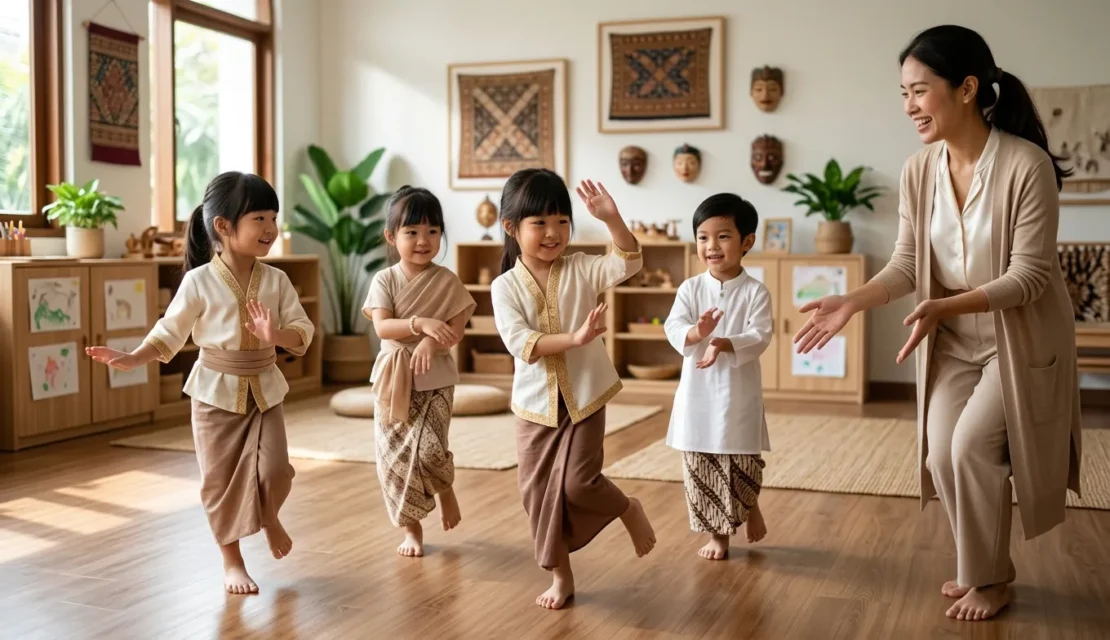
If you have ever seen a preschooler hear music and instantly start twirling with complete emotional commitment, you already know movement is never just movement. At Apple Tree Pre-School BSD, near Educenter bsd, we love using Traditional dance for kids as a joyful way to build confidence, coordination, cultural awareness, and plenty of smiles along the way. The lovely thing is that children do not need complicated choreography to connect with dance. They just need rhythm, imagination, and a safe space to move.
For many families in Indonesia, traditional dance can feel beautiful but slightly intimidating. You may think, “This looks amazing, but surely my four year old cannot do that.” We get it. Some traditional performances are highly detailed and require years of practice, but preschoolers can still enjoy simple, age appropriate versions that introduce the spirit of the dance without the pressure of perfection.
Traditional Dance for Kids Can Start with Simple Movements
When we talk about Traditional dance for kids, we are not asking preschoolers to perform like trained stage dancers. We are introducing them to gentle hand motions, repeated rhythms, expressive gestures, and cultural stories that make movement meaningful. That is a much friendlier place to begin.
Traditional dance works especially well in the preschool years because children learn with their whole bodies. They remember through movement, repetition, music, and play. A child may forget what you explained for ten minutes, but they will absolutely remember the part where they got to sway like a flower or clap in rhythm with their friends.
Why traditional dance feels so natural for preschoolers
Young children are already wired for movement. They hop when they are excited, spin when they are happy, and march around the house for reasons known only to them. Traditional dance simply gives that natural energy a beautiful shape.
It also gives children something more than exercise. Through dance, you are gently saying, “This is part of our culture. This is part of our story. This belongs to you too.” That feeling matters.
Easy Indonesian Traditional Dance Ideas for Preschool
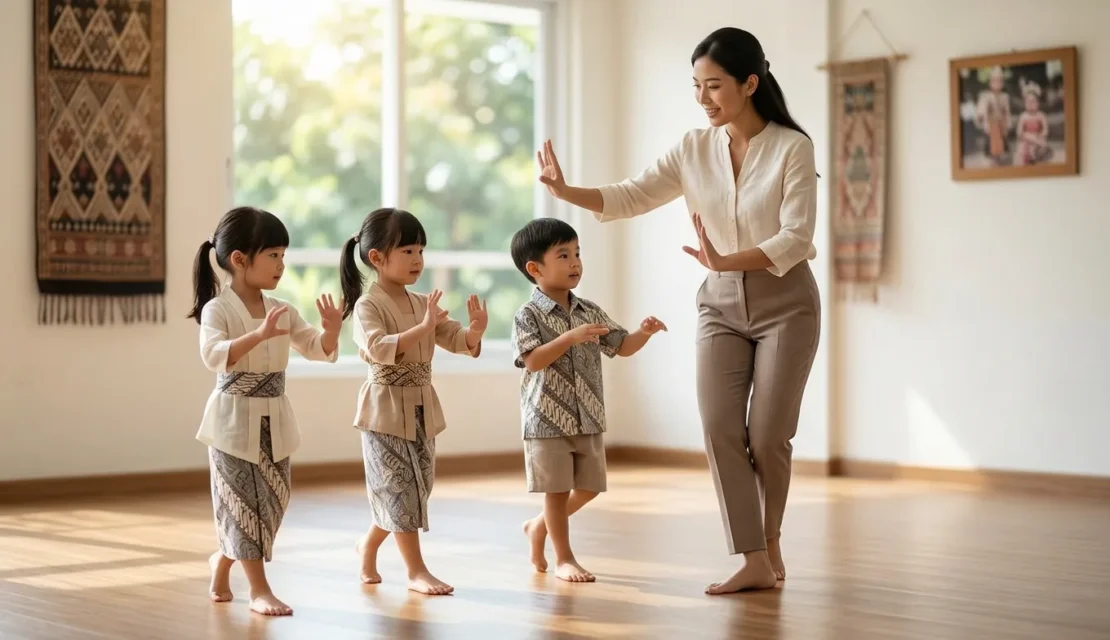
The best Traditional dance for kids is simple, repetitive, and fun to follow. You do not need to teach a full formal routine. Instead, you can borrow child friendly elements from well known dances and turn them into joyful classroom or home activities.
Pendet inspired movements from Bali
Pendet is widely known as a Balinese welcoming dance, and Balinese children often begin learning traditional dance from a young age. For preschoolers, you can simplify the style into graceful hand openings, soft steps, and gentle flower offering motions.
This works beautifully because the gestures are expressive without being too fast. Children enjoy pretending they are welcoming guests, offering flowers, or moving like they are part of a celebration. It feels elegant, but still playful enough for little ones.
Try introducing:
- Open and close hand gestures
- Small side steps
- Gentle turns
- Pretend flower offering movements
Saman inspired rhythm play from Aceh
Saman is one of Indonesia’s most famous traditional dances and comes from the Gayo community in Aceh. It is known for synchronized seated movements and rhythmic hand patterns, and UNESCO lists it as part of Indonesia’s intangible cultural heritage.
Now, a full Saman performance is far beyond preschool level, and that is perfectly fine. What preschoolers can enjoy is the rhythm. You can create a simplified circle time version with clapping, tapping knees, and moving together in a steady beat.
Children love this because it feels like a game. It also teaches listening, timing, and teamwork, which are all very useful skills when you are four and still deciding whether group instructions are a suggestion.
Pakarena inspired slow and graceful movement
Pakarena is a traditional court dance from the Makassar region of South Sulawesi. It is known for graceful, controlled movement, which makes it a lovely inspiration for preschool dance activities.
You do not need to recreate the full form. Instead, invite children to practise slow stepping, gentle arm movements, and calm transitions. This style is especially nice for children who enjoy quieter movement and may not love loud, energetic dance sessions.
We often find that slower dance activities can help children:
- Improve balance
- Build body control
- Learn patience
- Feel calm and focused
What Children Learn Through Traditional Dance for Kids
The biggest gift of Traditional dance for kids is that it never teaches just one thing. While your child is moving to music, they are also learning about rhythm, memory, culture, and how to share space with others. That is quite a lot for one song before snack time.
Motor skills grow naturally
Dance supports coordination, balance, posture, and spatial awareness. When a child steps sideways, lifts their hands, or follows a pattern, they are strengthening motor intelligence in a very natural way. It feels like fun, but the learning is real.
This is one reason we love movement based learning in early childhood. Preschoolers are not meant to sit still all day. Their bodies are part of how they think.
Children build confidence through performance
There is something special that happens when a child learns a few movements and realises, “I can do this.” Even very simple traditional dance activities can help children feel proud of themselves. They begin to move with more confidence and express themselves more freely.
And let us be honest, few things are more delightful than a preschooler taking a bow after three tiny dance steps as if they have just completed a world tour. We support that level of confidence wholeheartedly.
Culture becomes something children can feel
Stories matter, songs matter, and movement matters too. Traditional dance lets children experience Indonesian culture in a hands on, memorable way. They are not just hearing about culture. They are participating in it.
That is a powerful experience, especially in the early years. It helps children feel connected to their community while also learning to appreciate beauty, discipline, and tradition.
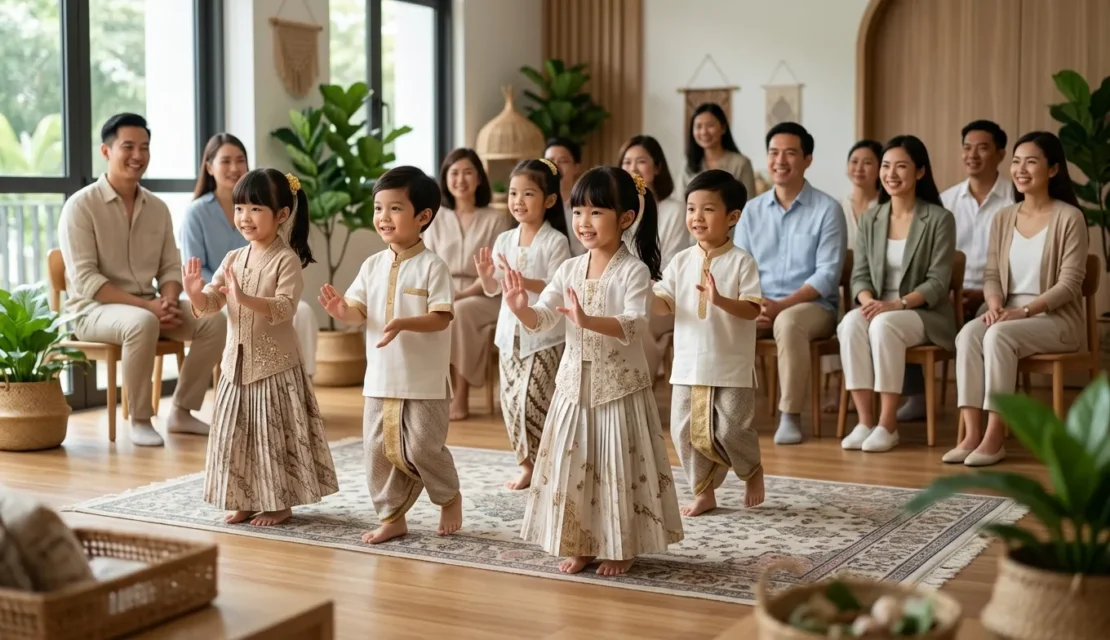
How to Introduce Traditional Dance at Home or School
If you want to try Traditional dance for kids with your child, keep it simple and light. You do not need a costume, a stage, or a perfectly quiet room. In fact, a perfectly quiet room with preschoolers would be suspicious.
Here are a few easy ways to begin:
- Choose one dance style and one or two signature movements
- Use short sessions, around 10 to 15 minutes
- Add a simple story, like welcoming guests or moving like flowers in the wind
- Repeat the same motions over a few days
- Celebrate effort, not perfection
Children learn best when they feel relaxed. If they laugh, wiggle off beat, and invent one completely unrelated move in the middle, that is not a problem. That is preschool.
A Joyful Way to Learn at Apple Tree
At Apple Tree Pre-School BSD, we believe children learn best when joy and meaning go together. That is why movement, music, culture, and creativity are woven into our everyday learning experiences. Whether children are exploring rhythm, language, art, or social skills, we want them to feel engaged, capable, and happy.
Our approach helps children grow not only academically, but also physically, socially, and emotionally. If you would like to see how we bring these experiences into the classroom, you can explore our programs. There is something very special about watching a child learn with their whole heart, and usually their whole body too.
Where Little Steps Become Big Discoveries
Traditional dance for kids is a beautiful way to help your child move, learn, and connect with Indonesian culture from an early age. With simple versions of dances inspired by Pendet, Saman, and Pakarena, preschoolers can enjoy rhythm, grace, teamwork, and self expression without feeling overwhelmed. The goal is not perfect performance. The goal is joyful discovery.
If you would love your child to grow in a warm preschool environment where culture, creativity, and confident learning all come together, we would be delighted to welcome your family. Chat with us on WhatsApp or call us at +62 888-1800-900. Come play and learn with other children at Apple Tree Pre-School BSD.


Be the first to write a comment.