When it comes to developing child musical abilities, many parents get stuck between two worries. You might wonder if your child is “naturally musical,” or if you are supposed to buy an instrument, book a class, and somehow raise a tiny concert pianist before they can even tie their shoes. At Apple Tree Pre-School BSD, located in the Educenter BSD Building, we see this concern all the time, and the good news is that musical growth usually starts much more simply than people think.
We have learned that children do not need pressure to become musical. They need rhythm, repetition, joyful exposure, and adults who do not panic when the “music session” sounds suspiciously like a kitchen drawer falling down the stairs. If you have ever handed your child a spoon and watched them turn the dining table into a drum concert, you already know the instinct is there.
That is why we like to talk about music as part of early childhood development, not as a special talent reserved for a lucky few. When you support musical exploration early, you are not only helping your child enjoy songs and sounds, you are also building listening skills, confidence, coordination, memory, and self expression.
Developing Child Musical Abilities Starts With Everyday Moments
The first thing we would challenge is the idea that musical ability only shows up when a child sings perfectly or plays an instrument well. That assumption is too narrow. In early childhood, musical ability usually looks much simpler and much more natural.
You may already notice it in small ways:
- Your child remembers melodies faster than instructions
- Your child moves their body when music starts
- Your child repeats rhythm patterns with claps, taps, or nonsense lyrics
- Your child enjoys sound play, humming, chanting, or making up songs
These are real early signs of musical development. They may not look impressive on paper, but they matter. Children often show musical understanding long before they can explain it.
Why music matters beyond performance
When we focus on developing child musical abilities, we are not trying to turn every child into a performer. We are helping them grow in areas that support overall learning.
Music helps children practice:
- Listening and attention
- Memory and sequencing
- Language development
- Emotional expression
- Coordination and body awareness
That is one reason music is part of our daily learning approach. It supports much more than “music time.”
How to Encourage Musical Growth at Home Without Pressure
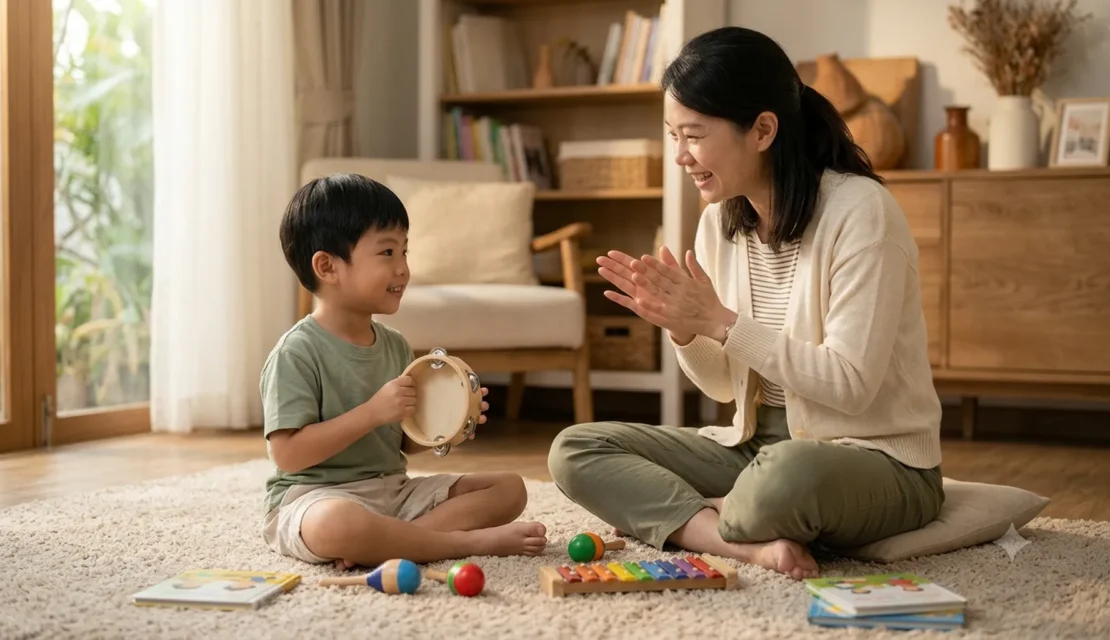
You do not need a formal setup to help your child grow musically. In fact, if you make it too formal too soon, it can backfire. Young children usually respond best when music feels playful, shared, and part of daily life.
Sing more, even if you think you cannot sing
We will be honest, children do not care if you are slightly off key. They care that you are with them. If you wait until you sound polished, your child will miss the fun part, which is connection.
Try singing during normal routines:
- While getting dressed
- During bath time
- In the car
- While tidying up
- Before bed
Simple repeated songs work best. Children love familiarity, and repetition helps them absorb rhythm and language at the same time.
Let your child move with the music
A lot of adults separate music from movement, but children do not. For them, music often lives in the whole body. If your child wants to jump, sway, spin, or march, that is part of learning.
You can try:
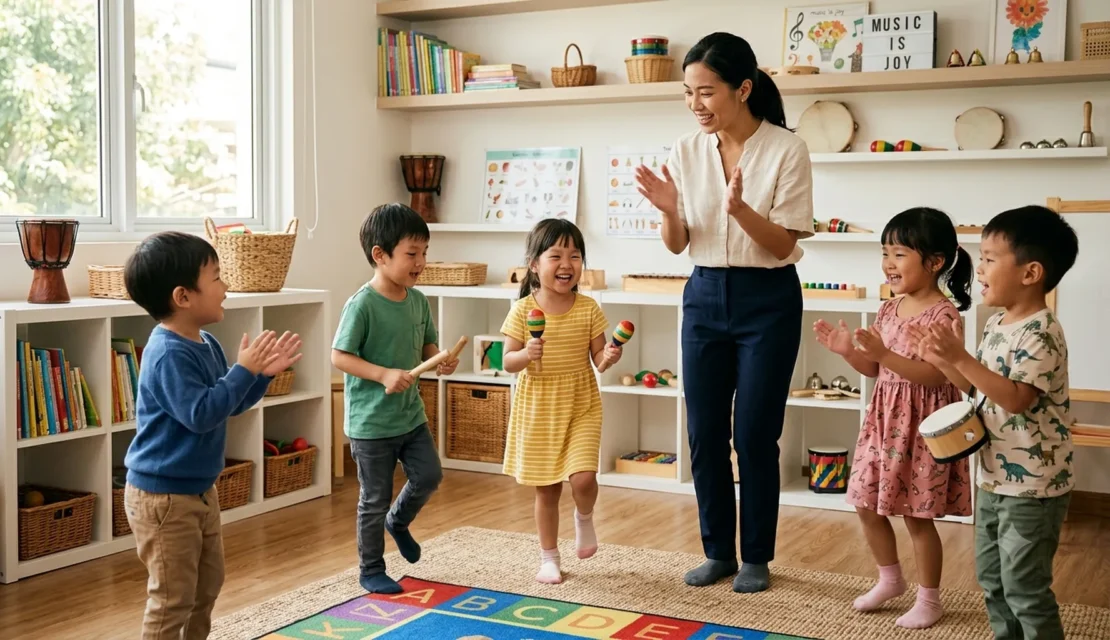
- Clapping games
- Freeze dance
- Marching to a beat
- Moving fast to fast music, then slow to slow music
- Pretending to be animals while music plays
This kind of movement builds rhythm awareness naturally. It also burns off some energy, which nobody in a preschool setting has ever complained about.
Give access to simple instruments and sound making tools
You do not need a grand piano in the living room. Start with easy, safe, child friendly sound tools. The point is exploration, not perfection.
A simple music basket could include:
- Shakers
- Tambourines
- Toy drums
- Bells
- Wooden rhythm sticks
- Homemade instruments from containers and rice
If you do use homemade instruments, just make sure they are secure and age appropriate. We do not want a “music activity” turning into a floor full of scattered beans and regret.
Developing Child Musical Abilities Through Listening and Play
Listening is a big part of musical growth, but passive listening alone is not enough. Children learn more when they respond to what they hear.
Play musical games that sharpen listening
Games give children a reason to pay attention. That makes musical learning stick much better than background noise.
You can play:
- “Copy my clap” with simple rhythm patterns
- “What sound is this” using household noises
- “Stop and go” with music starting and stopping
- “Loud or soft” games with voice and instruments
These activities build listening, control, and memory. They are also easy to repeat, which is useful because young children generally love doing the same thing again and again, and again.
Expose your child to different kinds of music
If your child only hears one style, their musical world stays small. Variety helps children notice tempo, mood, instruments, and patterns.
You can explore:
- Children’s songs
- Folk songs
- Instrumental music
- Cultural music from different backgrounds
- Calm music and energetic music
The goal is not to test their taste. The goal is to let their ears get curious.
Build Confidence Before Skill
One common mistake parents make is praising only “good” singing or “correct” rhythm. That can make children self conscious very quickly. Confidence usually comes before refinement, not after it.
Respond to effort and enjoyment
Instead of judging performance, notice participation. That keeps music associated with joy rather than pressure.
Helpful responses sound like this:
- “We loved how confidently you sang that”
- “You kept the beat so steadily”
- “You remembered that part all by yourself”
- “That sounded playful and strong”
Those responses tell your child that music is something they can enjoy and grow into, not something they get graded on every time they open their mouth.
How We Support Musical Development at Apple Tree Pre School BSD
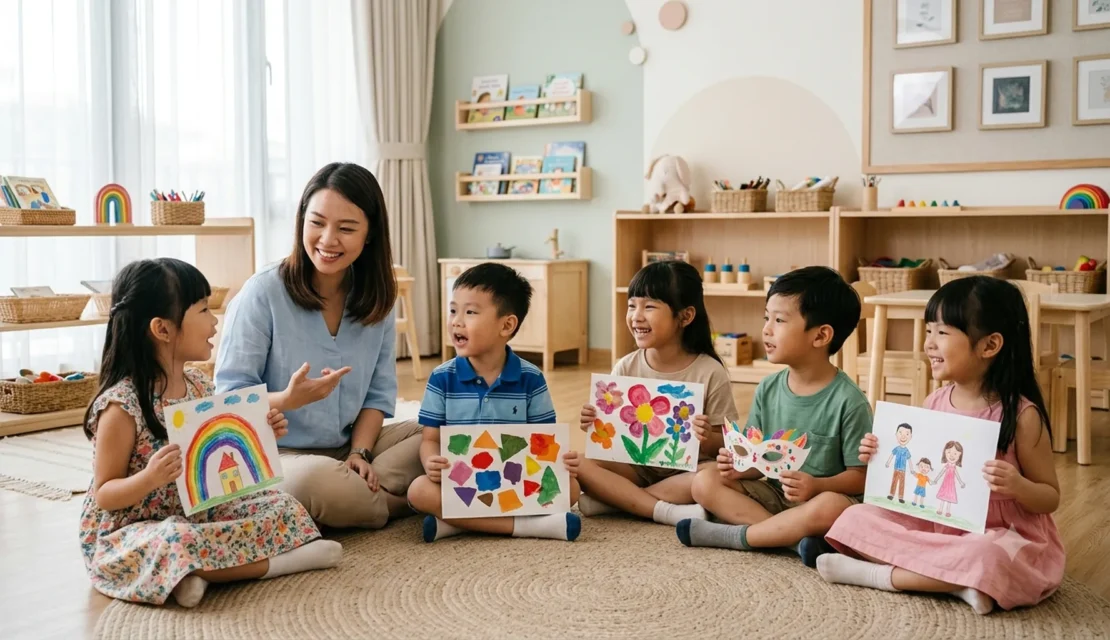
At Apple Tree Pre School BSD, we see music as part of the whole child. Our adopted Singapore curriculum includes English, Mathematics, Chinese, Creativity, Social Studies, Science, Bahasa, Moral, Music, Physical Education, and Phonics, which means music is not treated like an extra. It is one of the ways children learn to listen, express themselves, and build confidence.
In class, we support musical growth through:
- Songs for routines and transitions
- Rhythm games and movement activities
- Group singing and action songs
- Listening exercises
- Opportunities for creative expression
We also match activities to developmental stages. A toddler and a kindergarten child will not engage with music in the same way, and pretending otherwise usually ends with one child bored and another child running in circles.
Our programs include:
- Toddler, 2 times per week, age 1.5 to 2 years, 12 children per class
- Toddler, 3 times per week, age 1.5 to 2 years, 12 children per class
- Pre Nursery, age 2 to 3 years, 16 children per class
- Nursery, age 3 to 4 years, 20 children per class
- Kindergarten 1, age 4 to 5 years, 20 children per class
- Kindergarten 2, age 5 to 6 years, 20 children per class
If you want to see which class best supports your child’s stage of growth, you can explore our programs and find the right fit.
What Helps Most in Developing Child Musical Abilities
If we strip it down, developing child musical abilities comes back to a few things done consistently. You do not need to overcomplicate it.
What helps most is:
- Regular exposure to songs and rhythm
- A playful, low pressure environment
- Opportunities to move, listen, and repeat
- Encouragement without harsh correction
- A school setting that treats music as meaningful
Children grow musically when they feel free to try. That freedom matters more than expensive equipment or early performance goals.
Let’s Help Your Child Grow Through Music
Developing child musical abilities is really about giving your child room to listen, move, explore, and enjoy. When music becomes part of daily life, your child builds far more than musical skills. They build memory, confidence, expression, and connection with you.
If you would like your child to learn in a warm environment where music, creativity, and academics grow together, we would love to welcome you to Apple Tree Pre School BSD.
Direct phone: +62 888-1800-900
Register now, and come play and learn with other children with us.



Be the first to write a comment.