Developing child leadership skills can start way earlier than you think, sometimes right around the moment your child announces, “I’m the boss,” and you realize they might not be joking. We see this every week at Apple Tree Preschool BSD in the Educenter BSD Building, where leadership shows up in small moments like sharing roles in pretend play or helping a friend who feels shy.
If you are picturing “leadership” as a child giving speeches or acting like a tiny CEO, let’s gently park that idea. In early childhood, leadership is mostly about social confidence, empathy, communication, and the ability to solve small problems without panicking. When you guide those skills early, you are giving your child tools they will use in school, friendships, and eventually the real world.
This guide is practical and realistic for busy families. You do not need fancy materials or a strict personality makeover for your child. You just need repeatable habits that make leadership feel natural and safe.
Developing Child Leadership Skills Through Everyday Life
Leadership is not a personality type. It is a set of learnable behaviours, and you can practice them daily in ways that feel like normal family life. The best part is that most leadership practice looks like play, chores, and conversations, not lectures.
What Leadership Looks Like at Preschool Age
For young children, leadership usually shows up as:
- Taking turns and negotiating roles during play
- Speaking up politely when something feels unfair
- Helping a friend and noticing emotions
- Making a plan, then adjusting when it does not work
- Taking responsibility for small tasks without being forced
If your child is loud, they might look like a leader. If your child is quiet, they might also be a leader, just in a calmer style. The goal is not to produce the loudest child in the room, it is to help your child become confident, kind, and capable.
The Hidden Trap: Confusing Leadership With Control
Some children try to “lead” by ordering others around. That is not leadership, that is control, and it usually comes from insecurity or excitement, not bad character.
When you see bossy behaviour, treat it as a skills gap. Your child needs language for collaboration, patience for turn taking, and practice reading social cues. Those can be taught, and taught gently.
The Core Skills Behind Strong Kid Leadership
If you want to focus your efforts, focus on the basics. Leadership grows faster when the foundation is strong.
Communication: Clear Words, Calm Tone, Good Timing
Teach your child to use simple, respectful phrases. You are basically giving them a tiny toolkit for social life.
Try practicing lines like:
- “Can I have a turn after you?”
- “Let’s do it together.”
- “I don’t like that, please stop.”
- “I have an idea.”
When your child can communicate, they rely less on grabbing, shouting, or melting down. That is leadership in its most useful form.
Empathy: The Superpower That Makes People Want to Follow
A child who notices others and helps them is the kind of leader other children trust. Empathy is not fluffy, it is functional.
You can build empathy by naming emotions in real time. “Your friend looks sad because the tower fell,” is a simple comment that trains your child’s attention toward others.
Self Regulation: Leadership Starts With Managing Big Feelings
A child cannot lead a group game if they collapse emotionally the moment something changes. Emotional regulation is a leadership skill, even if it does not sound as exciting as “captain.”
Use tiny tools your child can repeat:
- Two slow breaths, “smell the flower, blow the candle”
- A short pause, “hands on tummy, count to three”
- A reset phrase, “Let’s try again”
These tools reduce impulsive reactions and make problem solving possible.
Simple Activities That Build Leadership at Home
You do not need a special “leadership curriculum” at home. You need daily micro opportunities where your child can practice responsibility, decision making, and social confidence.
Give Real Responsibilities That Actually Matter
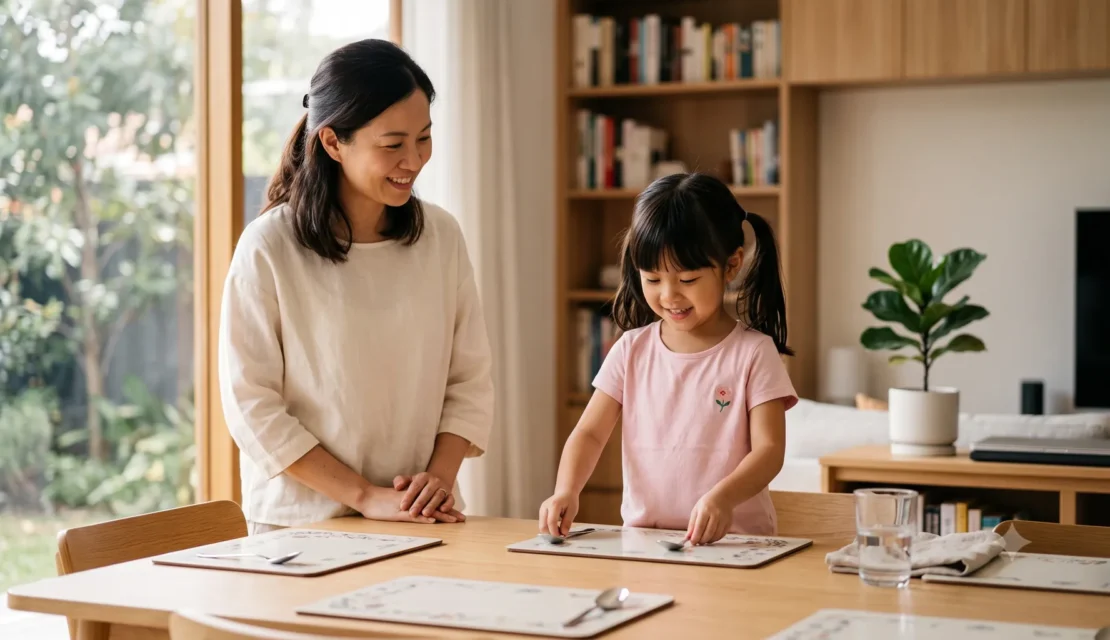
Kids can tell when a job is fake. “Please carry this invisible paper” will not build leadership, but “Please set the spoons for dinner” will.
Try age-friendly responsibilities like:
- Put shoes in the right place
- Water plants with a small cup
- Choose fruit for snack and wash it
- Help pack their bag, even if it takes longer
Yes, it takes longer. Leadership development is not a speed sport.
Let Your Child Lead Small Family Moments
You can build leadership by giving your child a safe moment to lead you.
Examples:
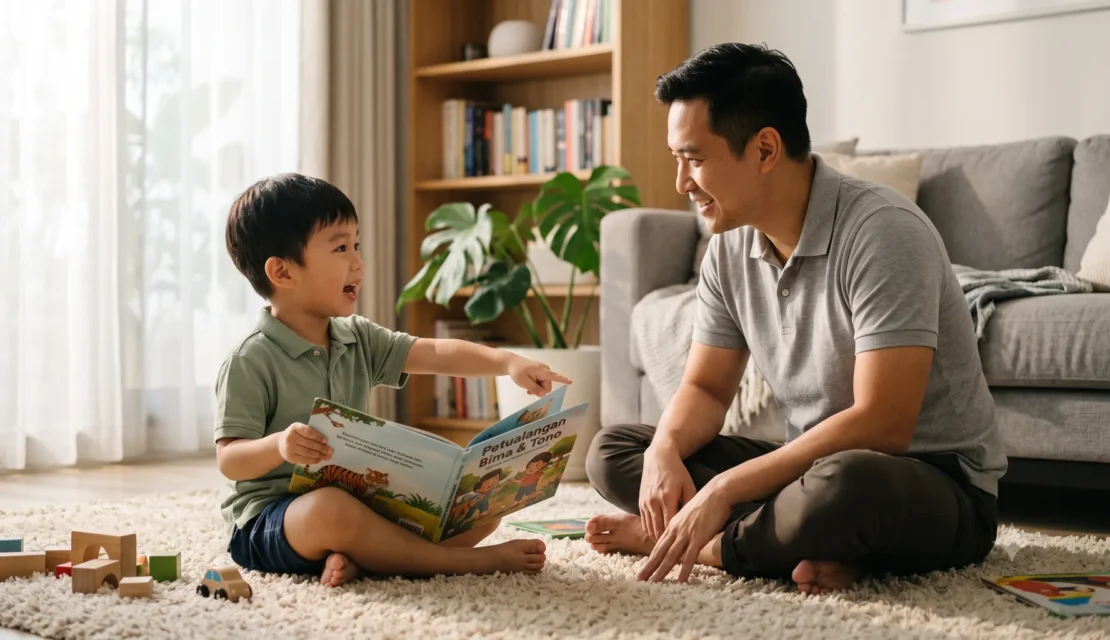
- Let them “teach” you a song or story
- Let them choose the bedtime book, then turn the pages
- Let them plan a mini picnic at home, blanket, cups, snack, done
When your child leads, you follow their plan without taking over. That follow-through is what teaches them their choices matter.
Use Cooperative Games, Not Constant Competition
If everything is a contest, some kids become anxious and others become aggressive. Cooperative play teaches leadership through teamwork.
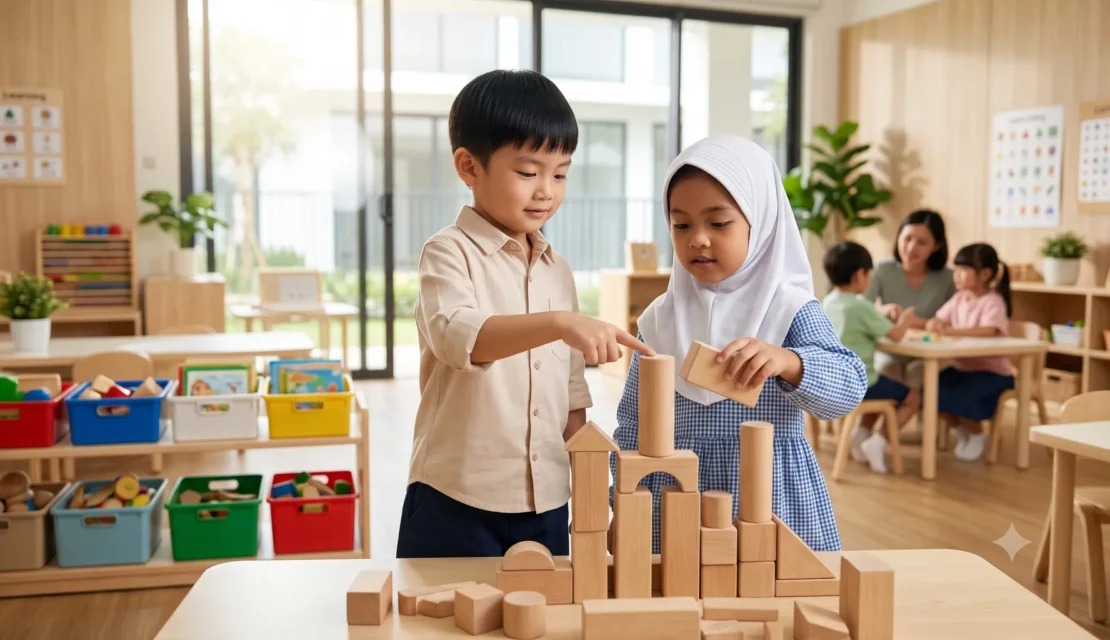
Good cooperative activities include building a shared block structure, completing a puzzle together, or creating a pretend restaurant where everyone has a role. You are teaching negotiation, patience, and shared goals, which are real leadership skills.
What to Say When Your Child Struggles With Leadership Moments
Leadership development includes failure. The key is teaching your child how to recover.
Praise the Process, Not the Spotlight
If you praise only “being the leader,” your child might start chasing attention. Praise the behaviours that make leadership healthy.
Try:
- “You listened to your friend, that was kind.”
- “You waited, that was patient.”
- “You found a solution, that was smart thinking.”
This keeps leadership grounded in values, not ego.
Coach “Bossy” Into “Collaborative”
When your child says, “You must do this,” help them rephrase. You can say, “Try it like this: ‘Let’s do this together.’”
Then have them practice the new sentence. It feels a bit like teaching a toddler to say “thank you,” which is to say, you will repeat it one million times and then one day it magically sticks.
How We Support Developing Child Leadership Skills at School
At Apple Tree Preschool BSD, we build leadership through daily classroom routines that feel safe and consistent. Children practice speaking up, taking turns, leading lines, helping classmates, and solving small conflicts with teacher guidance.
Our Singapore curriculum covers English, Mathematics, Chinese, Creativity, Social Studies, Science, Bahasa, Moral, Music, Physical Education, and Phonics, but leadership is woven into how children learn those subjects. A child who can ask a question, collaborate on a task, and try again after a mistake is already building leadership.
If you want to see how this looks by age, you can explore our programs. It helps you match home routines with what your child is practicing in class.
A Weekly Mini Plan You Can Actually Maintain
If you want a simple routine, try this. Keep it light, repeatable, and flexible.
- Monday: One “responsibility job” your child owns for the week
- Tuesday: One cooperative game, 10 to 15 minutes
- Wednesday: One “teach-back” moment, your child teaches you something
- Thursday: One empathy prompt, “How do you think your friend felt today?”
- Friday: One celebration of progress, “What did you do better this week?”
This works because it is small. Small things done consistently beat big plans done once.
Come See Leadership in Action, the Gentle Kind
Developing child leadership skills is not about raising a miniature adult. It is about helping your child become confident, considerate, and able to handle small challenges without falling apart. When you practice leadership at home through responsibility, empathy, communication, and calm routines, you build the kind of strength that shows up everywhere.
If you want a learning environment that practices these skills daily, we would love to welcome your family to Apple Tree. We are right here in the Educenter BSD Building, and you can visit, ask questions, and see how our classrooms support confident, kind leadership.
Register now, or come play and learn with other children!
Chat with us on WhatsApp or call +62 888-1800-900 to ask about class availability and the best fit for your child.





Be the first to write a comment.