Some of the best learning moments do not happen when children are sitting still and looking serious. They happen when paint is on their fingers, a song is stuck in their heads, and someone is asking a completely unexpected question about worms. That is why preschool activities matter so much in early childhood. At Apple Tree Preschool BSD, located in the Educenter BSD Building, we see every day how playful, well planned experiences help children absorb new ideas with much more joy, confidence, and focus.
If you have ever wondered whether fun activities really help children learn better, the answer is a very cheerful yes. Young children learn through movement, repetition, curiosity, and connection. When preschool activities are engaging, children are far more likely to remember what they explored, talk about it again later, and actually enjoy the process. Honestly, that is a much better outcome than trying to persuade a four year old that worksheets are thrilling.
Preschool Activities That Support Better Learning
Good preschool activities do more than fill time. They help children develop language, early math, fine motor skills, social confidence, creativity, and problem solving. The trick is choosing activities that feel playful while quietly building important foundations.
Below are 15 fun ideas that support better learning at home or in preschool.
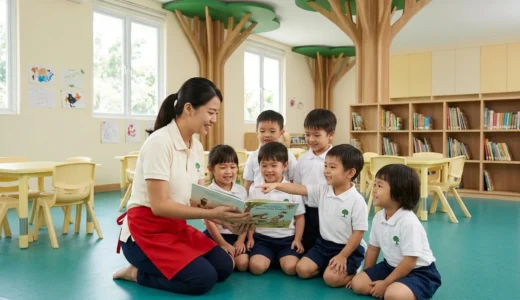
1. Story basket play
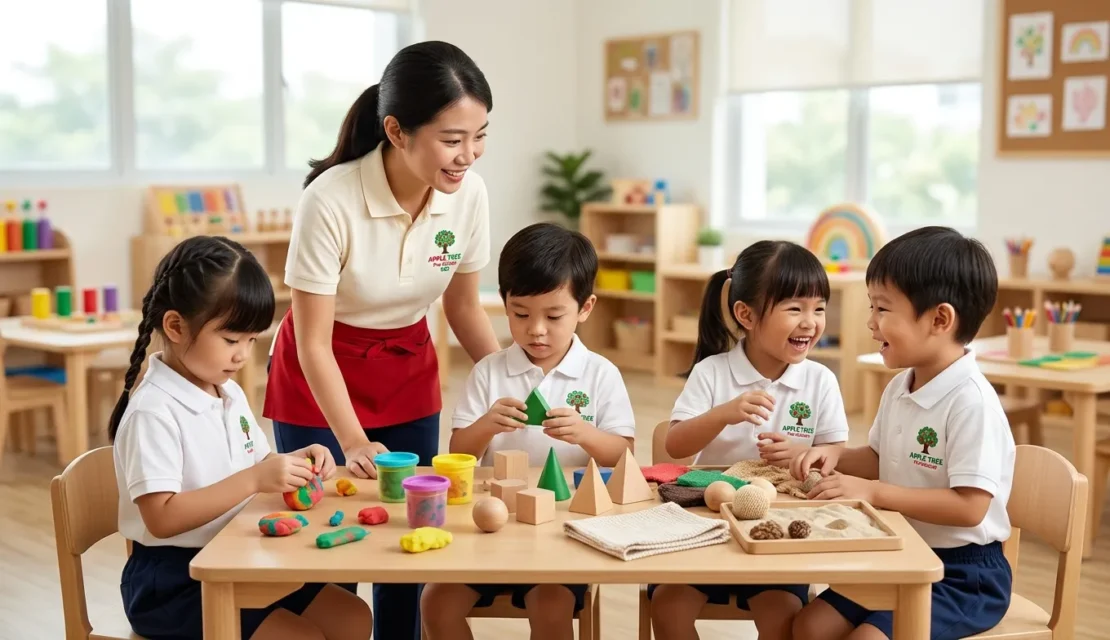
Fill a basket with a storybook and a few simple objects related to the story. If the book is about animals, add toy animals. If it is about cooking, toss in a spoon, bowl, and pretend food.
This kind of activity helps children connect words to real objects. It also boosts listening, vocabulary, and imagination, which makes it one of our favorite preschool activities for language development.
2. Color sorting games
Give your child colored pom poms, blocks, buttons, or paper pieces and ask them to sort by color. You can use bowls, muffin trays, or anything you already have at home.
Color sorting builds observation skills and early classification. It also sneaks in some math thinking without announcing itself, which is usually the smartest approach with preschoolers.
3. Sing along action songs
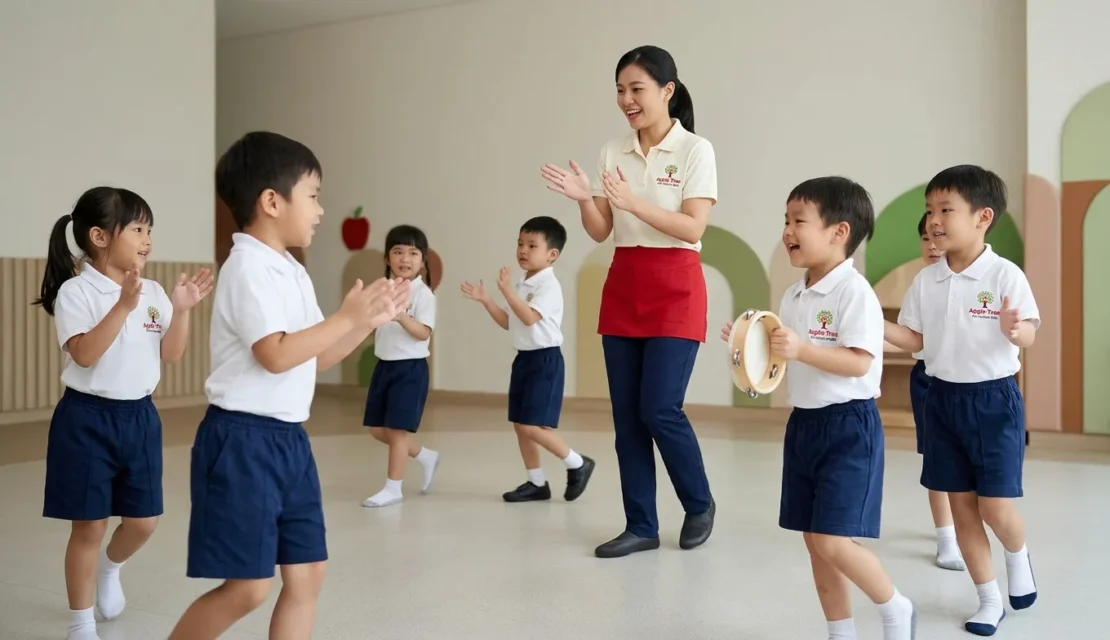
Songs with movement are gold in early childhood. Think clapping, stomping, jumping, pointing, and turning around like you are in a tiny dance studio with no dignity left, which is perfectly fine.
These preschool activities help with memory, listening, coordination, and language rhythm. Children learn patterns more easily when music is involved, and the energy release is a bonus.
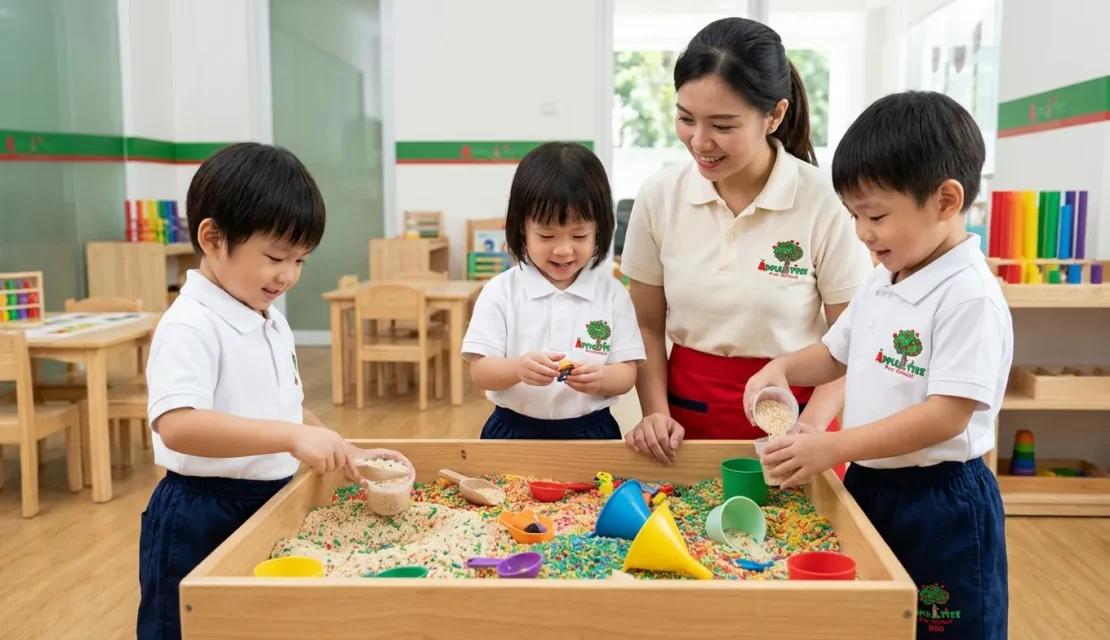
4. Sensory bin exploration
A sensory bin filled with rice, beans, sand, water beads, or scoops can keep children engaged for ages. Add cups, spoons, funnels, or hidden toy objects to make it even more interesting.
Sensory play supports focus, vocabulary, and fine motor development. It also gives children a calming hands on experience that many of them genuinely need.
Preschool Activities for Early Literacy and Language
Language grows best when children hear, say, repeat, and play with words in meaningful ways. These preschool activities make that process feel natural.
5. Letter treasure hunt
Hide foam letters or paper letters around the room and ask your child to find them. Once they collect them, name the letters together and think of words that begin with each one.
This is a fun way to build letter recognition and sound awareness. It turns literacy into a little adventure, which already makes it more appealing.
6. Puppet conversations
Hand your child a puppet, or even a sock with googly eyes if you are feeling creative, and start a silly conversation. Children often speak more freely when a puppet is involved.
Puppet play supports expressive language, turn taking, and confidence. For children who are shy, this can be one of the most effective preschool activities for communication.
7. Rhyming word games
Say a simple word like “cat” and invite your child to think of a rhyming word. They may say “hat,” “bat,” or something gloriously incorrect like “banana.” That is all part of the fun.
Rhyming strengthens phonological awareness, which is an important pre reading skill. Keep it light, playful, and full of laughter.
8. Picture card storytelling
Show your child a few picture cards and ask them to create a story using all of them. The story may be dramatic, confusing, and unexpectedly involve a dinosaur eating soup, but that is not a problem.
This activity builds sequencing, vocabulary, and imagination. It also helps children organize thoughts into a beginning, middle, and end.
Preschool Activities That Strengthen Thinking Skills
Some of the best preschool activities help children compare, predict, solve, and experiment. These are the moments when curiosity really starts to shine.
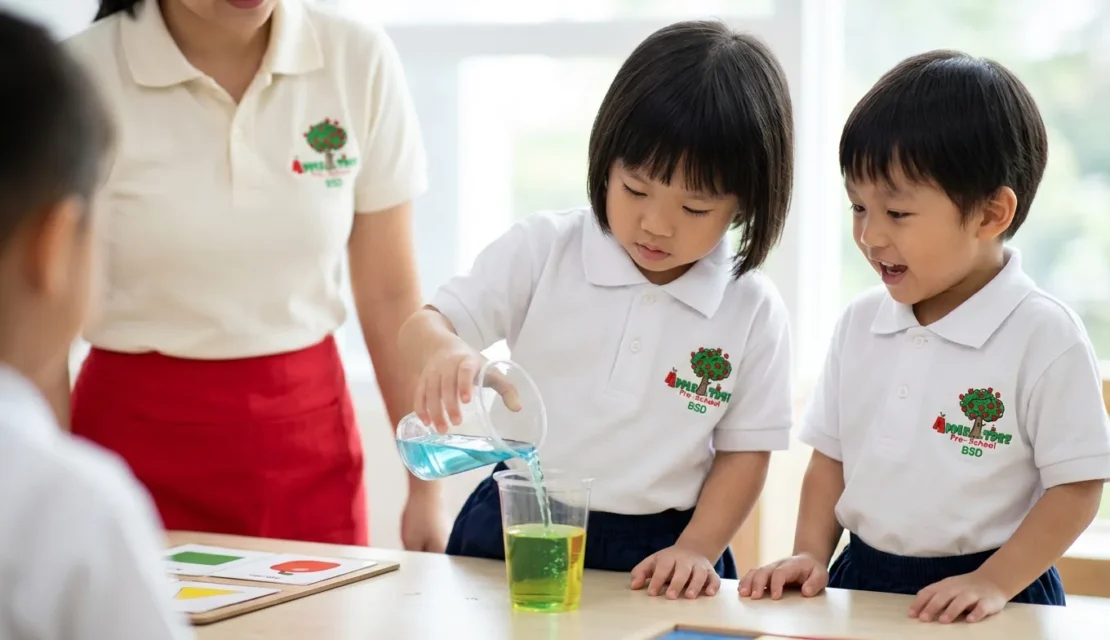
9. Simple science experiments
Try sinking and floating, color mixing, or watching seeds grow in cotton. Preschool science does not need to be fancy. It just needs to invite children to notice and wonder.
These activities build observation, questioning, and early scientific thinking. You also get the joy of hearing your child say “Look what happened” with complete astonishment.
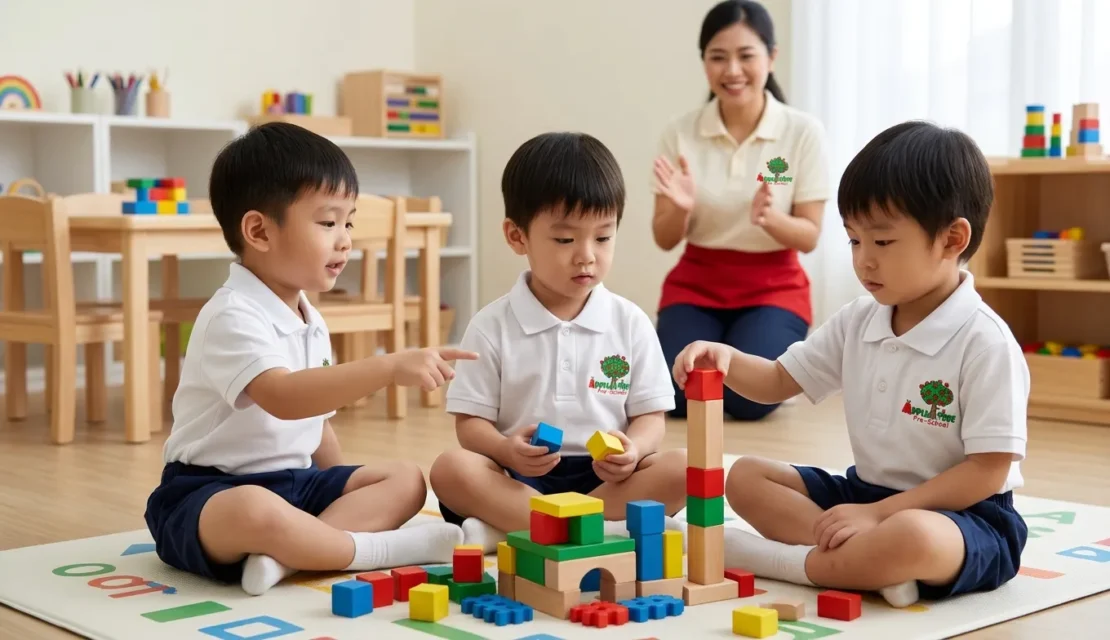
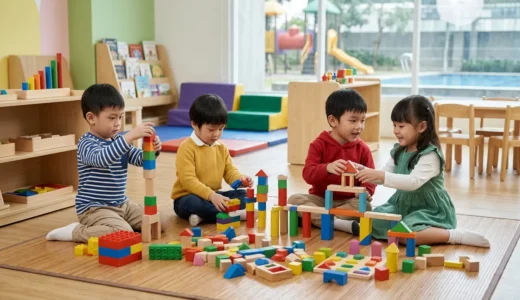
10. Building with blocks
Blocks are classic for a reason. Children learn about balance, size, shape, and spatial awareness while building towers, roads, homes, or highly unstable masterpieces.
Block play supports problem solving and persistence. When a tower falls and your child tries again, that is learning in action.
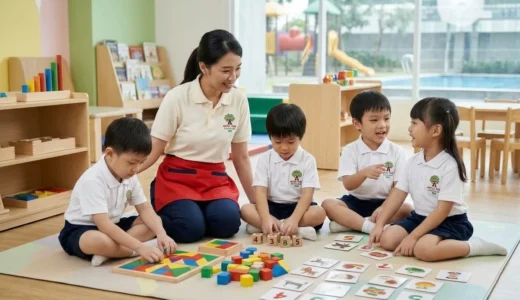
11. Matching and memory games
Use cards, objects, or pictures to create matching games. Children can match shapes, animals, colors, or everyday objects.
These preschool activities strengthen memory, attention, and visual discrimination. They are simple, effective, and easy to repeat without much setup.
12. Puzzle time
Age appropriate puzzles help children think carefully, notice details, and stick with a challenge. They also build patience, which we all appreciate in the long run.
You can start with large knob puzzles and gradually move to more complex ones. The sense of accomplishment is often huge.
Preschool Activities for Motor Skills and Social Growth
Children do not learn only with their minds. They learn with their hands, feet, voices, and whole bodies. That is why movement based preschool activities are so valuable.
13. Playdough creations
Playdough is wonderful for strengthening little hands. Rolling, pinching, flattening, and shaping all support fine motor skills that later help with writing and self help tasks.
Invite your child to make letters, food, animals, or funny faces. The process matters more than the final result, which is good news for every mysterious blob ever created.
14. Obstacle courses
Create a simple obstacle course with cushions, tape lines, tunnels, or chairs. Children can crawl under, jump over, tiptoe across, and move from one point to another.
This type of play supports gross motor coordination, listening, and body awareness. It also helps energetic children channel their movement in a purposeful way.
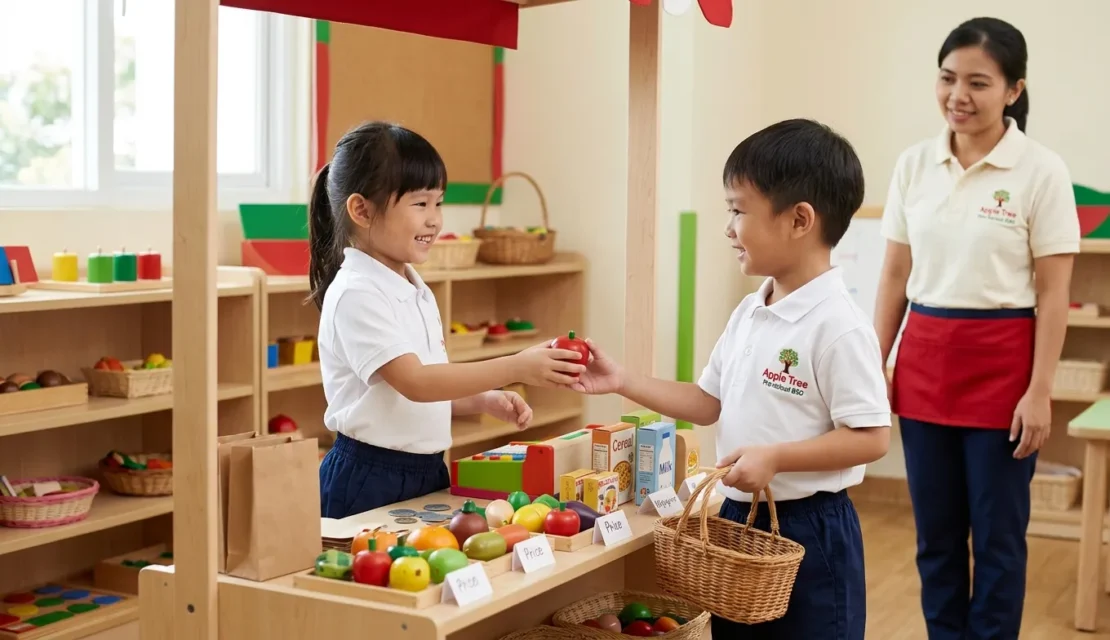
15. Pretend shop play
Set up a mini shop with toy food, bags, play money, and simple labels. Children can take turns being the shopkeeper and customer.
Pretend shop play combines language, counting, social skills, and creativity. It is one of those preschool activities that covers a surprising amount of learning while feeling completely playful.
Why Playful Learning Works So Well
Children learn better when they feel safe, interested, and involved. That is why playful routines often lead to stronger progress than overly rigid teaching methods. When learning is enjoyable, children participate more, remember more, and build positive feelings around discovery.
At Apple Tree Preschool BSD, we design learning experiences that support the whole child through English, Mathematics, Chinese, Creativity, Social Studies, Science, Bahasa, Moral, Music, Physical Education, and Phonics. Our Singapore curriculum helps children grow smart and happy together with parents, and you can explore our programs to see the best fit for your child’s age and stage.
Where Fun and Learning Grow Together
The beauty of preschool activities is that they help children learn without making learning feel heavy. A story basket can build vocabulary. A puzzle can strengthen patience. A pretend shop can support counting and communication. Small moments like these add up in powerful ways.
If you would like your child to enjoy this kind of warm, playful, and meaningful learning every day, we would love to welcome your family to Apple Tree Preschool BSD. To find out more, Chat with us on WhatsApp or call us at +62 888-1800-900. Register now and come play and learn with other children in a place where joyful learning truly comes to life.


Be the first to write a comment.