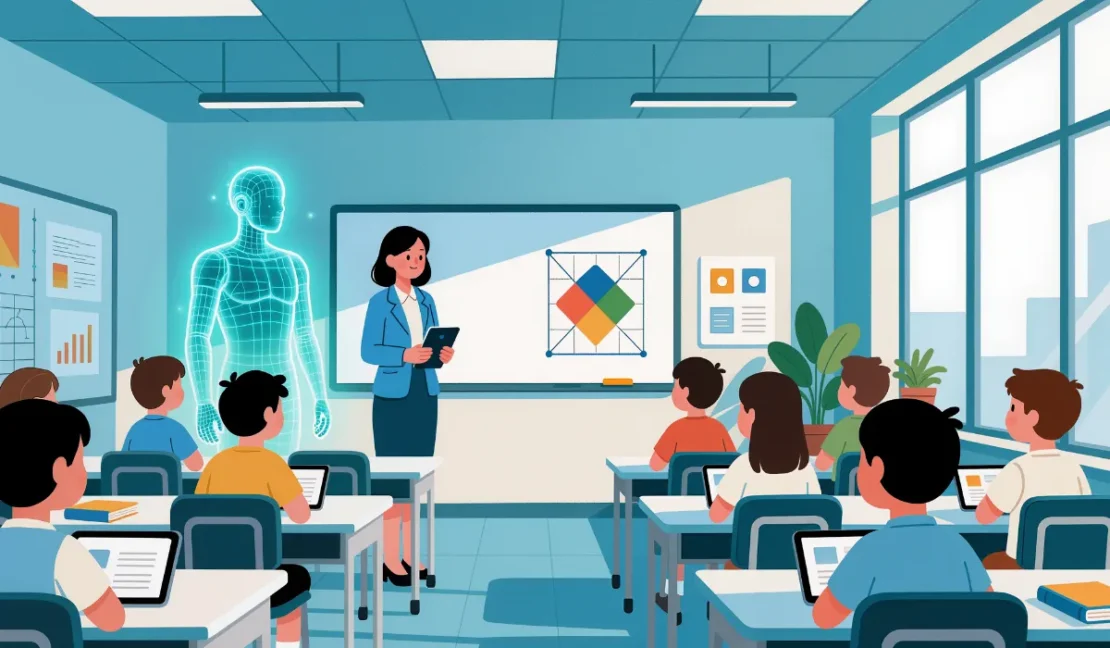
Your child asks you a question that stops you cold. “Mom, does Siri think like I do?” You pause, realizing you’re not entirely sure how to answer. Artificial intelligence kids encounter every single day, yet most parents struggle to explain it simply. The world children grow up in today is filled with technology that feels magical and mysterious. Teaching artificial intelligence kids concepts in ways they actually understand builds their confidence about the future.
Here’s what we’ve learned at Apple Tree Pre-School BSD. Children are naturally curious about technology surrounding them. They see smart speakers, voice recognition on tablets, and recommendation systems on apps. Rather than avoiding these topics, we’ve discovered that introducing artificial intelligence kids to these ideas early, in age-appropriate ways, actually builds their confidence and curiosity. Your child doesn’t need to become a programmer. They simply need to understand the world they’re growing up in.
What Is Artificial Intelligence for Kids
Artificial intelligence kids need simple, concrete explanations before anything complex. Think of AI like teaching your child to recognize dogs. At first, they think all four-legged animals might be dogs. Over time, they learn to spot the differences between dogs, cats, and rabbits. Computers learn similarly by seeing many examples. Artificial intelligence kids can grasp this concept when you use their own learning as the example.
The beauty of explaining artificial intelligence kids is using examples from their daily lives. Your artificial intelligence kids encounters AI constantly without realizing it. When YouTube recommends videos, that’s AI working. When the tablet recognizes your child’s face to unlock, that’s AI too. When autocorrect fixes spelling mistakes, that’s artificial intelligence kids in action. Connecting these daily experiences to the concept of AI makes learning feel relevant and real.
Breaking Down Artificial Intelligence Kids Concepts Simply
Three foundational ideas matter most when teaching artificial intelligence kids. First, artificial intelligence kids should know that AI is made by people, not magic. Real humans created these tools through thinking and hard work. This understanding empowers artificial intelligence kids to see AI as something humans built, meaning other humans can improve it or fix problems with it.
Second, artificial intelligence kids should understand that AI learns from examples. When artificial intelligence kids sees a computer recognizing a cat, they can learn that the computer studied many pictures of cats first. This concept translates beautifully because artificial intelligence kids learn the same way through repetition and examples. Your child doesn’t need statistics. They simply need to grasp that seeing many examples helps anyone improve.
Third, artificial intelligence kids need to know that AI isn’t perfect. Computers make mistakes sometimes, and that’s completely normal and fixable. This prevents artificial intelligence kids from developing unrealistic expectations about technology. Children who understand limitations think more critically about what technology can and cannot do.
Why Artificial Intelligence Kids Learn Best Through Play
You don’t need special materials to teach artificial intelligence kids about AI at home. Simple activities work beautifully when introducing artificial intelligence kids to these ideas:
- Play sorting games where artificial intelligence kids categorizes objects by color, size, or shape, then explain how computers learn these sorting rules
- Play guessing games where you describe something and artificial intelligence kids figures out what it is, mirroring how AI recognition works
- Ask “What would a computer need to learn to do this?” when artificial intelligence kids watches cooking or crossing the street
- Let artificial intelligence kids draw pictures and use programs that identify what they drew
- Sort objects together and discuss how a computer could learn to do this task by seeing many examples
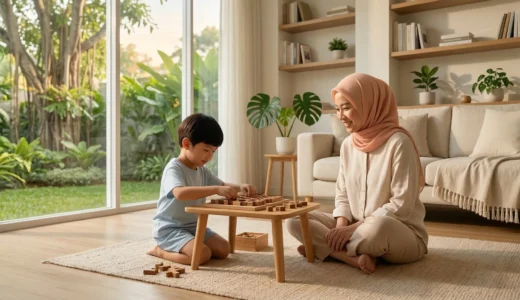
These activities help artificial intelligence kids develop systems-thinking skills naturally. They’re playful, engaging, and build intuition about how technology works without screen time. Your child learns that artificial intelligence kids is logical, learnable, and understandable.
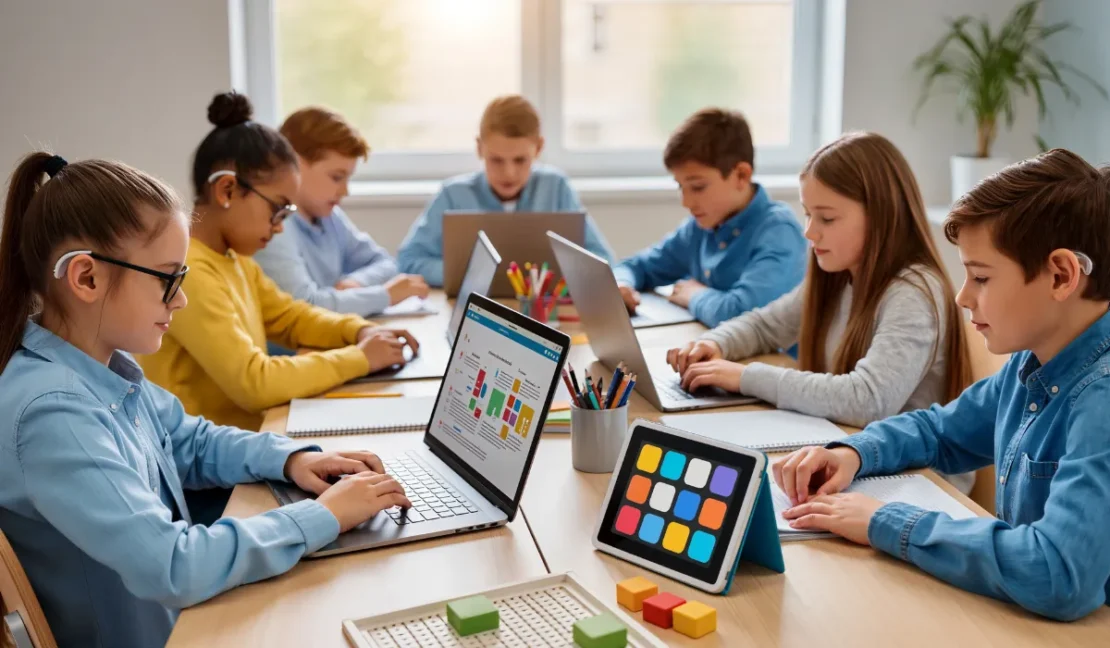
Image Source: Canva
Artificial Intelligence Kids in Modern Education
Teaching artificial intelligence kids concepts early isn’t optional anymore. These skills are foundational for your child’s future success. Artificial intelligence kids who understand AI fundamentals will have advantages in virtually every field. They’ll understand the tools they use daily. They’ll make better decisions about technology. They’ll be prepared for jobs that haven’t been invented yet but will likely involve AI somehow.
We’re living through a technology shift as significant as the Industrial Revolution. That transformation changed every job, every school, every industry. Artificial intelligence kids now face a similar transformation happening right now. Children entering kindergarten today will work with AI throughout their careers. Preparing artificial intelligence kids with foundational understanding gives them confidence instead of fear about their technological future.
Building Digital Literacy for Artificial Intelligence Kids
Digital literacy for artificial intelligence kids means understanding how technology works, not just using it. Many children learn to tap screens intuitively but never learn how applications actually function. Artificial intelligence kids who understand the thinking behind technology become better critical thinkers. They question why algorithms recommend certain content. They think about privacy when using apps. They make more thoughtful choices about technology use.
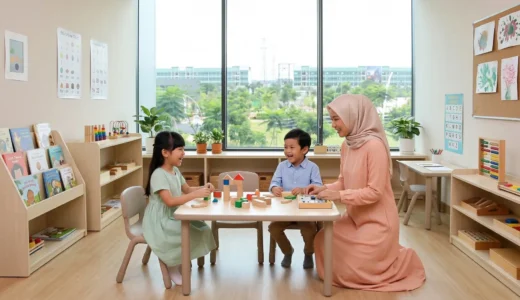
At Apple Tree Pre-School BSD, we weave technology understanding naturally into our Singapore curriculum. Artificial intelligence kids in our programs learn through play, exploration, and hands-on activities. We don’t put young artificial intelligence kids in front of screens to teach AI concepts. We use real-world experiences to build understanding. Our classes for ages 1.5 through 6 introduce artificial intelligence kids to problem-solving, pattern recognition, and logical thinking, which are foundational to understanding AI.
Problem-Solving Skills Through Artificial Intelligence Kids Learning
Teaching artificial intelligence kids about AI builds problem-solving skills that transfer everywhere. Artificial intelligence kids who understand that computers solve problems systematically develop similar thinking patterns. They learn to break big problems into smaller pieces. They practice recognizing patterns in information. They develop logical thinking about cause and effect.
Artificial intelligence kids also learn that multiple solutions exist for the same problem. Children in our classrooms explore different approaches to challenges. They see that their first idea might not be the only idea. This builds creative confidence in artificial intelligence kids. They become comfortable trying different approaches and learning from what doesn’t work.
Common Questions Parents Ask About Artificial Intelligence Kids
Many parents worry that discussing artificial intelligence kids makes childhood too serious or technical. Actually, the opposite happens. Artificial intelligence kids who understand technology feel less anxious about it. They’re curious rather than intimidated. Young artificial intelligence kids ask wonderful questions when they understand AI is something humans created and can understand.
Some parents worry that teaching artificial intelligence kids concepts will mean more screen time. Actually, understanding artificial intelligence kids works best through minimal screens. Artificial intelligence kids learn through sorting games, pattern activities, drawing, and conversations. We prioritize play-based learning where artificial intelligence kids discover concepts through physical experience. This approach keeps artificial intelligence kids engaged with the real world while building AI understanding.
Frequently Asked Questions About Artificial Intelligence Kids
Q: What’s the right age to start teaching artificial intelligence kids?
You can introduce artificial intelligence kids concepts as early as age three or four. Keep explanations concrete and simple. Use examples from their daily lives. Artificial intelligence kids in our Nursery and Kindergarten programs naturally encounter AI concepts through play and activities.
Q: Will teaching artificial intelligence kids about AI make them less creative?
Not at all. Understanding artificial intelligence kids actually enhances creativity. Artificial intelligence kids who grasp how AI works imagine new possibilities for technology. They think about how AI could solve problems they care about.
Q: How do I explain artificial intelligence kids without using technical terms?
Use analogies from your child’s experience. Compare artificial intelligence kids learning to how your child learns. Use activities like sorting, patterns, and guessing games. Talk about devices your artificial intelligence kids uses daily.
Q: Isn’t artificial intelligence kids risky or dangerous for young children?
Understanding artificial intelligence kids actually helps children develop healthy relationships with technology. Artificial intelligence kids who understand how things work make better choices about what they use. They develop critical thinking rather than blind trust.
How We Nurture Artificial Intelligence Kids at Apple Tree
At the Educenter BSD Building, we’re committed to preparing artificial intelligence kids thoughtfully. Our programs integrate technology understanding naturally throughout our curriculum. We believe every child deserves to grow up comfortable and curious about the world around them, including the technology increasingly present in it.
Our Toddler programs, available 2x/week or 3x/week for ages 1.5-2, focus on exploration and sensory discovery. Pre-Nursery children age 2-3 begin recognizing patterns and engaging in problem-solving play. Nursery students age 3-4 start understanding cause and effect through hands-on activities. Kindergarten 1 children age 4-5 develop logical thinking and creative problem-solving skills. Kindergarten 2 students age 5-6 combine these abilities to tackle complex challenges. Artificial intelligence kids learning happens across all our programs through age-appropriate activities and guided discovery.
We keep class sizes small intentionally. Our Toddler classes have only 12 children, Pre-Nursery has 16, and Nursery through Kindergarten 2 have 20. This means every artificial intelligence kids gets genuine attention and individual support. Our teachers observe how each child thinks. They ask questions that deepen artificial intelligence kids understanding. They celebrate creative thinking and brave attempts.
Starting Artificial Intelligence Kids Learning at Home
Helping your child understand artificial intelligence kids starts with simple conversations. It continues through play, exploration, and answering their questions honestly. It flourishes in environments where artificial intelligence kids feel safe to wonder, ask, and discover. Whether you’re teaching artificial intelligence kids at home or seeking a school that understands these needs, the important thing is starting now.
You don’t need advanced knowledge to help your artificial intelligence kids. You simply need curiosity and willingness to explore together. Ask your child questions about the technology they use. Let them lead investigations. Celebrate their questions and thinking. Show genuine interest in how artificial intelligence kids solve problems.
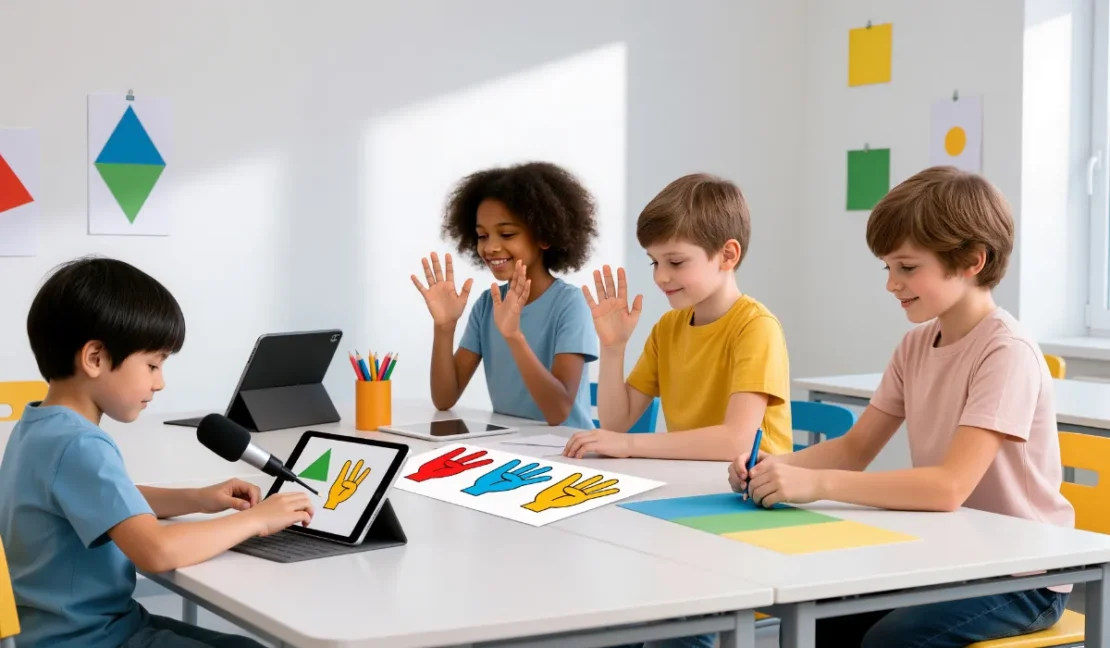
Image Source: Canva
Preparing Your Child for an AI-Driven Future
The world artificial intelligence kids will inhabit is fundamentally shaped by technology. Your child won’t have the option of ignoring artificial intelligence kids or avoiding it. But they can grow up comfortable with it, curious about it, and thoughtful in how they use it. That’s our mission in preparing artificial intelligence kids.
Artificial intelligence kids who understand these concepts early develop real confidence. They see AI as something humans created that they can eventually understand and perhaps even shape. Instead of feeling overwhelmed by technology, artificial intelligence kids feel empowered by it. They ask smarter questions. They make better decisions. They become the kind of citizens and workers the future actually needs.
Ready to help your child become comfortable and curious about artificial intelligence kids? Visit Apple Tree Pre-School BSD and discover how we integrate modern skills into play-based learning. See how our teachers help artificial intelligence kids develop confidence with technology through exploration and hands-on activities.
Schedule a visit to our classrooms at the Educenter BSD Building and experience our approach to preparing artificial intelligence kids for their futures. Watch how children naturally learn about technology, problem-solving, and critical thinking through play and discovery.
Send us a WhatsApp message or call us at +62 888-1800-900 to learn more about our programs for artificial intelligence kids. Register your child in our Toddler, Pre-Nursery, Nursery, or Kindergarten programs today. Give your child the gift of growing up curious, confident, and prepared for a world shaped by artificial intelligence kids! 🚀💻✨