
Last Friday, six-year-old Maya from our Kindergarten 2 class did something that made us all pause and take notice. During our chess enrichment activity, she was losing badly to her friend when suddenly she stopped, studied the board for a full minute, and announced, “Wait! I see something!” Three moves later, she had turned the entire game around with a brilliant strategy that surprised even our chess instructor. That moment perfectly captured why chess benefits for kids extend so far beyond just learning to move pieces around a board.
At Apple Tree Pre-School BSD, we’ve integrated chess into our creativity curriculum because we’ve witnessed firsthand how this ancient game transforms young minds. Children who learn chess don’t just develop strategic thinking skills, they become better problem-solvers, more patient decision-makers, and surprisingly, more confident in facing challenges throughout their daily lives.
Here’s what we’ve discovered about introducing chess to preschoolers and early elementary students. You don’t need to wait until children are older to start teaching them this incredible mental sport. Young minds are actually perfectly equipped to grasp chess concepts, and the cognitive benefits they gain create foundations for success in academics, social situations, and life in general.
Cognitive Development Through Strategic Thinking
Chess benefits for kids become most apparent in how the game develops critical thinking and analytical skills that transfer directly to academic performance. In our classrooms at the Educenter BSD Building, we see children who play chess regularly demonstrate enhanced problem-solving abilities across all subject areas, from mathematics to creative writing.
The game naturally teaches children to think several steps ahead, considering cause and effect relationships that strengthen their logical reasoning capabilities. When four-year-old Arif learns that moving his knight will expose his queen, he’s developing the same analytical thinking skills that help him understand story sequences in reading or multi-step problems in mathematics.
Pattern recognition skills developed through chess play support learning in numerous areas, particularly mathematics and science. Children who regularly identify chess patterns become better at recognizing number patterns, geometric relationships, and scientific cause-and-effect sequences.
Chess also builds what educators call “executive function” skills, the mental processes that include working memory, flexible thinking, and self-control. These foundational cognitive abilities determine how well children can focus, follow directions, and manage multiple tasks simultaneously.
Memory Enhancement and Focus Development
Regular chess play dramatically improves children’s ability to concentrate for extended periods while managing complex information. We’ve observed that children who participate in our chess activities show improved attention spans during other classroom activities and better retention of academic material.
The game requires players to remember multiple rules, piece movements, and strategic principles simultaneously, providing excellent exercise for developing memory systems. When children internalize chess rules and begin recognizing common patterns, they’re strengthening the same memory processes that support vocabulary acquisition and mathematical fact retention.
Visual-spatial memory gets particular reinforcement through chess as children learn to visualize potential moves and remember board positions. This mental skill transfers beautifully to geometry, map reading, and even artistic composition understanding.
Logical Reasoning and Problem-Solving Skills
Chess presents children with constantly changing problems that require systematic analysis and creative solution-finding. Unlike many games that rely on luck, chess rewards careful thinking and strategic planning, teaching children that consistent effort and good reasoning lead to success.
The game naturally teaches children to evaluate multiple options before making decisions, a skill that serves them well in academic settings and social situations. When children learn to compare different chess moves and choose the best option, they’re practicing the same analytical process needed for essay writing, science experiments, and conflict resolution.
Each chess game provides dozens of mini-problems that children must solve under time pressure, building their confidence in tackling challenging situations. This problem-solving practice creates mental flexibility that helps children approach new academic challenges with greater confidence and persistence.
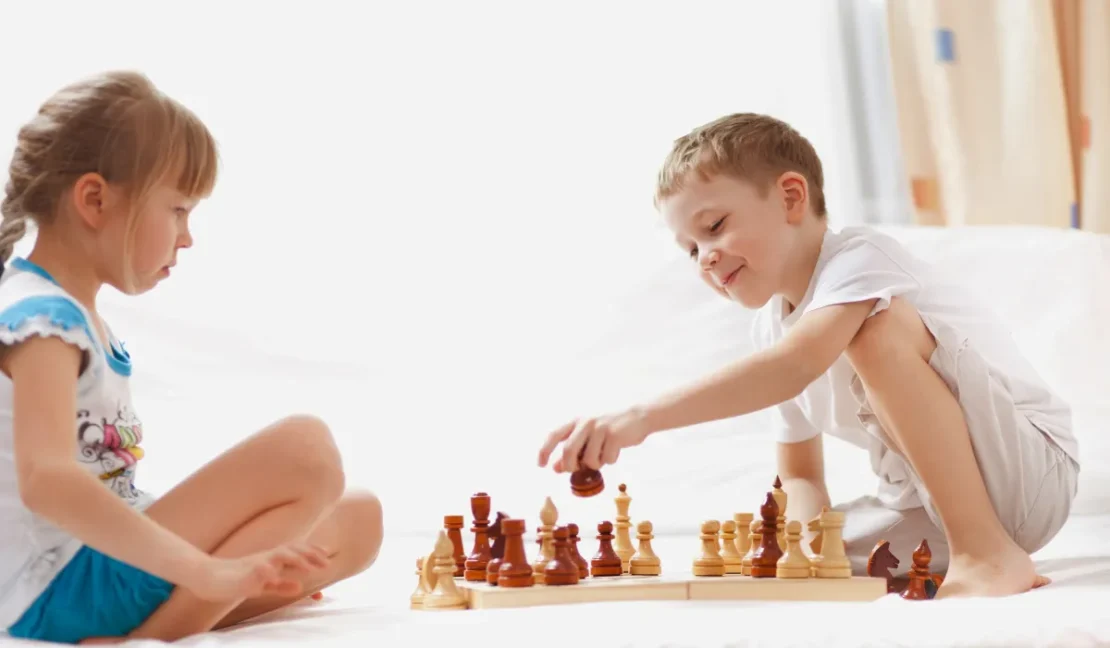
Image Source: Canva
Social and Emotional Growth Through Chess
Beyond cognitive benefits, chess provides excellent opportunities for developing social skills, emotional regulation, and character building. Children learn to win graciously, lose with dignity, and respect opponents regardless of the game outcome.
The game teaches patience and delayed gratification as children learn that rushing moves often leads to mistakes. This self-control practice transfers to better classroom behavior, improved focus during academic tasks, and enhanced ability to work through challenging assignments without giving up.
Chess naturally builds resilience as children learn that losing games provides learning opportunities rather than reasons for discouragement. When children understand that even strong players lose regularly, they develop healthier attitudes toward mistakes and setbacks in other areas of life.
Building Confidence and Self-Esteem
Chess success depends entirely on thinking and effort rather than physical attributes, giving all children equal opportunities to excel regardless of size, strength, or athletic ability. This creates particularly valuable confidence-building opportunities for children who might struggle with traditional sports.
The individual nature of chess means that children experience personal achievement based on their own improvement rather than team success. When five-year-old Sari successfully executes a strategy she’s been practicing, her sense of accomplishment belongs entirely to her effort and learning.
Regular chess play helps children develop accurate self-assessment skills as they learn to evaluate their own play and identify areas for improvement. This honest self-reflection builds authentic confidence based on real capabilities rather than empty praise.
Cultural Values and Respect Development
Chess teaching naturally incorporates values that resonate strongly with Indonesian families, including respect for opponents, gracious behavior, and appreciation for wisdom and strategy over aggression. Children learn that success comes through thoughtful planning rather than emotional reactions.
The game’s emphasis on learning from more experienced players aligns beautifully with Indonesian values about respecting elders and learning from those with greater knowledge. Children naturally seek advice from stronger players and appreciate guidance from adults.
Chess communities typically emphasize good sportsmanship, honesty, and mutual respect, creating positive social environments where children learn valuable character lessons alongside strategic thinking skills.
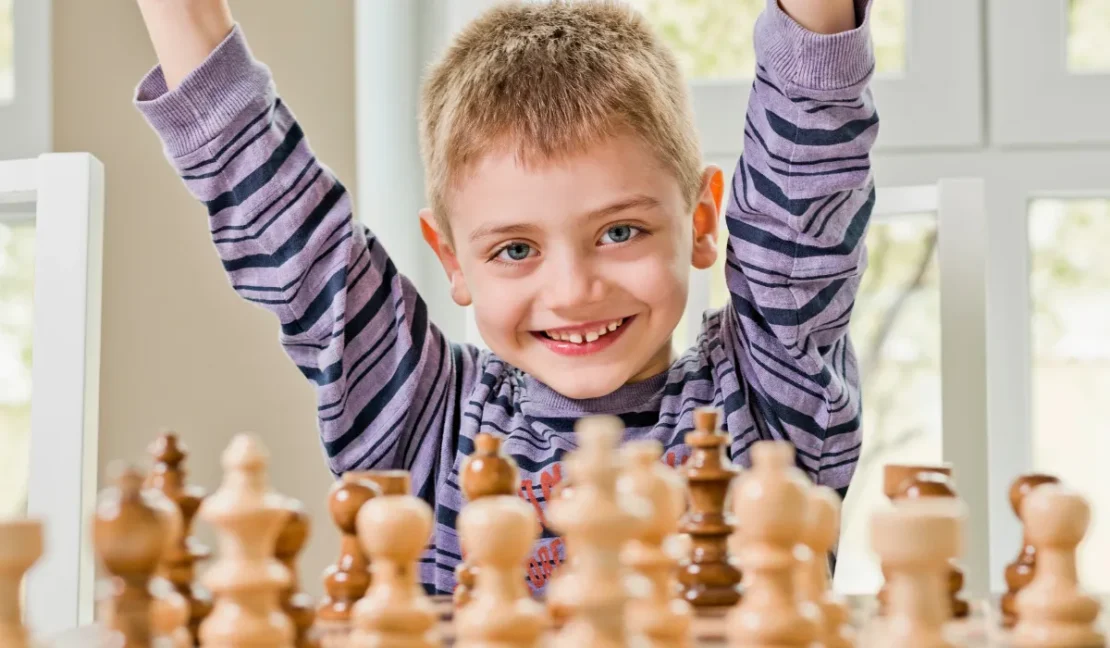
Image Source: Canva
Academic Performance Enhancement
Research consistently shows that children who learn chess demonstrate improved performance across academic subjects, particularly mathematics, reading comprehension, and scientific reasoning. The analytical thinking skills developed through chess play transfer directly to academic problem-solving situations.
Mathematical concepts become more intuitive for children who understand chess strategy because both require pattern recognition, logical sequencing, and systematic analysis. Children who can calculate chess combinations often find algebraic thinking and geometric proofs much more accessible.
Reading comprehension improves as children develop better analytical thinking skills and enhanced ability to understand complex relationships between different elements in stories or informational texts.
Time Management and Planning Skills
Chess teaches children to manage time effectively while making quality decisions under pressure. These time management skills transfer directly to test-taking situations, project completion, and homework organization.
The planning aspects of chess strategy help children understand how short-term actions connect to long-term goals, a crucial skill for academic success and life planning. Children learn to work backward from desired outcomes to identify necessary steps.
Strategic thinking developed through chess helps children approach large academic projects by breaking them into manageable components and creating step-by-step plans for completion.
Chess benefits for kids extend far beyond learning an entertaining game, providing cognitive, social, emotional, and academic advantages that last throughout their lives. At Apple Tree Pre-School BSD, we’ve seen how chess education enhances children’s overall development while building confidence, analytical thinking skills, and character.
The goal isn’t to create chess masters but rather to use this powerful educational tool to develop well-rounded children who can think critically, solve problems creatively, and approach challenges with confidence and persistence. When children learn chess in supportive, educational environments, they gain mental tools that serve them in every area of their development.
Our comprehensive programs integrate enriching activities like chess naturally throughout our curriculum, ensuring children develop strong cognitive skills alongside traditional academic knowledge.
Ready to give your child the cognitive advantages that chess education provides? We’d love to show you how our approach to chess instruction builds thinking skills, character, and confidence while keeping learning enjoyable and age-appropriate. Send us a WhatsApp message or give us a call at +62 888-1800-900.
Come play and learn with other children, because great thinkers are made through great challenges and strategic fun! ♟️🧠✨