Last Thursday, something caught my attention that made me realize we urgently need to discuss brain rot in children definition with our parent community. Three-year-old Alex was sitting in our reading corner, but instead of looking at his picture book, he was rapidly flipping pages every few seconds while making sound effects that mimicked the quick transitions he’d seen in online videos. When I offered to read the story with him, he looked genuinely confused and said, “But Miss, where are the funny parts that change really fast?” That moment made my heart sink as I realized how deeply rapid-fire digital content was rewiring his expectations for all forms of entertainment and learning.
Here at Apple Tree Pre-School BSD, we’re seeing more children whose attention patterns and learning preferences have been shaped by what researchers are calling “brain rot” content. Understanding brain rot in children definition isn’t about demonizing technology, it’s about recognizing how certain types of digital content can interfere with healthy brain development during these crucial early years.
The term “brain rot” describes the cognitive effects of consuming low-quality, highly stimulating digital content that provides instant gratification without requiring sustained attention or meaningful engagement. For young children whose brains are still developing critical thinking and attention regulation systems, exposure to this type of content can create lasting changes in how they process information and engage with the world around them.
1. Understanding Brain Rot in Children Definition and Impact
Brain rot in children definition encompasses more than just watching too much screen time. It specifically refers to exposure to rapid-fire, high-stimulation content that trains developing brains to expect constant entertainment without the effort typically required for learning and growth.
At our location in the Educenter BSD Building, we’ve observed distinct patterns in children who’ve been exposed to brain rot content. These children often struggle with activities that require sustained attention, show preference for passive entertainment over active engagement, and have difficulty finding satisfaction in slower-paced learning experiences.
The concerning aspect isn’t just the immediate behavioral effects, but the potential long-term impact on neural pathway development. Young brains are incredibly adaptable, and repeated exposure to rapid stimulation patterns can create preferences that interfere with traditional learning approaches and deep thinking skills.
The Neuroscience Behind Digital Content Effects
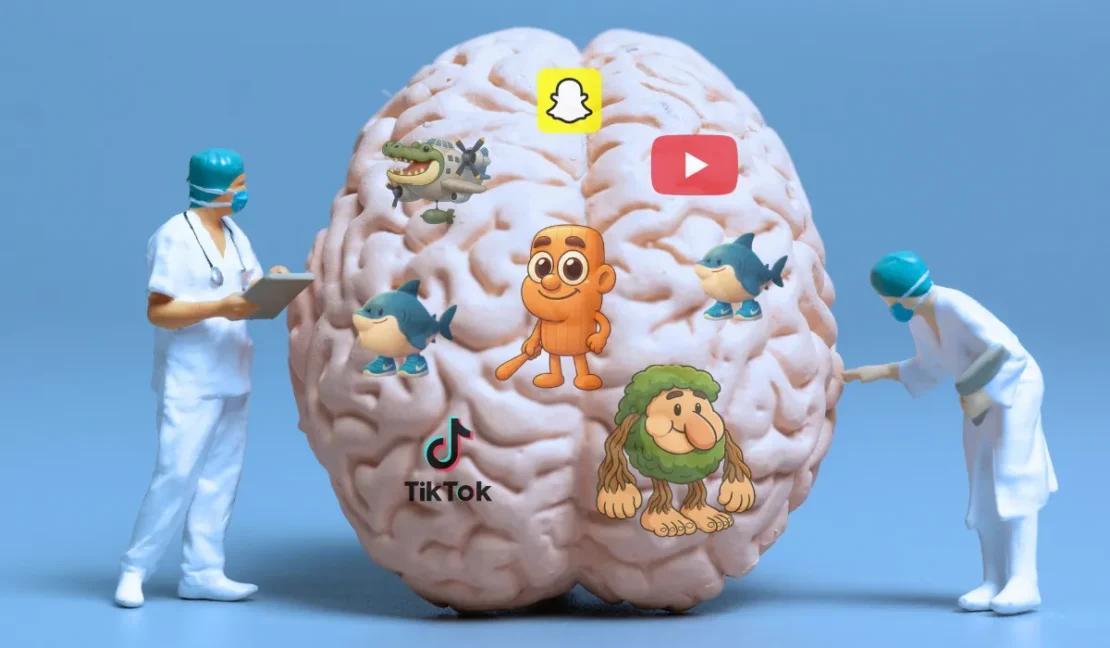
Research shows that developing brains respond differently to various types of stimulation, with high-speed, rapidly changing content triggering dopamine releases that can become addictive patterns. Children’s brains are particularly vulnerable because their impulse control and decision-making areas are still developing.
When young children consume brain rot content regularly, their neural pathways begin to prioritize immediate gratification over delayed satisfaction. This can affect everything from their ability to listen to stories to their willingness to work through challenging puzzles or learning activities.
The prefrontal cortex, responsible for attention regulation and executive function, requires practice with sustained focus to develop properly. Brain rot content provides the opposite experience, potentially interfering with these crucial developmental processes.

Image Source: Canva
2. Identifying Brain Rot Content Characteristics
Understanding brain rot in children definition requires recognizing the specific characteristics that make certain digital content particularly problematic for developing minds. Not all screen time creates equal effects, and parents need clear guidelines for identifying potentially harmful content.
Key Characteristics of Brain Rot Content:
- Extremely rapid scene changes or transitions occurring every few seconds
- High-volume, overstimulating audio with constant sound effects or music
- Repetitive, mindless content that requires no active engagement or thinking
- Bright, flashing colors designed to capture and hold attention artificially
- Content that encourages passive consumption rather than interaction or learning
- Material that provides instant gratification without building skills or knowledge
The algorithm-driven nature of many platforms means that once children start consuming this type of content, they’re likely to see more of it. The systems are designed to maximize engagement time, not support healthy development.
3. Age-Specific Vulnerabilities to Brain Rot
Different age groups show varying susceptibility to brain rot effects, with younger children being particularly vulnerable due to their developmental stage. Toddlers and preschoolers lack the cognitive filters that might help older children process rapid-fire content more critically.
Children in our programs between ages 2-4 show the most dramatic behavioral changes when exposed to brain rot content. Their developing attention systems are easily overwhelmed by overstimulation, leading to difficulties with focus during learning activities.
Kindergarten-age children may seem less affected initially, but they often struggle with patience, sustained effort, and finding satisfaction in activities that don’t provide immediate rewards or entertainment.
4. Observable Effects on Learning and Behavior
The impact of brain rot content on young children shows up in predictable patterns that parents and educators can learn to recognize. These effects often appear gradually, making it easy to miss the connection between content consumption and behavioral changes.
Children affected by brain rot often show decreased patience for activities requiring sustained attention. Picture book reading becomes difficult, puzzle-solving feels frustrating, and creative play seems boring compared to the high-stimulation entertainment they’ve become accustomed to experiencing.
Impact on Social and Emotional Development
Brain rot content consumption can interfere with social skill development because it typically involves solitary, passive entertainment rather than interactive experiences. Children miss opportunities to practice conversation skills, emotional regulation, and cooperative play.
We’ve noticed that children heavily exposed to brain rot content often struggle with emotional regulation when faced with boredom or frustration. They’ve become accustomed to external stimulation managing their emotional states rather than developing internal coping skills.
The performative nature of much brain rot content can also affect how children view social interactions, sometimes leading them to expect constant entertainment or to treat relationships as sources of stimulation rather than meaningful connections.
Effects on Academic Readiness
Traditional academic skills require sustained attention, patience with gradual progress, and satisfaction from effort-based achievement. Brain rot content works against all of these foundational learning skills.
Children affected by brain rot often show difficulties with phonics instruction, which requires careful attention to subtle sound differences. They may struggle with math concepts that build gradually or science experiments that unfold slowly over time.
The most concerning effect is often a decreased intrinsic motivation for learning. When children become accustomed to external stimulation managing their engagement, they may struggle to find internal motivation for educational activities.
5. Protecting Children from Brain Rot Effects
Understanding brain rot in children definition empowers parents to make informed choices about their family’s digital consumption habits. The goal isn’t to eliminate technology entirely but to choose content that supports rather than undermines healthy development.
Focus on interactive, educational content that requires active participation rather than passive consumption. Look for programs that encourage children to respond, create, or engage with the material in meaningful ways.
Creating Healthy Digital Habits
Establish clear boundaries around screen time that prioritize high-quality content over quantity. Short periods of carefully chosen educational programming often provide more benefit than longer sessions of brain rot content.
Balance digital content with plenty of hands-on, real-world experiences that naturally build attention spans and engagement skills. Art activities, building projects, nature exploration, and cooperative games provide the type of sustained engagement that supports healthy brain development.

Image Source: Canva
6. Building Resilience Against Digital Overwhelm
Prevention and intervention strategies for brain rot effects focus on strengthening children’s natural capacity for sustained attention and intrinsic motivation. These skills serve as protective factors against various forms of digital overwhelm.
Teach children to recognize their own attention and engagement levels. Help them notice the difference between feeling genuinely interested and satisfied versus feeling stimulated but empty after content consumption.
Understanding brain rot in children definition helps families navigate our digital world while protecting young minds during crucial developmental periods. At Apple Tree Pre-School BSD, we believe that awareness and intentional choices can help children develop healthy relationships with technology while maintaining the deep learning and authentic engagement that support lifelong success.
The key lies in recognizing that not all digital content affects developing brains equally. By choosing wisely and balancing screen time with rich, hands-on experiences, we can help children thrive in our connected world.
Ready to give your child protection against brain rot while building strong learning foundations? We’d love to discuss how our approach supports healthy attention development and intrinsic motivation for learning. Send us a WhatsApp message or give us a call at +62 888-1800-900.
Come play and learn with other children, because healthy minds are built through meaningful experiences and genuine engagement! 🧠💚✨