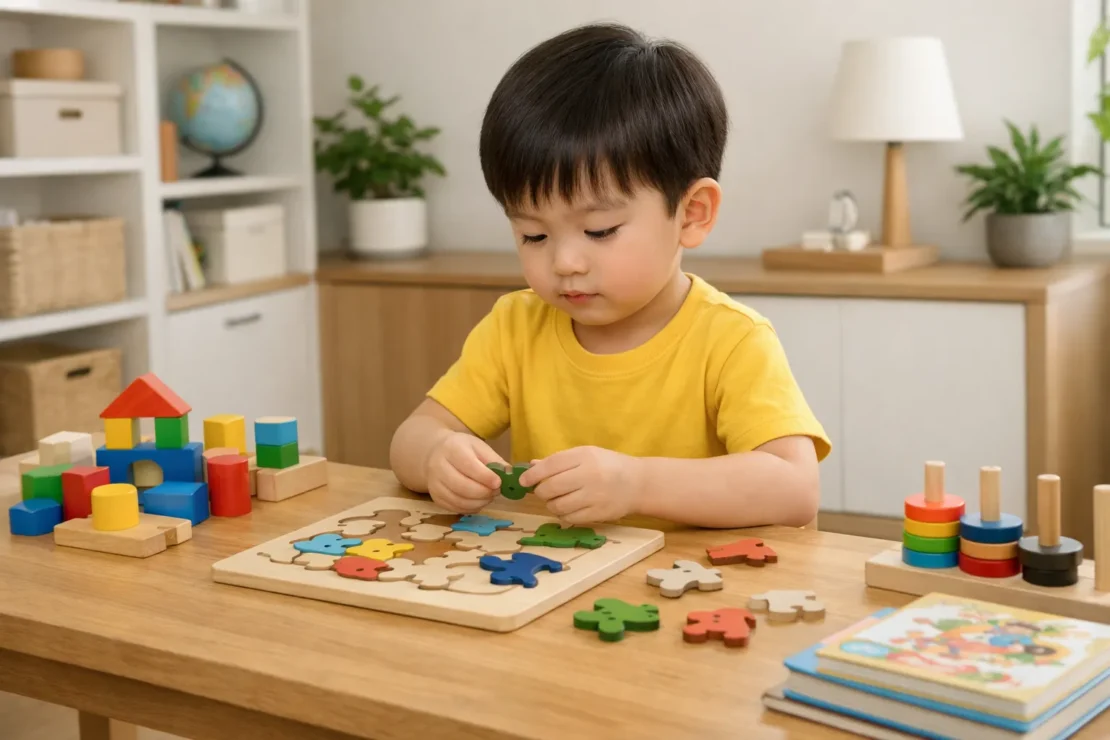
Last week, I watched three-year-old Rafa stare at a puzzle for what felt like forever. He turned pieces this way and that way repeatedly. His tongue poked out in concentration, absolutely adorable and determined. Then suddenly, his face lit up as a piece finally fit perfectly into place.
That moment captured something really important about logical thinking in kids. It wasn’t about getting the answer right immediately. It was about the process, the problem-solving, the persistence. It was about Rafa developing his brain in ways that would serve him forever.
Many parents ask us how they can help their children develop logical thinking in kids naturally. They wonder if it requires special programs or expensive materials. They worry they might not be doing enough. The truth is, logical thinking in kids develops beautifully through everyday activities and play.
At Apple Tree Pre-School BSD, we’ve made developing logical thinking in kids central to everything we do. We weave it throughout our Singapore curriculum seamlessly. We create environments where children puzzle things out, explore possibilities, and discover patterns. We believe that strong logical thinking in kids forms the foundation for academic success and problem-solving throughout life.
The Educenter BSD Building houses our classrooms where logical thinking in kids happens naturally through play. We don’t force it or make it feel like a chore. Instead, we invite children to think, question, and explore. We celebrate their curiosity and encourage their natural drive to understand how things work.
Logical Thinking in Kids Develops Through Play and Exploration
Logical thinking in kids isn’t something that suddenly appears when they start school. It develops gradually from infancy through consistent exploration and problem-solving. Young children are natural scientists who want to understand their world. They test hypotheses without knowing they’re testing hypotheses. They observe cause and effect constantly.
When your toddler drops food from a high chair repeatedly, they’re developing logical thinking in kids. They’re observing that gravity works consistently. They’re experimenting with cause and effect. When your preschooler asks “Why?” for the hundredth time, they’re building logical thinking in kids. They’re seeking to understand the reasons behind what they observe.
We support logical thinking in kids by creating environments full of interesting materials. We provide blocks, puzzles, sorting toys, and open-ended play items. We let children explore freely without rushing them toward “correct” answers. This freedom to experiment builds genuine logical thinking in kids naturally over time.
How Logical Thinking in Kids Develops at Different Ages
Understanding how logical thinking in kids develops at each stage helps us support them better. Toddlers between 1.5 and 2 years are beginning basic logical thinking in kids. They understand simple cause and effect. They notice that certain actions produce specific results. They start sorting objects by one characteristic like color or size.
Pre-Nursery children aged 2 to 3 years develop more complex logical thinking in kids. They can follow simple sequences and understand what comes next. They begin matching objects and recognizing patterns. They ask questions constantly as they build logical thinking in kids foundations. They start understanding concepts like “more” and “less” through play and exploration.
Nursery children aged 3 to 4 years show increasingly sophisticated logical thinking in kids. They can solve simple problems and think through basic steps. They understand more complex cause and effect relationships. They sort objects by multiple characteristics simultaneously. They begin developing early mathematical and scientific thinking through play activities.
Kindergarten children aged 4 to 6 years demonstrate advanced logical thinking in kids. They can plan simple sequences and think ahead. They classify objects in multiple ways and understand hierarchies. They solve more complex puzzles and problems. They develop strategies and test different approaches when logical thinking in kids is needed.
Building Logical Thinking in Kids Through Sorting and Matching Activities
Sorting and matching activities build logical thinking in kids beautifully and naturally. These activities seem simple on the surface, but they develop critical thinking. When children sort objects by color, shape, size, or category, they practice logical thinking in kids. They learn to identify characteristics and organize information based on those characteristics.
We use sorting activities throughout our programs at every age level. Toddlers sort large items like colored balls and building blocks. Pre-Nursery children sort by multiple characteristics like shape and color together. Nursery and Kindergarten children create their own sorting categories and explain their thinking. This progression builds logical thinking in kids systematically as they grow.
At home, you can easily create sorting activities that develop logical thinking in kids. Use buttons, beads, dried beans, or pasta sorted by color. Sort laundry by colors and whites. Group toys by type or size. Sort fruits and vegetables at the market by type. Let your child take the lead and explain their categories. These everyday activities powerfully develop logical thinking in kids.
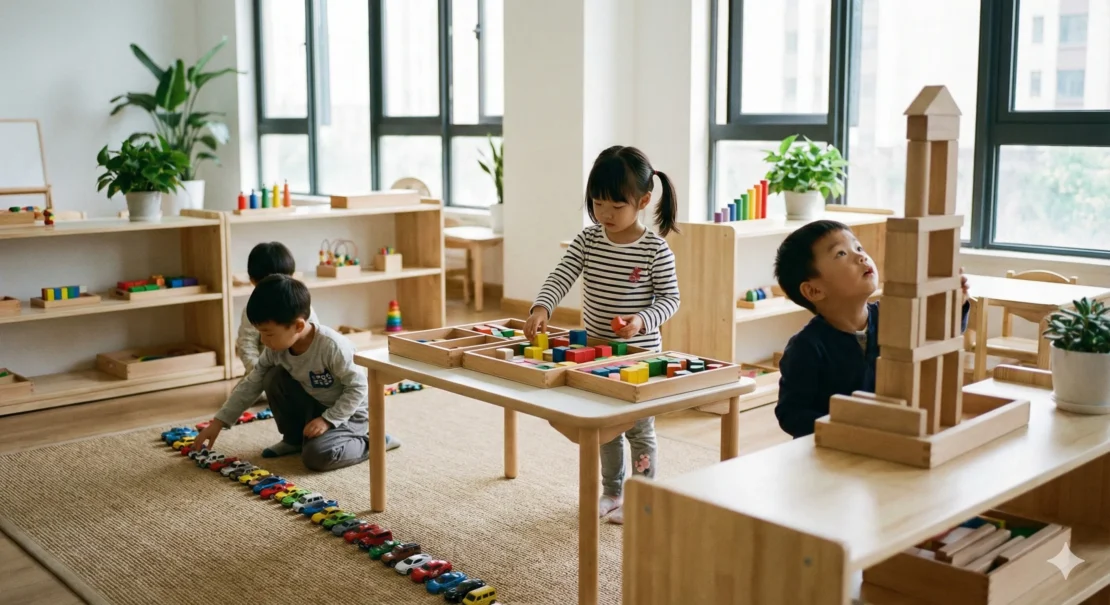
Image Source: Ai
Logical Thinking in Kids Through Pattern Recognition Activities
Patterns are everywhere in mathematics, nature, music, and art. When children recognize and extend patterns, they’re developing crucial logical thinking in kids. Pattern recognition teaches children to predict what comes next. It helps them understand order and sequence. It builds the foundation for mathematical thinking.
We introduce pattern activities starting in Pre-Nursery at Apple Tree Pre-School BSD. We use simple patterns first, like red, blue, red, blue. Children learn to identify the pattern and continue it. As they progress, patterns become more complex. We use patterns with shapes, colors, sounds, and movements. Every activity builds logical thinking in kids.
You can create pattern activities at home using simple materials. Make patterns with colored tape on the floor: red, red, blue, red, red, blue. Create patterns with toys or stuffed animals. Use beads to make pattern necklaces. Clap patterns: clap, clap, snap, clap, clap, snap. Sing pattern songs. These fun activities develop logical thinking in kids naturally.
Sequencing Activities That Develop Logical Thinking in Kids
Sequencing activities help children understand that events happen in a specific order. Understanding sequences is crucial for logical thinking in kids. It prepares them for understanding stories with beginning, middle, and end. It helps them follow instructions and plan their own actions.
We use sequencing throughout our curriculum to develop logical thinking in kids. We sequence picture cards showing daily routines. We talk about what happens first, next, and last. We read stories and discuss the sequence of events. We cook together and sequence the steps involved. These activities make logical thinking in kids concrete and understandable.
At home, you can develop logical thinking in kids through sequencing. Tell stories using sequence words: first, next, then, finally. Use picture cards to show daily routines and ask what comes next. Cook simple recipes together discussing each step. Play games like Simon Says where you give sequences of movements. These activities build logical thinking in kids powerfully.
Logical Thinking in Kids Develops Through Problem-Solving Games
Problem-solving games are perhaps the most effective way to develop logical thinking in kids. Games make children think strategically and test different approaches. They learn that problems often have multiple solutions. They develop persistence when their first attempt doesn’t work. Games naturally encourage logical thinking in kids.
We incorporate games throughout our programs specifically to build logical thinking in kids. We play matching games, memory games, and strategy games. We use building blocks and construction challenges. We create puzzle activities at every level. Children love games, making them perfect for developing logical thinking in kids.
Simple games you can play at home develop logical thinking in kids effectively. Memory matching games build logical thinking in kids through recall and strategy. Hide and seek develops logical thinking in kids as children predict hiding spots. Building challenges like stacking cups develop logical thinking in kids through experimentation. Board games introduce strategic thinking as part of logical thinking in kids. Card games teach pattern recognition and strategy supporting logical thinking in kids.
Games That Build Logical Thinking in Kids:
- Memory matching games that develop recall and recognition skills
- Puzzle activities that teach spatial reasoning and problem-solving
- Building block challenges that encourage experimentation and planning
- Treasure hunts that require following clues and logical deduction
- Simple board games that develop strategic thinking abilities
- Sorting and matching games for pattern recognition skills
- Stacking games that teach cause and effect relationships
- Scavenger hunts that develop observation and logical thinking skills
Open-Ended Play Supports Logical Thinking in Kids
Open-ended play, where there’s no single correct way to play, powerfully develops logical thinking in kids. When children build with blocks freely, they experiment and problem-solve. When they paint or draw without instructions, they make creative choices. When they use loose materials in imaginative ways, they develop flexible thinking. Open-ended play is essential for logical thinking in kids.
We provide extensive open-ended play opportunities in our classrooms at the Educenter BSD Building. Children use blocks, recycled materials, natural items, and loose parts for building. They create their own games and rules. They test ideas and modify them as needed. This type of play naturally develops logical thinking in kids. It teaches children to think creatively and solve problems.
At home, encourage open-ended play to develop logical thinking in kids. Provide building blocks, Lego, boxes, and recycled materials. Let your child explore without giving specific instructions. Ask questions like “What else could you make?” and “What would happen if?” Rather than directing their play, let them take the lead. This freedom builds logical thinking in kids naturally.
Logical Thinking in Kids Through Science Exploration
Science activities are perfect for developing logical thinking in kids. Children observe, predict, experiment, and draw conclusions. They learn that the world works according to logical principles. They discover patterns in nature. They develop hypothesis testing as part of logical thinking in kids.
Our science activities at Apple Tree Pre-School BSD develop logical thinking in kids across all age groups. We explore water properties through pouring and mixing. We investigate floating and sinking. We observe living things and their life cycles. We explore colors through mixing and light. Every science activity builds logical thinking in kids.
Simple science explorations develop logical thinking in kids at home. Water play teaches cause and effect supporting logical thinking in kids. Mixing colors teaches logical thinking in kids through observation. Planting seeds and watching growth teaches logical thinking in kids about life cycles. Observing weather patterns develops logical thinking in kids. These everyday explorations develop logical thinking in kids beautifully.
Logical Thinking in Kids Through Mathematical Activities
Mathematical thinking is really about logical thinking in kids applied to numbers and quantities. When children count objects and understand quantity, they’re developing logical thinking in kids. When they measure and compare, they’re building logical thinking in kids. When they identify shapes and understand spatial relationships, they’re strengthening logical thinking in kids.
We integrate mathematical activities throughout our curriculum to develop logical thinking in kids. We count everything during our days: steps, toys, snacks, friends. We compare quantities: more, less, equal. We explore shapes and patterns. We sort and categorize objects. These activities make logical thinking in kids concrete and meaningful for young learners.
At home, everyday situations develop logical thinking in kids mathematically. Cooking involves measuring and logical thinking in kids about proportions. Shopping involves counting money and logical thinking in kids about quantities. Playing with toys involves sorting and logical thinking in kids about categories. Setting the table involves one-to-one correspondence supporting logical thinking in kids. These natural activities develop logical thinking in kids effectively.
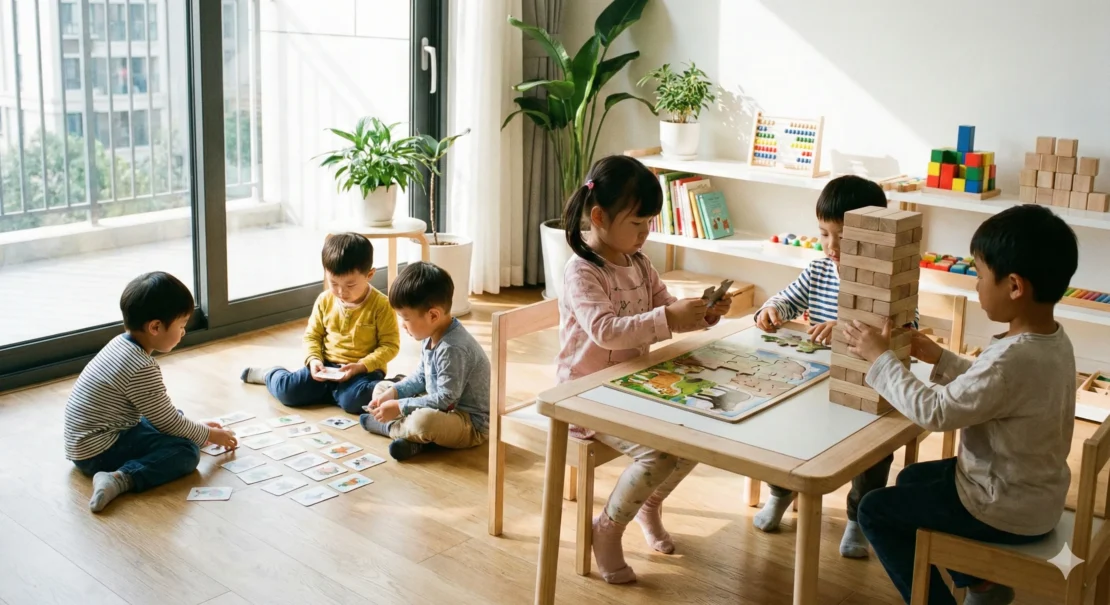
Image Source: Ai
Frequently Asked Questions About Logical Thinking in Kids
Q: At what age should I start developing logical thinking in kids?
Logical thinking in kids begins developing from infancy. Even tiny babies are observing cause and effect. Toddlers benefit from sorting and simple problem-solving activities. You can start intentionally supporting logical thinking in kids from around age 1.5 years through play and exploration.
Q: How can I tell if my child is developing logical thinking in kids properly?
Signs of developing logical thinking in kids include asking many questions, showing interest in how things work, enjoying puzzles and problem-solving activities, and recognizing simple patterns. Children developing logical thinking in kids like to experiment and test ideas. They notice sequences and predict what comes next. Every child develops at their own pace, so trust the process.
Q: Do expensive toys and materials help develop logical thinking in kids better?
Not at all. The most effective activities for logical thinking in kids use simple, everyday materials. Blocks, buttons, beans, recycled containers, and natural items develop logical thinking in kids just as well as expensive toys. The key to developing logical thinking in kids is providing opportunities for exploration and problem-solving, not spending money on fancy materials.
Q: How much time should children spend on activities developing logical thinking in kids?
Logical thinking in kids develops through short, frequent activities rather than long sessions. Five to ten minutes of focused activity is better than thirty minutes of forced work. Weave logical thinking in kids development throughout the day naturally. Let it happen during play, meals, and routines rather than scheduling special “logical thinking in kids time.”
Q: What if my child gets frustrated with activities developing logical thinking in kids?
Frustration is normal and actually supports learning. Help your child develop persistence rather than immediately solving problems for them. Encourage them to try different approaches. Sometimes taking a break and returning later helps. Celebrate effort and persistence, not just success. This builds resilience alongside logical thinking in kids.
Q: How does logical thinking in kids at preschool prepare them for school?
Strong logical thinking in kids prepares children for academic success in reading, mathematics, and science. It develops problem-solving skills that help children navigate challenges. It builds confidence and independence. It creates a foundation for critical thinking that serves children throughout their education and life.
Start Building Logical Thinking in Kids Today
Logical thinking in kids is one of the most valuable skills you can develop in early childhood. It supports academic learning, creative thinking, and independent problem-solving. It builds confidence as children discover they can figure things out. It creates the foundation for lifelong learning and curiosity about the world.
Developing logical thinking in kids doesn’t require special programs or expensive materials. It requires providing opportunities for exploration, play, and problem-solving. It means asking questions and letting children discover answers. It involves celebrating their thinking process, not just their results. These simple approaches to logical thinking in kids create powerful results.
At Apple Tree Pre-School BSD, we prioritize developing logical thinking in kids throughout our programs. From Toddler classes starting at age 1.5 through Kindergarten 2 at age 5-6, we weave logical thinking in kids into everything we do. Our Singapore curriculum naturally supports logical thinking in kids development. Our small class sizes allow us to meet each child where they are developmentally.
Our classrooms at the Educenter BSD Building are designed to encourage exploration and problem-solving supporting logical thinking in kids. We provide diverse materials, interesting challenges, and patient teachers who ask good questions. We celebrate children’s thinking and encourage them to test ideas. We create environments where logical thinking in kids flourishes naturally.
Ready to help your child develop strong logical thinking in kids? Our programs offer the perfect environment for this crucial development. We combine structured learning with plenty of free exploration and play. We support logical thinking in kids through activities children genuinely enjoy. Send us a WhatsApp message or call us at +62 888-1800-900 to learn more.
Come visit our classrooms and see logical thinking in kids happening naturally during play and exploration. Watch children puzzle things out, ask questions, and discover patterns. Register your child today and give them the gift of strong logical thinking in kids that will serve them throughout their education! 🧩🤔✨