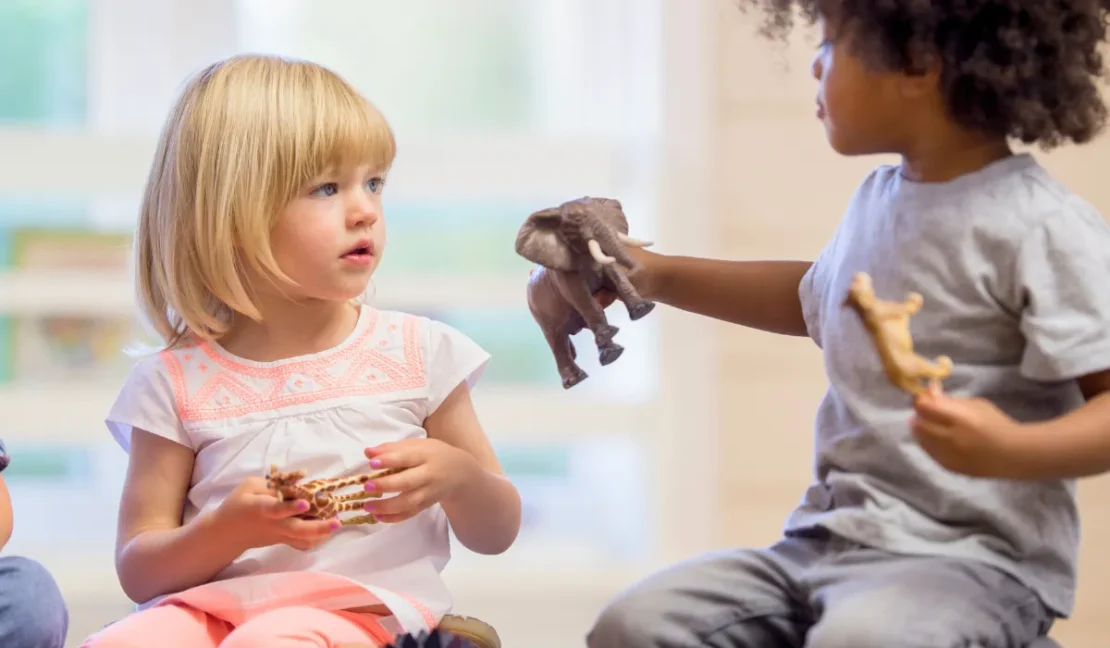
Last week, I watched two toddlers in our Toddler class battle over a single red truck. Both tiny hands gripped it tightly while their eyes welled up with tears. My heart squeezed watching their frustration build. Then something magical happened when I offered them a simple solution that made sharing toys teaching click into place.
That moment perfectly captures why teaching kids to share matters so much. Sharing toys teaching isn’t about forcing children to give up what they want. It’s about helping them understand cooperation, kindness, and consideration for others. When we approach sharing toys teaching with patience and age-appropriate strategies, everything changes for our little ones.
Many parents feel frustrated watching their children refuse to share with friends or siblings. You might wonder if your child is selfish or difficult. The truth is quite different and actually quite encouraging. Teaching kids to share is a developmental skill, just like learning to walk or talk. Some children master it quickly while others need more time and practice. That’s completely normal and expected at every age.
At Apple Tree Pre-School BSD, we’ve spent years perfecting strategies for sharing toys teaching that actually work. Our programs at the Educenter BSD Building incorporate sharing toys teaching into everything we do daily. We understand the developmental stages involved in learning to share. We know which strategies work best for different ages. We’ve learned that sharing toys teaching requires patience, consistency, and genuine understanding of how children think.
Your child’s ability to share will develop gradually over years, not weeks. Teaching kids to share is a journey, not a destination you reach quickly. With the right approach and consistent practice, your child will learn cooperation and kindness naturally. This foundational skill will serve them well throughout their entire lives ahead.
Teaching Kids to Share Starts With Understanding Development
Before we dive into sharing toys teaching strategies, let’s understand where children actually are developmentally. Young toddlers don’t naturally understand sharing toys teaching concepts at all. Their brains genuinely believe the world exists only for them. This isn’t selfishness, it’s simple cognitive development. Around age two or three, children start developing the ability to think about others’ perspectives. This is when sharing toys teaching really begins to take root.
Teaching kids to share requires recognizing that ownership feels deeply important to young children. When a toy belongs to them, it represents safety, control, and identity somehow. Asking them to share feels like asking them to give up something precious. Understanding this emotional reality helps us approach sharing toys teaching with compassion rather than frustration.
The progression of learning to share happens slowly and unevenly. Your two year old won’t understand sharing toys teaching the same way a four year old will. A five year old demonstrates sharing toys teaching skills completely differently from a three year old. These developmental differences mean we need different strategies at different ages. What works for teaching kids to share in Toddler class won’t work in Kindergarten class.
Understanding Age Stages in Sharing Toys Teaching
Teaching kids to share looks completely different depending on age. Our Toddler class students (ages 1.5 to 2 years) are just beginning their sharing toys teaching journey. At this stage, teaching kids to share is mostly about parallel play and gentle redirection. We focus on helping toddlers understand that other children exist and have needs too.
Our Pre-Nursery students (ages 2 to 3 years) show early signs of understanding sharing toys teaching concepts. They’re starting to recognize that taking turns exists as a concept. Teaching kids to share at this age involves lots of coaching and celebration of small successes. We use simple words and lots of repetition during sharing toys teaching practice.
Our Nursery students (ages 3 to 4 years) can grasp basic sharing toys teaching with consistent reminders. Teaching kids to share at this age becomes more about understanding fairness and turn-taking. They start recognizing that sharing makes friends happy. Our Kindergarten students (ages 4 to 6 years) demonstrate much more sophisticated sharing toys teaching skills. Teaching kids to share now involves empathy, negotiation, and genuine kindness toward peers.
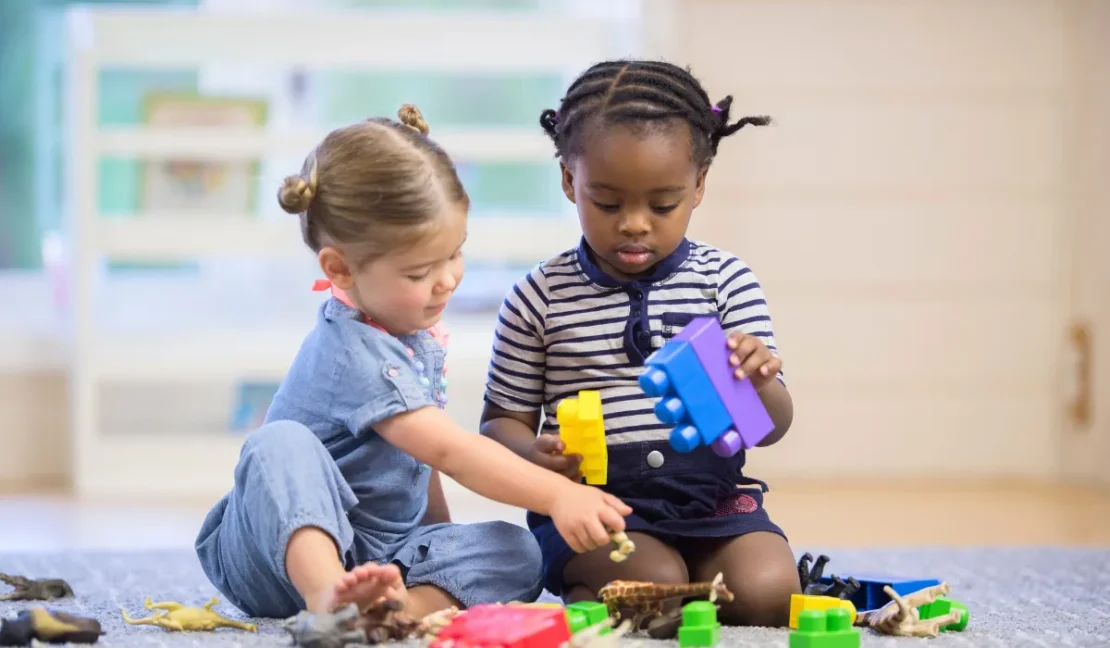
Image Source: Canva
Practical Strategies for Teaching Kids to Share Successfully
Now let’s talk about concrete, practical approaches to sharing toys teaching that actually work. These strategies come from years of experience with thousands of children in our programs. We’ve tested what works and what doesn’t during sharing toys teaching lessons repeatedly. Here’s what we’ve learned about teaching kids to share effectively.
Start Early With Sharing Toys Teaching Foundations
Teaching kids to share begins long before formal sharing toys teaching lessons. Start with your own family at home through simple modeling. When you share snacks with your child, say out loud, “I’m sharing my cookies with you because I love you.” This narrates the sharing toys teaching process and makes it visible and understandable.
Read books together that feature sharing toys teaching themes. Stories make abstract concepts concrete for young children learning to share. Characters modeling kind sharing behaviors give children examples to follow. Teaching kids to share through stories feels natural and engaging rather than preachy or forced.
Practice sharing toys teaching at home with your own possessions first. Let your child watch you share with siblings or friends. Explain why sharing toys teaching matters to you. Model the language you want them to use when teaching kids to share with others.
Use Simple Language During Sharing Toys Teaching
Teaching kids to share requires using language that matches their developmental level. Avoid complex explanations when teaching kids to share. Keep your language simple, concrete, and direct. Say things like, “Maya’s turn now, then your turn” when teaching kids to share with peers.
When teaching kids to share during conflicts, stay calm and use few words. Long explanations about why sharing toys teaching is important won’t work in the heat of the moment. Simply redirect and offer solutions. Later, when everyone is calm, you can discuss sharing toys teaching more deeply.
Use specific praise when teaching kids to share well. Don’t just say, “Good job sharing.” Instead say, “You let Tommy play with your truck. That made Tommy so happy. That’s kind sharing.” This specific feedback helps children understand exactly what sharing toys teaching looks like in action.
Use Timers for Teaching Kids to Share Effectively
Teaching kids to share becomes much easier when you introduce the concept of turn-taking. Timers make teaching kids to share concrete and fair. Set a timer for two or three minutes and explain, “When the timer goes off, it’s your turn.” Teaching kids to share with timers removes the emotion and conflict from transitions.
Visual timers work best because children can see time passing. Teaching kids to share using visual timers reduces arguments and tears. Children can anticipate when their turn is coming. This predictability makes teaching kids to share far less emotionally charged.
Celebrate when transitions happen smoothly. Say something like, “Look how well you shared that toy. You waited patiently and now it’s your turn.” This positive reinforcement makes teaching kids to share feel rewarding rather than punishing.
Create an Environment That Supports Sharing Toys Teaching
At Apple Tree Pre-School BSD, we intentionally design our classrooms to support sharing toys teaching naturally. We have multiples of popular toys so children don’t have to share the same one constantly. Teaching kids to share works best when we reduce unnecessary conflicts over limited resources.
We organize toys and materials clearly so children know what’s available. Teaching kids to share is easier when they understand what options exist. We model kindness and cooperation daily through our interactions with children and colleagues.
Our small class sizes support sharing toys teaching tremendously. With only 12 children in Toddler class, 16 in Pre-Nursery, and 20 in Nursery through Kindergarten 2, we can coach each child individually during sharing toys teaching moments. Teaching kids to share requires personalized attention and consistent practice that smaller groups make possible.
Addressing Common Sharing Toys Teaching Challenges
Teaching kids to share comes with predictable challenges that confuse many parents. Understanding these common situations helps you navigate sharing toys teaching conflicts more effectively. We encounter these sharing toys teaching scenarios constantly at our classrooms.
When Your Child Refuses to Share During Teaching
Sometimes children outright refuse to share despite your best efforts at teaching kids to share. This is actually normal and doesn’t mean your teaching kids to share approach is failing. Young children often need time to feel secure before they’re ready to share toys teaching skills.
Never force your child to share if they’re truly upset about it. Teaching kids to share through force backfires and creates negative associations. Instead, validate their feelings. Say something like, “You’re not ready to share right now. That’s okay. Your feelings matter.” This approach actually supports teaching kids to share better long term.
Give your child space and time. They might share toys teaching skills with you later when they feel safe. Sometimes children need to see peers modeling sharing toys teaching before they’re ready to try. Patience and acceptance are crucial for successful teaching kids to share.
Helping Shy Children With Sharing Toys Teaching
Some children struggle with sharing toys teaching because they’re shy or socially anxious. Teaching kids to share is harder for children who lack confidence around peers. For these children, teaching kids to share might need to start with just adult interaction first.
Practice sharing toys teaching at home with family members in low-pressure situations. Gradually expand to other trusted adults. Then introduce peer interactions slowly. Teaching kids to share works better when children feel emotionally safe and secure.
Our programs at Apple Tree Pre-School BSD provide consistent peer interactions that support teaching kids to share gradually. Small class sizes help shy children build confidence with classmates. Teaching kids to share becomes less scary in supportive environments.
Managing Sibling Dynamics in Sharing Toys Teaching
Teaching kids to share with siblings is different from sharing with peers because emotions run deeper. Siblings know exactly which toys matter most and they exploit that knowledge. Teaching kids to share with siblings requires patience because sibling relationships are complex.
Set clear rules about toys that must be shared versus toys that can be kept private. Teaching kids to share works better when boundaries are clear. Some toys are community property in the house while others belong individually. Teaching kids to share becomes less contentious with these guidelines.
Supervise sharing toys teaching moments between siblings, especially early on. Coach them through it and praise positive interactions. Teaching kids to share with siblings is a long-term project, not something that happens overnight.
Common Sharing Toys Teaching Challenges and Solutions:
- Refusal to share due to insecurity, fear, or strong attachment to items
- Aggressive reactions when forced to share before ready emotionally
- Difficulty understanding ownership and possession concepts
- Shyness or social anxiety making peer sharing difficult
- Sibling conflicts over shared and personal items
- Inability to wait turns or transition between activities
- Difficulty understanding fairness and equal access concepts
- Anxiety about when their turn will come around again
Image Source: Canva
Frequently Asked Questions About Sharing Toys Teaching
Q: At what age should I start teaching kids to share?
You can start teaching kids to share around age two when they’re developmentally ready. Before age two, sharing toys teaching concepts are mostly beyond their understanding. Start simple with parallel play and gradual introduction to turn-taking concepts.
Q: Is my three year old selfish if they won’t share?
Not at all. Three year olds are developmentally egocentric, which is completely normal. Teaching kids to share is a skill they’re just beginning to develop. What looks like selfishness is actually normal development. Patience and consistent teaching kids to share strategies will help.
Q: Should I force my child to share toys teaching situations?
Never force sharing toys teaching. Forced sharing backfires and creates negative associations. Instead, teach and model sharing toys teaching. Validate their feelings when they’re unwilling to share. Offer choices and solutions during sharing toys teaching conflicts.
Q: How long does teaching kids to share actually take?
Teaching kids to share is a multi-year process, not something that happens quickly. You’ll see gradual progress from age two through age six in sharing toys teaching development. Some children pick it up faster while others need more time. Consistent teaching kids to share strategies help throughout.
Q: What if my child shares at school but not at home?
This is actually quite common. Children often behave differently in different environments. Teaching kids to share at home might require different approaches than at school. Stay patient and consistent with sharing toys teaching at home. It will eventually transfer to home settings.
Q: How do preschools support teaching kids to share?
Quality preschools like Apple Tree Pre-School BSD incorporate teaching kids to share into daily activities. Our programs create opportunities for peer interaction and cooperation. We coach children through sharing toys teaching moments. We celebrate successes and support children through challenges with sharing toys teaching.
Making Teaching Kids to Share a Family Priority
Teaching kids to share takes consistent practice and patience over years. It’s not a skill that develops overnight or through lectures. Your child learns sharing toys teaching through repeated opportunities to practice with your guidance and support. Every small success in sharing toys teaching matters and builds toward greater development.
Remember that teaching kids to share is about more than just toys. It’s about building empathy, kindness, and consideration for others. These character qualities matter far more than whether your child shares a specific toy. Teaching kids to share lays the groundwork for positive relationships throughout their lives.
At Apple Tree Pre-School BSD, we partner with families to support teaching kids to share through consistent practice. Our programs at the Educenter BSD Building create environments where children practice sharing toys teaching daily. We celebrate their progress and support them through challenges with patience and understanding.
Ready to help your child develop strong sharing toys teaching skills? Our programs work for families with different needs and schedules. From Toddler programs starting at age 1.5 years through Kindergarten 2 at age 5 to 6, we support healthy social development including teaching kids to share. Send us a WhatsApp message or call us at +62 888-1800-900 to learn more about our approach to teaching kids to share.Come visit our classrooms at the Educenter BSD Building and see children learning to share together joyfully. Watch how we coach teaching kids to share with patience and kindness. Register your child today and give them a community where learning to share, cooperate, and care for others happens naturally! 🌟💚✨