Your three-year-old just snatched a toy from another child at the playground. Again. You watch the other child burst into tears while your little one clutches the toy triumphantly, completely oblivious to the emotional devastation she just caused. You rush over to manage the situation, apologizing to the other parent while wondering: when exactly do kids learn empathy, sharing, and all those other skills that make them decent human beings?
The answer is social emotional learning, and it starts way earlier than most parents realize. These aren’t skills children magically develop when they’re “ready.” They’re taught, practiced, and reinforced starting from toddlerhood. At Apple Tree Pre-School BSD, social emotional learning forms the foundation of everything we do, woven into our Singapore curriculum alongside Mathematics, English, and Science.
Here’s what surprises parents: academic success in later years is often predicted more by social emotional skills in preschool than by early reading or math abilities. A child who can manage frustration, cooperate with peers, and persist through challenges will outperform a child with advanced academics but poor emotional regulation. Ready to discover how social emotional learning shapes your child’s entire future?
Understanding Social Emotional Learning in Early Childhood
Before we dive into strategies, let’s clarify what social emotional learning actually means and why it matters so much during the preschool years.
What is Social Emotional Learning?
Social emotional learning is the process through which children acquire skills to understand and manage emotions, set positive goals, show empathy for others, establish positive relationships, and make responsible decisions. It’s basically the entire toolkit for being a functioning, happy human.
For young children, social emotional learning includes recognizing their own feelings, calming down when upset, taking turns, making friends, solving conflicts, showing kindness, and understanding that other people have feelings too. These sound simple, but for a two or three-year-old, they’re monumentally difficult skills requiring tons of practice.
At our Educenter BSD Building campus, we see the full spectrum of social emotional development. Some children arrive with strong foundations from home, while others are just beginning this journey. The good news? All children can develop these skills with proper support.
Why Social Emotional Learning Matters Now More Than Ever
Today’s children face challenges previous generations didn’t encounter. Increased screen time means less face-to-face interaction practice. Busy family schedules sometimes mean fewer opportunities for unstructured play with peers. Academic pressure starts earlier, creating stress that young children aren’t equipped to handle.
Social emotional learning provides the buffer children need. Kids with strong emotional regulation manage stress better. Children with solid social skills navigate conflicts without falling apart. Those who’ve developed empathy build the meaningful friendships that protect against loneliness and anxiety.
We’ve noticed in our Nursery and Kindergarten classes with 20 children each that the kids who thrive aren’t always the smartest academically. They’re the ones who can ask for help, bounce back from disappointment, and work cooperatively with others. That’s social emotional learning in action.
The Five Core Competencies
Social emotional learning breaks down into five key areas. Understanding these helps parents know what to watch for and support.
Self-awareness: Recognizing one’s own emotions, thoughts, and values and how they influence behavior. For preschoolers, this means learning to name feelings and connect them to situations.
Self-management: Regulating emotions, thoughts, and behaviors in different situations. This includes managing stress, controlling impulses, and motivating oneself. Think of the four-year-old who can take deep breaths instead of hitting when frustrated.
Social awareness: Understanding the perspectives of others and empathizing with people from diverse backgrounds. In early childhood, this starts with recognizing that the crying child is sad because you took their toy.
Relationship skills: Establishing and maintaining healthy relationships through clear communication, active listening, cooperation, and conflict resolution. Preschool is where children learn these fundamental skills through daily practice.
Responsible decision-making: Making constructive choices about personal behavior and social interactions based on ethical standards and safety concerns. Even young children can start learning to think through consequences before acting.
Image Source: Canva
Building Self-Awareness in Young Children
Self-awareness is the foundation of social emotional learning. Children can’t manage emotions they haven’t learned to recognize and name.
Teaching Feelings Vocabulary
The first step in social emotional learning is giving children words for their internal experiences. Many behavioral issues stem from children feeling something strongly but lacking the vocabulary to express it.
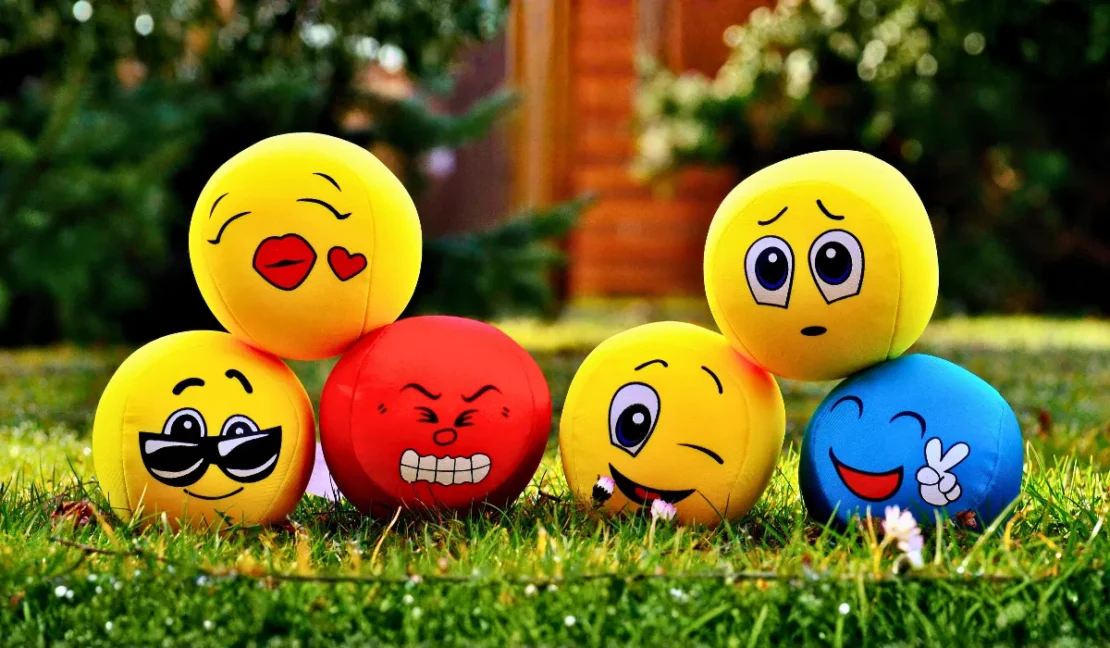
We use feelings charts extensively in our programs from Toddler through Kindergarten 2. Pictures of faces showing happy, sad, angry, scared, frustrated, excited, and more give children reference points. “I see your face looks like this picture. Are you feeling frustrated?”
At home strategies:
- Name your own emotions throughout the day: “Mommy feels frustrated because we’re stuck in traffic”
- Read books featuring characters experiencing different emotions
- Create a feelings check-in routine at dinner or bedtime
- Validate all feelings while guiding behavior: “It’s okay to feel angry, but it’s not okay to hit”
Connecting Feelings to Body Sensations
Part of social emotional learning is helping children notice how emotions feel physically. Anger might feel hot and tight. Anxiety might create butterflies in the stomach. Excitement might make you want to jump around.
In our Physical Education and Music classes, we incorporate movement activities where children act out feelings. “Show me an angry body! Now show me a calm body!” This embodied learning makes abstract emotions more concrete for young children.
Developing Emotional Literacy Through Stories
Books are powerful social emotional learning tools. Stories let children safely explore complex emotions and social situations from a comfortable distance.
Our English and Bahasa curriculum includes intentionally selected books featuring characters navigating jealousy, disappointment, fear, excitement, and friendship challenges. After reading, we discuss: “How do you think the character felt? Have you ever felt that way? What helped them feel better?”
Teaching Self-Management and Regulation
Knowing you’re angry is one thing. Managing that anger without hurting people or breaking things is another. This is where social emotional learning gets challenging but critically important.
Co-Regulation Comes Before Self-Regulation
Here’s something many parents don’t realize: children can’t self-regulate until they’ve experienced tons of co-regulation. Co-regulation means an adult helps a child return to calm by being present, offering comfort, and modeling calmness.
When your toddler melts down, your calm presence helps regulate their nervous system. Over hundreds of repetitions, they internalize this process and gradually learn to self-soothe. Expecting young children to “calm down by themselves” skips a crucial developmental step.
At Apple Tree, we emphasize co-regulation in all our programs. When a child in our Pre-Nursery class with 16 children gets overwhelmed, a teacher sits with them, speaks softly, maybe offers a hug or a calm-down corner with soft toys. We’re teaching regulation through relationship.
Practical Calming Strategies for Preschoolers
Social emotional learning includes giving children a toolbox of strategies for managing big feelings. Different techniques work for different children, so offering variety matters.
Calming techniques we teach:
- Deep breathing (we call it “smell the flower, blow out the candle”)
- Counting slowly to ten
- Squeezing and releasing fists
- Taking space in a calm corner
- Hugging a stuffed animal
- Drawing or coloring feelings
- Naming the emotion out loud
The key is practicing these when children are calm, not introducing them in the middle of a meltdown. We build these into our daily Moral curriculum so they become familiar tools.
The Power of Routine and Predictability
Children regulate better when life is predictable. Knowing what comes next reduces anxiety and helps children manage transitions without falling apart.
In our classrooms covering everything from Creativity to Science to Chinese, we maintain consistent daily schedules. Children know circle time follows free play, snack comes before outdoor time, and story time ends the day. This predictability is actually part of social emotional learning because it creates the security needed for emotional regulation.
Developing Social Awareness and Empathy
This is the area where many young children struggle. Understanding that other people have feelings and perspectives different from your own requires cognitive development that’s still emerging in preschoolers.
Perspective-Taking Activities
Social emotional learning in early childhood includes lots of practice thinking about what others might feel or think. This doesn’t come naturally to egocentric preschoolers but can be gradually developed.
We use puppets and role-play extensively. “The puppet is crying. What do you think happened? How does the puppet feel?” These simple scenarios help children start considering perspectives beyond their own.
Our Social Studies curriculum includes learning about diverse families, cultures, and experiences. When children see that not everyone celebrates the same holidays or eats the same foods, they begin understanding that different doesn’t mean wrong, it just means different.
Teaching Empathy Through Modeling
Children learn empathy primarily by experiencing it. When adults respond empathetically to children’s feelings, children internalize that model and begin extending it to others.
“You fell down and got hurt. That must have really scared you. Let me help you feel better.” Over time, the child who receives this empathy learns to offer it: “Are you okay? Do you need help?”
At Apple Tree, every teacher models empathetic responses hundreds of times daily. This consistent modeling is powerful social emotional learning in action.
Noticing Impact on Others
Part of social awareness is recognizing when your actions affect someone else. Young children often genuinely don’t notice they’ve hurt someone until it’s explicitly pointed out.
“Look at Sarah’s face. See how she’s crying? When you took her toy, it made her sad because she was playing with it.” This simple narration helps children start connecting actions with emotional consequences.
We practice this constantly in our programs. With 12 to 20 children per class depending on the level, plenty of opportunities arise for teaching about impact and empathy.
Building Relationship Skills
Social emotional learning isn’t just about managing your own emotions. It’s about navigating the complex world of relationships, friendships, and social interactions.
Teaching Friendship Skills Explicitly
We can’t assume children automatically know how to make friends. Friendship skills are part of social emotional learning and need explicit teaching.
Friendship skills we teach:
- Greeting others and introducing yourself
- Inviting someone to play
- Sharing and taking turns
- Offering help when someone is struggling
- Giving compliments
- Apologizing when you’ve hurt someone
- Accepting apologies from others
In our Kindergarten 1 and 2 programs, we do friendship role-plays. “How could you ask to join that game? What could you say?” This practice in a safe environment translates to better interactions on the playground.
Conflict Resolution for Preschoolers
Conflicts are actually valuable social emotional learning opportunities. Every disagreement is a chance to practice communication, compromise, and problem-solving.
When two children want the same toy in our Creativity class, we don’t just solve it for them. We facilitate: “You both want the blue paint. That’s a problem. What could we do?” With guidance, children generate solutions: take turns, use it together, find another blue paint, choose a different color.
These repeated problem-solving experiences build crucial skills. Children learn that conflicts are normal, solvable, and don’t require adult rescue every time.
Communication Skills Matter
Clear communication is fundamental to relationships and thus central to social emotional learning. Preschoolers are still developing language, which makes expressing needs and feelings challenging.
We teach children to use “I statements” even in our Toddler programs with 12 children. “I feel sad when you take my toy. Can I have it back?” It’s simple, but it’s powerful. Children learn to advocate for themselves clearly rather than hitting or grabbing.
Our English, Bahasa, and Chinese curriculum all emphasize communication skills. Being able to express yourself in multiple languages expands opportunities for connection and understanding.
Fostering Responsible Decision-Making
Even young children can begin learning to think through choices and consequences. This is the decision-making component of social emotional learning.
Offering Age-Appropriate Choices
Decision-making is a skill developed through practice. When we give children appropriate choices throughout the day, we’re building their decision-making muscles.
“Do you want apple slices or banana for snack?” “Should we read the animal book or the construction book?” These simple choices matter. Children learn that their preferences are valid and that they have agency in their world.
In our classrooms, we offer choices constantly while maintaining structure. During Creativity time, children choose which activity area to start with. During outdoor Physical Education, they might choose which game to play. Choice within structure is key.
Thinking Through Consequences
Part of social emotional learning is connecting choices with outcomes. “If you build your blocks too high without a strong base, what might happen?” This predictive thinking develops over time.
We use natural consequences whenever safe to do so. If you don’t put your work in your cubby, you might not find it later. If you rush through cleanup, you’ll have less time for the fun activity afterward. These lessons stick because they’re real.
Problem-Solving Practice
Every day brings problems to solve, and each one is a social emotional learning opportunity. We encourage children to think through problems rather than immediately providing solutions.
“Your tower keeps falling down. That’s frustrating! What could you try differently?” This process of identifying problems, brainstorming solutions, trying them out, and evaluating results is fundamental to decision-making.
Our Mathematics and Science curriculum provide natural problem-solving contexts. How can we make the ramp steeper? How can we sort these objects? What happens if we add more water? These academic problems simultaneously build thinking skills central to social emotional learning.
Social Emotional Learning at Different Ages
Social emotional learning looks different at different developmental stages. Understanding what’s appropriate for your child’s age prevents unrealistic expectations.
Toddlers (Ages 1.5 to 2)
At this age, social emotional learning is just beginning. Toddlers are highly egocentric and have minimal impulse control. They experience big emotions but can’t name or manage them independently.
What to expect: Frequent meltdowns, limited sharing, parallel play rather than cooperative play, beginning to recognize emotions in themselves and others.
What to focus on: Naming emotions for them, co-regulation, establishing routines, gentle guidance about gentle touches, modeling simple empathy.
In our Toddler programs (offered 2x or 3x per week), we focus heavily on emotional vocabulary and co-regulation. With 12 children per class, we can give individual attention to each child’s emerging social emotional skills.
Pre-Nursery (Ages 2 to 3)
Social emotional learning expands as language develops. Two and three-year-olds begin using words to express needs, though physical reactions are still common when emotions run high.
What to expect: Growing emotional vocabulary, beginning attempts at sharing and turn-taking, emerging empathy (especially when prompted), testing boundaries constantly.
What to focus on: Expanding feelings vocabulary, teaching simple calming strategies, facilitating (not forcing) sharing, narrating others’ emotions, simple problem-solving.
Our Pre-Nursery class with 16 children provides tons of social practice. Children learn to navigate group dynamics with more teacher support than older kids need.
Nursery (Ages 3 to 4)
This is when social emotional learning really takes off. Three and four-year-olds are developing theory of mind (understanding that others have different thoughts and feelings). Friendships become important.
What to expect: More sustained cooperative play, beginning conflict resolution attempts, growing self-regulation, strong friendship preferences, imaginative play that practices social roles.
What to focus on: Friendship skills, conflict resolution with support, empathy development, expanding emotional literacy, simple responsibility and decision-making.
In our Nursery classes, social emotional learning is woven into every activity. From Music to Moral education, we’re constantly reinforcing these crucial skills.
Kindergarten (Ages 4 to 6)
By kindergarten age, social emotional learning has built a solid foundation. Children have more sophisticated understanding of emotions, better self-regulation, and more complex social skills.
What to expect: Growing independence in managing emotions, ability to wait and delay gratification, understanding of social rules and fairness, capacity for genuine empathy, collaborative problem-solving.
What to focus on: Complex emotion vocabulary (disappointed, embarrassed, proud, jealous), independence in conflict resolution, perspective-taking, ethical thinking about right and wrong, leadership skills.
Our Kindergarten 1 and 2 programs with 20 children each provide rich social environments where these advanced social emotional learning skills can flourish. Children are ready for the more complex social world of elementary school.
Image Source: Canva
Supporting Social Emotional Learning at Home
Parents are children’s first and most important social emotional learning teachers. What happens at home matters enormously.
Create Emotional Safety
Children develop social emotional skills best in environments where all feelings are acceptable even when all behaviors aren’t. Creating emotional safety means validating feelings while guiding actions.
“You’re really angry at your brother right now. Anger is okay. Hitting is not okay. Let’s find a better way to show your anger.” This approach acknowledges the feeling while redirecting behavior.
At Apple Tree, we create emotionally safe classrooms where children can express the full range of human emotions appropriately. This same safety needs to exist at home for optimal social emotional learning.
Model What You Want to See
Children learn social emotional skills primarily through observation and imitation. They watch how you handle frustration, resolve conflicts, show empathy, and manage stress.
When you apologize after losing your temper, you teach that everyone makes mistakes and repairs matter. When you name your own emotions, you normalize emotional awareness. When you show empathy to a struggling friend, you model compassion.
Prioritize Connection
Social emotional learning happens in the context of relationships. Children who feel securely connected to caregivers are more willing to take emotional risks, try new social skills, and recover from setbacks.
Daily connection time, even just 15 minutes of focused attention without phones or distractions, fills children’s emotional tanks and supports all aspects of social emotional development.
Use Everyday Moments
You don’t need special curriculum or programs for social emotional learning. Everyday life provides constant opportunities. The sibling argument is a conflict resolution lesson. The disappointment over canceled plans is emotional regulation practice. The new neighbor is a friendship skills opportunity.
We approach social emotional learning this way at Apple Tree too. Yes, we have structured lessons in our Moral and Social Studies curriculum, but the real learning happens in the hundreds of micro-moments throughout each day.
Common Social Emotional Learning Challenges
Even with great support, children face predictable challenges in social emotional development. Knowing what’s normal helps parents respond effectively.
The Child Who Hits When Frustrated
Hitting is communication for a child who lacks other tools. This child needs intensive work on both emotional vocabulary and alternative strategies for expressing anger or frustration.
Rather than just punishing hitting, invest in teaching better options. Practice phrases like “I don’t like that” or “Stop, please.” Offer alternatives like stomping feet, squeezing a stress ball, or asking an adult for help.
The Highly Sensitive Child
Some children experience emotions more intensely than others. This isn’t bad; it’s temperament. These children need extra support with regulation and often need more downtime to process stimulation.
In our diverse classrooms, we see the full range of temperaments. We adjust our social emotional learning approaches to match each child’s needs. What works for one child might overwhelm another.
The Shy or Socially Anxious Child
Some children take longer to warm up in social situations. They’re observing and processing, which is their learning style. Pushing too hard can increase anxiety and slow social emotional learning.
Give these children time, stay nearby for security, and celebrate small steps. The child who makes eye contact with one peer is making progress, even if they’re not joining the group game yet.
The Impulsive Child
Some children struggle significantly with self-regulation. Their bodies move before their brains catch up. These children benefit from extra physical activity, clear structure, and tons of practice with stop-and-think strategies.
In our Physical Education classes, we work on body awareness and control. Games like Red Light/Green Light aren’t just fun, they’re regulation practice. For impulsive children, this practice is crucial social emotional learning.
The Long-Term Impact of Social Emotional Learning
Why does all this matter? Because social emotional learning in early childhood predicts outcomes years later.
Academic Success
Research consistently shows that social emotional skills in preschool and kindergarten predict later academic achievement. Children who can focus attention, persist through challenges, and seek help when needed simply learn better.
Our Singapore curriculum at Apple Tree is academically rigorous, covering English, Mathematics, Chinese, Science, and more. But we know that academic content is absorbed best by children with strong social emotional foundations.
Mental Health and Wellbeing
Children who develop social emotional skills early have lower rates of anxiety and depression later. They have tools for managing stress, maintaining relationships, and bouncing back from setbacks.
In our Moral education, we explicitly teach self-compassion, resilience, and emotional regulation. These aren’t soft skills; they’re essential mental health protective factors.
Relationship Quality
The relationship skills learned in early childhood set patterns for life. Children who learn to communicate clearly, resolve conflicts, and show empathy build healthier friendships, family relationships, and eventually romantic partnerships.
Career Success
Believe it or not, the social emotional learning happening in preschool influences eventual career success. Collaboration, communication, problem-solving, leadership, all of these workplace essentials begin developing in early childhood.
Creating a Social Emotional Learning Partnership
The most effective social emotional learning happens when home and school work together, using consistent language and reinforcing the same skills.
Communication Between Home and School
We encourage parents to share what they’re working on at home so we can reinforce it at school. Likewise, we share classroom strategies parents can use at home.
If a child is working on using words instead of hitting, everyone can use the same phrases and approaches. This consistency accelerates social emotional learning.
Consistent Expectations
When home and school have wildly different expectations, children get confused. While you don’t need identical rules, having similar values around kindness, respect, and emotional expression helps.
At Apple Tree, our Moral curriculum emphasizes values like honesty, kindness, responsibility, and respect. When families share these values, social emotional learning is reinforced everywhere children spend time.
Celebrating Progress Together
Social emotional learning happens gradually, in small increments. Celebrating these small wins together keeps everyone motivated.
“Did you notice how Emma asked to join the game today instead of just grabbing the toys? That’s such progress!” When teachers and parents both acknowledge growth, children feel seen and encouraged to keep developing.
Why Social Emotional Learning Starts at Apple Tree
Everything we’ve discussed about social emotional learning is intentionally woven into daily life at Apple Tree Pre-School BSD. From our Toddler programs through Kindergarten 2, we prioritize these foundational skills alongside academic content.
Our comprehensive curriculum covers academic subjects like Mathematics, Science, English, Chinese, Bahasa, and Phonics. But every subject is taught with attention to social emotional development. Math lessons include turn-taking and frustration tolerance. Science investigations require cooperation and communication. Music and Physical Education build body awareness and regulation.
With class sizes from 12 children in our Toddler programs to 20 children in our Kindergarten classes, we maintain the ratio needed for individualized social emotional support while providing rich peer interaction opportunities.
Ready to give your child a foundation that lasts a lifetime? Social emotional learning at our Educenter BSD Building campus prepares children not just for school, but for life. Discover how we help children grow smart and happy or call us at +62 888-1800-900.Join our Apple Tree family where social emotional learning meets academic excellence! 🍎