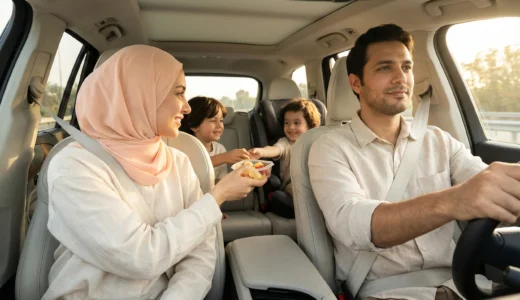

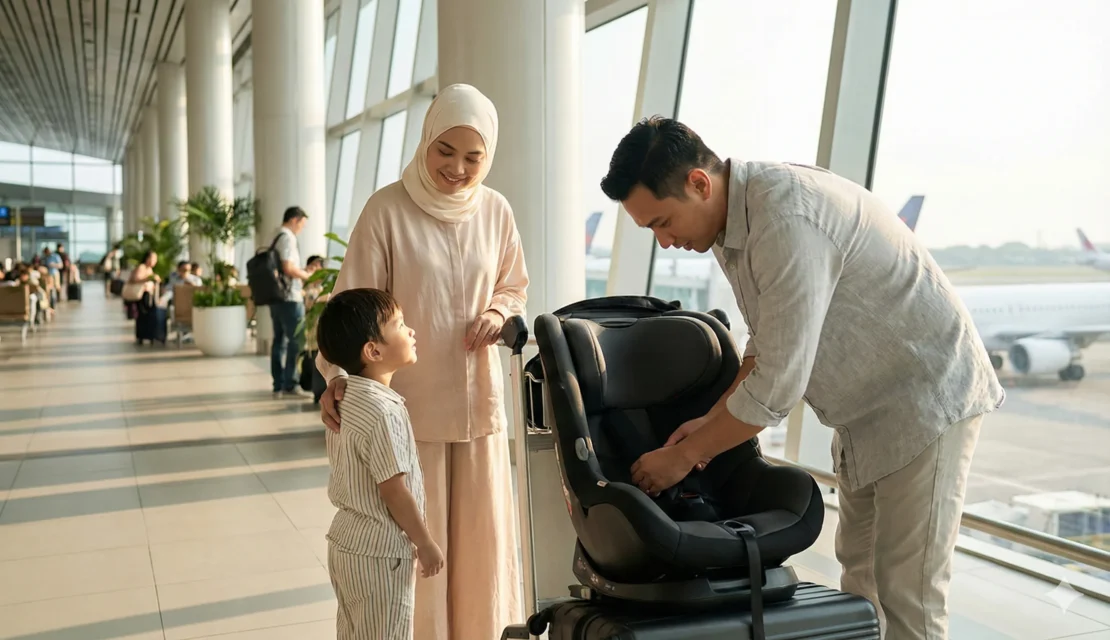
Picture this: you’re buckled in your airplane seat, the cabin doors are closing, and your toddler decides this exact moment is perfect for discovering they can scream at a pitch that makes dogs three villages away howl in sympathy. Every passenger within earshot shoots you those looks, and you’re contemplating whether it’s possible to melt into your seat and disappear entirely. Flying with toddlers during the holiday season is an adventure that requires serious preparation, a good sense of humor, and most importantly, a solid understanding of safety measures that keep your little one protected throughout the journey.
At Apple Tree Pre-School BSD, we hear countless stories from parents about their flight experiences with young children, ranging from surprisingly smooth to “we’re never doing that again” disasters. The good news is that flying with toddlers doesn’t have to be a white-knuckle experience when you understand the safety essentials and prepare properly. Holiday travel with little ones is absolutely manageable when you prioritize safety alongside entertainment and snacks.
This comprehensive safety guide for flying with toddlers covers everything from car seat decisions to ear protection, keeping your child secure and comfortable at 30,000 feet. Whether you’re flying domestic within Indonesia or heading internationally to visit family, these safety considerations help ensure your holiday travels are smooth, secure, and maybe even enjoyable for everyone involved.
Essential Safety Tips For Flying With Toddlers
1. Book The Right Seat For Maximum Safety
The single most important safety decision when flying with toddlers involves seating arrangements. While airlines allow children under two to fly as “lap infants” sitting on a parent’s lap, aviation safety experts strongly recommend purchasing a separate seat for your toddler and using an approved car seat. During turbulence or emergency situations, your arms simply cannot provide the same protection as a properly installed car seat restraint system.
If budget allows, always book a separate seat when flying with toddlers, especially for longer flights or during holiday periods when turbulence is common due to weather patterns. Request seats away from emergency exit rows since children cannot sit there, and consider bulkhead seats for extra legroom when traveling with car seats. Window seats work wonderfully for toddlers who want to look outside while keeping them contained away from aisle traffic and cart bumps.
When flying with toddlers, check your airline’s specific policies about child seats and seating arrangements before booking. Some airlines offer discounted infant fares for children under two who have their own seat, making the safety upgrade more affordable during holiday travel periods when every rupiah counts.
2. Use An FAA-Approved Car Seat On The Plane
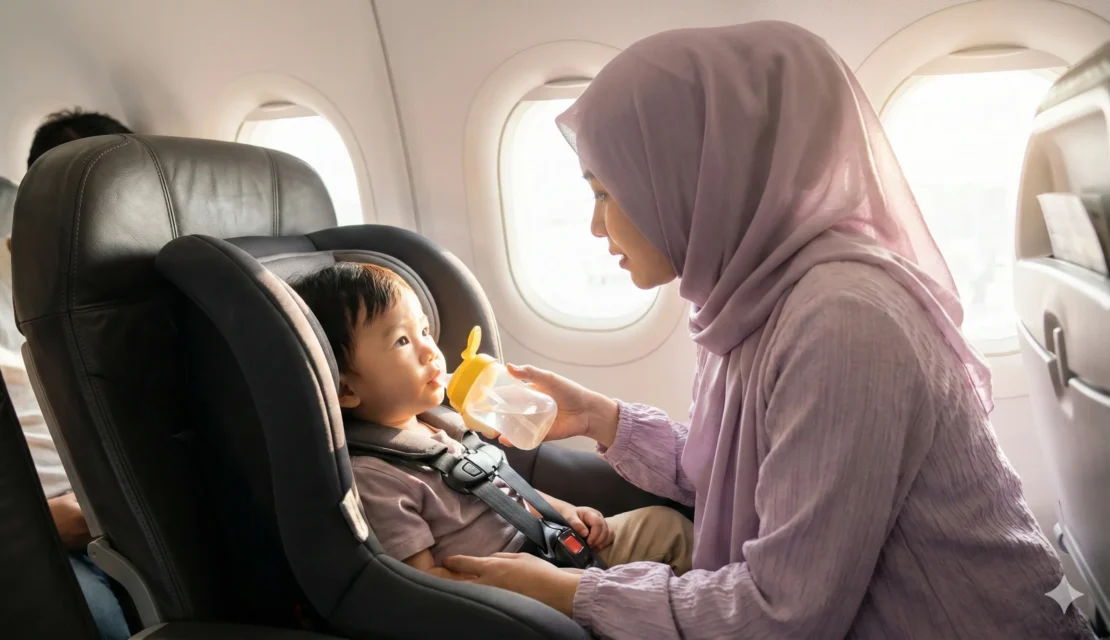
Bringing your car seat onboard is the gold standard for flying with toddlers safely. Look for car seats labeled “FAA-Approved” or “Certified for Use in Motor Vehicles and Aircraft” to ensure compatibility with airplane seats. The car seat provides familiar, secure containment that protects your toddler during takeoff, landing, turbulence, and any unexpected events while also giving them a comfortable space they recognize from car rides.
Install the car seat in the airplane seat using the airplane’s seatbelt, threading it through the car seat’s belt path exactly as you would in a vehicle. Position the car seat in a window seat so it doesn’t block other passengers’ access to the aisle during emergencies. Flight attendants can assist with installation questions, but practicing at home before your trip reduces stress and ensures proper installation when you’re juggling luggage, boarding passes, and an excited toddler.
If bringing a car seat isn’t practical for your trip, consider the CARES harness system, an FAA-approved alternative specifically designed for flying with toddlers. This lightweight harness weighs less than one kilogram, fits in your carry-on, and provides upper body restraint that far exceeds the protection of a simple lap belt for young children.
3. Protect Little Ears During Pressure Changes
Ear pain from cabin pressure changes causes significant distress when flying with toddlers, and understanding how to manage this improves both safety and comfort. Young children’s Eustachian tubes are smaller and more horizontal than adults’, making pressure equalization more difficult and painful. This isn’t just about comfort but also about preventing potential ear damage or infections that can occur from repeated pressure trauma.
Encourage swallowing during takeoff and landing by offering a sippy cup, bottle, snacks, or pacifier to help ears equalize naturally. For breastfeeding mothers, nursing during ascent and descent provides excellent ear pressure relief while also calming anxious toddlers during these potentially scary moments. If your toddler is old enough, teaching them to yawn or chew gum can help, though most toddlers master swallowing liquids more easily.
Consider specialized children’s ear plugs designed for flying with toddlers that regulate pressure changes gradually. Products like EarPlanes for Kids have filters that slow pressure changes, reducing the sudden discomfort that causes screaming and distress. If your toddler has a cold or ear infection before travel, consult your pediatrician about whether flying is advisable or if decongestants might help.
4. Keep Your Toddler Hydrated And Healthy
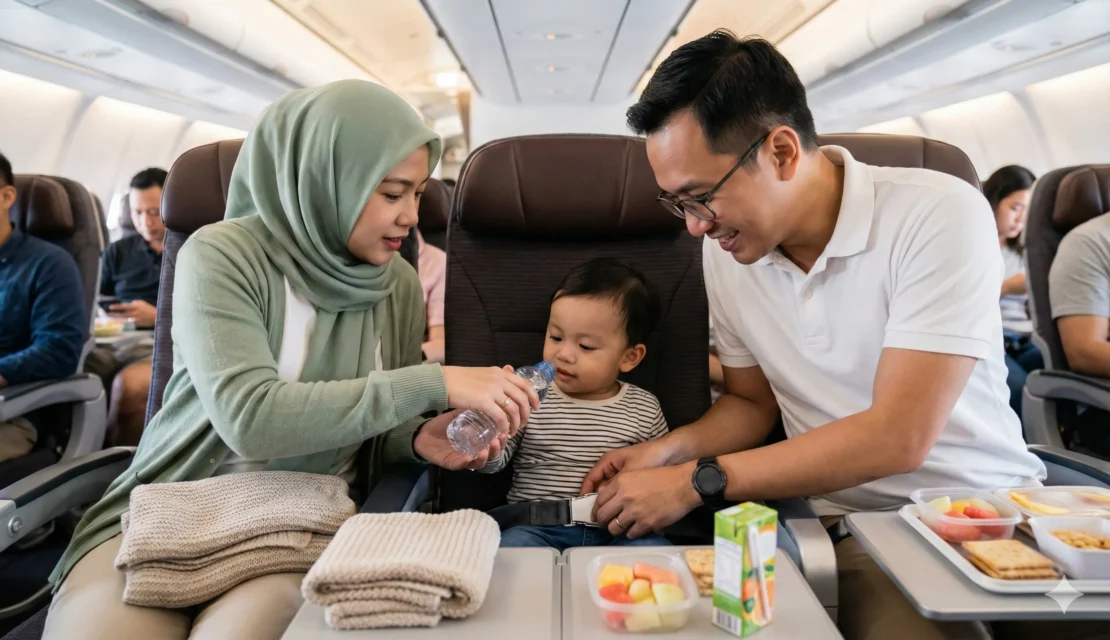
Airplane cabins have extremely low humidity, typically around 10 to 20 percent, which can dehydrate passengers quickly and make toddlers more susceptible to illness. When flying with toddlers, prioritize hydration by offering water or milk frequently throughout the flight. Dehydration contributes to crankiness, headaches, and weakened immune systems, none of which you want while traveling during busy holiday periods.
Pack healthy snacks and avoid excessive sugar or unfamiliar foods that might upset little tummies at altitude. Digestive systems can behave differently during flights, and the last thing you need when flying with toddlers is a mid-flight stomach upset with limited bathroom facilities. Stick to familiar, gentle foods your toddler eats regularly without any digestive issues.
We recommend at Apple Tree Pre-School BSD that parents also consider immune support before holiday travel. Ensure your toddler is well-rested before flying, up-to-date on vaccinations, and perhaps give vitamin C or probiotics in the days leading up to travel. Airplanes concentrate germs from hundreds of passengers, so any immune boost helps when flying with toddlers during peak holiday travel seasons.
5. Practice Safety Awareness Throughout The Journey
Airport and airplane environments present safety hazards that don’t exist at home, so heightened awareness matters when flying with toddlers. Keep your toddler in a stroller, carrier, or firmly holding your hand in busy airport terminals where crowds, escalators, moving walkways, and rushing passengers create injury risks. Never let toddlers run freely in airports regardless of how much energy they need to burn before boarding.
On the plane, ensure your toddler stays buckled whenever the seatbelt sign is illuminated and ideally throughout the entire flight. Unexpected turbulence can occur without warning, and unbuckled toddlers can be injured by sudden movements. Keep the area under the seat in front of you clear so you can quickly access emergency equipment or exit paths if needed, even if this means reorganizing your entertainment bag mid-flight.
Be mindful of hot beverage service when flying with toddlers and request that flight attendants not serve hot drinks over your child or use cup lids when available. Turbulence can cause spills that seriously burn young children’s sensitive skin. Position your toddler away from the aisle during meal and beverage service to reduce burn and bump risks from passing carts.
6. Prepare For Medical Emergencies In The Air
When flying with toddlers, carry a small first aid kit with essentials like bandages, antiseptic wipes, pain reliever appropriate for your child’s age, fever reducer, anti-nausea medication, and any prescription medications your toddler takes regularly. Pack these in your carry-on, not checked luggage, so they’re accessible throughout the flight. Include copies of prescriptions and your pediatrician’s contact information for emergencies.
Know where the airplane’s medical kit is located and don’t hesitate to alert flight attendants if your toddler shows signs of serious illness or allergic reaction. Flight crews are trained in basic medical response and can radio ahead for medical assistance at your destination if needed. If your toddler has known allergies, especially food allergies, inform the airline during booking and again at boarding so staff can accommodate and respond appropriately.
Consider travel insurance that covers medical emergencies when flying with toddlers internationally, ensuring you can access quality medical care at your destination without financial stress. The Educenter BSD Building community includes many families who travel internationally during holidays and emphasize how peace of mind from proper insurance makes the entire experience more relaxed and enjoyable.
Quick Safety Checklist For Flying With Toddlers
Before heading to the airport, run through this quick safety checklist to ensure you’ve covered all bases for flying with toddlers during the holiday rush.
Pre-flight safety essentials:
- Confirm airline car seat policies and book appropriate seats for your toddler’s age and size
- Check that your car seat is FAA-approved and practice airplane installation at home
- Pack children’s ear protection or plan swallowing strategies for pressure changes during ascent and descent
- Prepare first aid kit with age-appropriate medications, prescriptions, and emergency contact information
- Ensure toddler is healthy, well-rested, and hydrated before travel day begins
- Charge devices and download entertainment so toddlers stay occupied and seated during flights
- Review airline safety cards and know emergency exit locations relative to your seats
- Pack extra clothes accessible in carry-on for spills, accidents, or temperature changes
- Bring familiar comfort items that help your toddler feel secure in unfamiliar airplane environments
- Confirm travel insurance covers medical emergencies at your destination if traveling internationally
Frequently Asked Questions About Flying With Toddlers
Is it safe to fly with a toddler on my lap? While airlines permit lap infants under two, safety experts recommend purchasing a separate seat with an approved car seat for maximum protection during turbulence or emergencies. What age is best for flying with toddlers? There’s no perfect age, but many parents find flying with toddlers becomes easier after 18 months when children can better understand explanations and engage with entertainment options. How do I keep my toddler safe during turbulence? Keep your toddler buckled in their car seat or airplane seatbelt throughout the flight, especially when the seatbelt sign is illuminated, to prevent injury from unexpected turbulence.
Flying Safely Makes Holiday Memories Better
Mastering safety essentials when flying with toddlers transforms stressful holiday travel into manageable adventures that create positive family memories. From proper seating and car seat use to ear protection and health awareness, these safety measures protect your little one while reducing parental anxiety at 30,000 feet. Remember that preparation is your superpower when flying with toddlers, and every safety step you take contributes to smoother, safer holiday journeys.
Looking for a preschool that prepares children for life’s adventures with confidence and independence? At Apple Tree Pre-School BSD, we nurture children aged 1.5 to 6 years through our comprehensive Singapore curriculum, building the adaptability and self-regulation that makes experiences like holiday travel easier for the whole family.Visit us at the Educenter BSD Building or WhatsApp us to learn more. Call +62 888-1800-900 to discover how Apple Tree Pre-School BSD helps children grow smart, confident, and ready for any adventure! ✈️👶💚