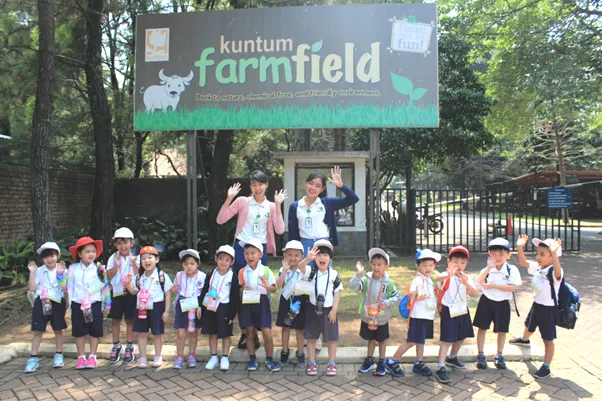
Last week, something magical happened during our outdoor playtime that perfectly captures why we’re so passionate about learning beyond classroom walls. Four-year-old Jake was crouched by our garden bed, completely absorbed in watching a line of ants carry crumbs back to their nest. “Miss, they’re like tiny delivery trucks!” he exclaimed, his eyes wide with wonder. For the next thirty minutes, he observed, questioned, and theorized about ant behavior with the intensity of a seasoned researcher.
That’s the power of outdoor learning. It transforms ordinary moments into extraordinary discoveries and turns the whole world into a classroom. At Apple Tree Pre-School BSD, we’ve learned that some of the most meaningful education happens when children step outside and engage with nature directly.
You might think outdoor time is just about burning energy or getting fresh air, and while those benefits are real, there’s so much more happening. Every puddle becomes a science experiment, every tree becomes a math lesson, and every garden bed becomes a living laboratory where curiosity thrives.
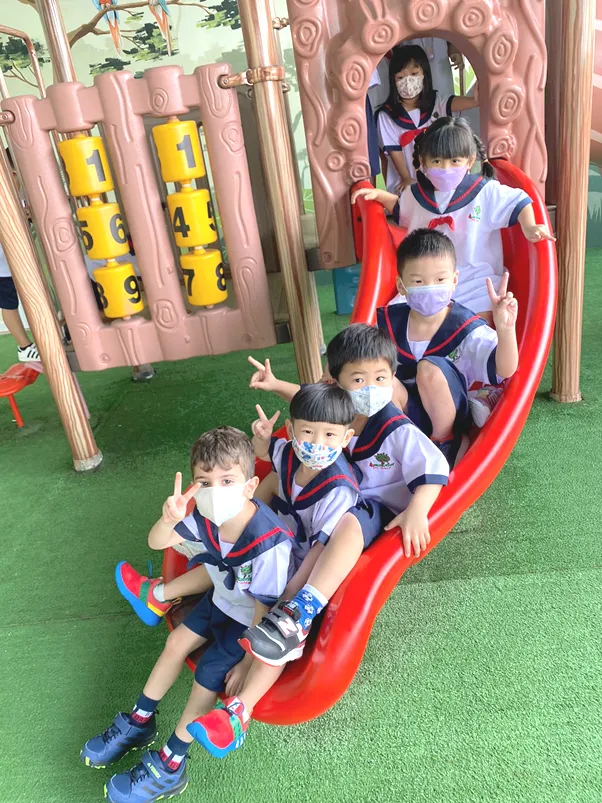
Image Source: Apple Tree Pre-School BSD
Why Outdoor Learning Activities Transform Young Minds
When we moved into our current location at the Educenter BSD Building, we made sure our outdoor spaces could support rich learning experiences. We’ve watched countless children who struggle to focus indoors become completely engaged when learning moves outside.
There’s something about the multisensory nature of outdoor environments that clicks with young learners. They’re not just seeing and hearing, they’re feeling textures, smelling flowers, and experiencing learning through their whole bodies. This kind of immersive experience creates stronger neural connections and deeper understanding than traditional indoor instruction alone.
Research backs up what we observe daily: children who spend regular time learning outdoors show improved creativity, better problem-solving skills, and increased environmental awareness. They also tend to be more physically active, socially collaborative, and emotionally resilient. Nature has a way of leveling the playing field, too, where children who might struggle academically indoors often shine as outdoor explorers and leaders.
Nature’s Classroom: Simple Activities That Spark Wonder
Scavenger Hunts That Build Observation Skills
We love creating themed scavenger hunts that turn outdoor exploration into focused learning adventures. Our “Color Hunt” challenges children to find natural objects in every color of the rainbow, while our “Shape Safari” has kids searching for circles, triangles, and squares in nature.
The beauty of these outdoor learning activities is how they naturally integrate multiple subjects. Children practice counting, sorting, comparing, and describing while developing their observation skills. Our Toddler groups might look for “something soft” and “something rough,” while our Kindergarten 2 students tackle more complex challenges like “find something that shows a pattern.”
Last month, we created a “Letter Hunt” where children searched for objects that began with specific sounds. Watching them discover that “rock” starts with “r” while holding an actual rock creates connections that workbook exercises simply can’t match.
Garden-Based Learning Adventures
Our school garden has become one of our most valuable teaching tools, and you don’t need a large space to create similar opportunities at home. Even a few pots with herbs or flowers can provide endless learning possibilities.
Children learn responsibility through daily watering and care routines. They observe life cycles firsthand, from seed to sprout to full-grown plant. Math concepts become concrete as they measure growth, count leaves, and compare sizes. Science comes alive as they investigate what plants need to thrive and observe the creatures that visit their garden.
The patience required for gardening also teaches valuable life skills. In our instant-gratification world, watching seeds slowly transform into plants helps children understand that good things take time and consistent care.
Weather Watchers and Seasonal Explorers
Every day brings new weather-related learning opportunities that cost absolutely nothing but provide invaluable education. We’ve turned our daily weather observations into comprehensive learning experiences that span multiple subjects.
Our students track daily temperatures, rainfall, and wind patterns using simple charts and graphs. They make predictions about weather changes and test their hypotheses. During seasonal transitions, we document how plants, animals, and our outdoor environment change over time.
Rainy days become particularly exciting learning opportunities. We set up containers to measure rainfall, create paper boats to test in puddles, and observe how water flows and collects in different areas. These hands-on investigations make abstract concepts like the water cycle tangible and memorable.
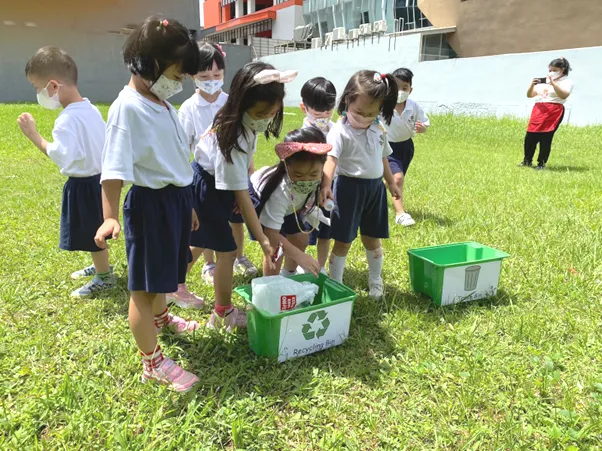
Image Source: Apple Tree Pre-School BSD
Active Learning Through Outdoor Games and Challenges
Movement-Based Math and Literacy
Who says math has to happen at a desk? Our outdoor number games transform abstract concepts into physical experiences that children love. Hopscotch naturally reinforces number recognition and sequencing, while simple races can teach measurement and comparison concepts.
We create giant letter formations using chalk or natural materials, encouraging children to walk the letter shapes while saying the corresponding sounds. This kinesthetic approach to phonics helps children who learn best through movement, and the outdoor space gives them room to make these activities as big and energetic as they need.
Our “Math Trail” activities place simple addition and subtraction problems around our outdoor area, with children moving from station to station to solve problems using natural materials like rocks, leaves, or flowers as manipulatives.
Collaborative Building and Construction
Outdoor spaces provide unlimited opportunities for large-scale construction projects that would be impossible indoors. We provide children with natural and recycled materials, then challenge them to work together on building projects.
Fort construction using branches, leaves, and fabric scraps teaches engineering concepts, spatial reasoning, and teamwork. Sand and water play areas become sites for dam building, road construction, and urban planning projects that integrate science, math, and social studies concepts.
These collaborative outdoor learning activities also develop crucial social skills. Children must communicate, negotiate, and problem-solve together to achieve their building goals, creating authentic opportunities for developing leadership and cooperation skills.
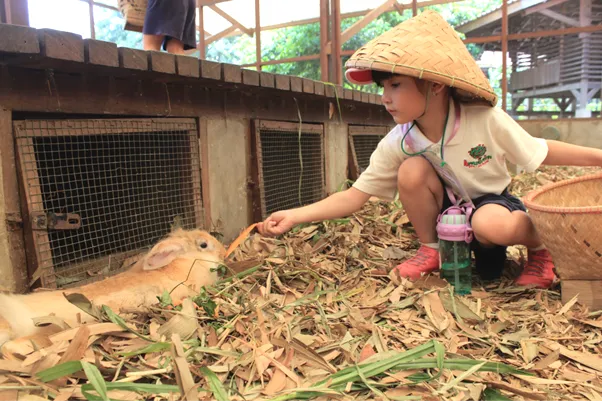
Image Source: Apple Tree Pre-School BSD
Making Outdoor Learning Work for Every Child
Adapting Activities for Different Ages and Abilities
One of the greatest advantages of outdoor learning is how naturally it accommodates different developmental levels and learning styles. The same nature walk can provide appropriate challenges for all our age groups, from Toddlers to Kindergarten 2 students.
Younger children might focus on basic observation and sensory exploration, while older children tackle more complex classification, measurement, and hypothesis-testing activities. Children who struggle with traditional academic tasks often discover hidden talents and confidence through outdoor exploration and hands-on investigation.
We’ve seen quiet children become confident leaders during outdoor activities, while energetic children find healthy outlets for their enthusiasm. Nature provides something for everyone, whether they’re drawn to careful observation, active exploration, or creative expression.
Safety First: Creating Secure Outdoor Learning Environments
Effective outdoor learning requires thoughtful preparation to ensure children’s safety while maximizing learning opportunities. We establish clear boundaries, conduct regular safety checks of our outdoor areas, and teach children to be aware of their environment.
Simple precautions like appropriate clothing, sunscreen application, and basic safety rules allow children to explore confidently. We also teach children to respect living things and natural spaces, fostering environmental stewardship alongside academic learning.
Weather planning ensures that outdoor learning can happen year-round, with appropriate adjustments for different conditions. Rainy day explorations can be just as valuable as sunny day adventures when properly planned and supervised.
Outdoor learning activities offer young children irreplaceable opportunities to connect with nature, develop holistic skills, and discover the joy of hands-on investigation. At Apple Tree Pre-School BSD, we’ve seen how these experiences create confident, curious learners who approach challenges with enthusiasm and creativity.
The natural world provides endless curriculum possibilities that engage all the senses and accommodate every learning style. When children learn outdoors, they’re not just acquiring academic skills, they’re developing environmental awareness, physical confidence, and a lifelong love of exploration and discovery.
Ready to give your child the gift of outdoor learning adventures? We’d love to show you how our comprehensive approach combines nature-based activities with structured curriculum to create well-rounded, happy learners. Send us a WhatsApp message or give us a call at +62 888-1800-900.
Come play and learn with other children, because the best classroom is sometimes the one without walls! 🌳🌺🦋