I remember standing in our school lobby last Tuesday watching two mothers have a heated debate. One swore by Montessori methods for her daughter. The other insisted traditional approaches worked better for her son. Both walked away convinced they’d chosen the right path.
That conversation got me thinking about how confusing this decision really is. The question of montessori vs traditional keeps parents up at night. They worry they’re making the wrong choice. They stress about their child’s future development. They wonder which approach truly serves their child best.
Here’s the honest truth we’ve learned at Apple Tree Pre-School BSD after working with hundreds of families. Montessori vs traditional isn’t actually a simple either-or choice. Both approaches have genuine strengths and real limitations. Both can help children thrive and develop beautifully. The real question is which approach fits your child, your family, and your values best.
At the Educenter BSD Building, we’ve watched this montessori vs traditional debate play out countless times. Parents feel pressure to choose perfectly. They worry they’ll shortchange their child somehow. They want to make an informed decision but feel overwhelmed by conflicting information.
That’s exactly why we created this article to help you navigate montessori vs traditional thoughtfully. We’ll explore what each approach really involves. We’ll discuss the genuine benefits and real drawbacks of each. We’ll help you figure out which path aligns with your child and your family’s needs. By the end, you’ll feel confident about making the right choice.
Understanding Montessori vs Traditional Education
The debate about montessori vs traditional has existed for over a century now. Maria Montessori developed her revolutionary approach in Italy around 1906. Traditional education evolved from much older teaching methods and systems. Both have educated millions of children successfully worldwide.
But when we talk about montessori vs traditional, we’re really comparing two completely different philosophies. They differ in classroom structure, teacher roles, curriculum approach, and learning goals. Understanding these differences matters when making the montessori vs traditional decision for your child.
Traditional education is what most of us experienced growing up. Teachers lead instruction from the front of the classroom. Students sit at desks in rows facing the teacher. The curriculum follows a set sequence of subjects and topics. Everyone learns roughly the same content at roughly the same pace. Assessment happens through tests, quizzes, and grades.
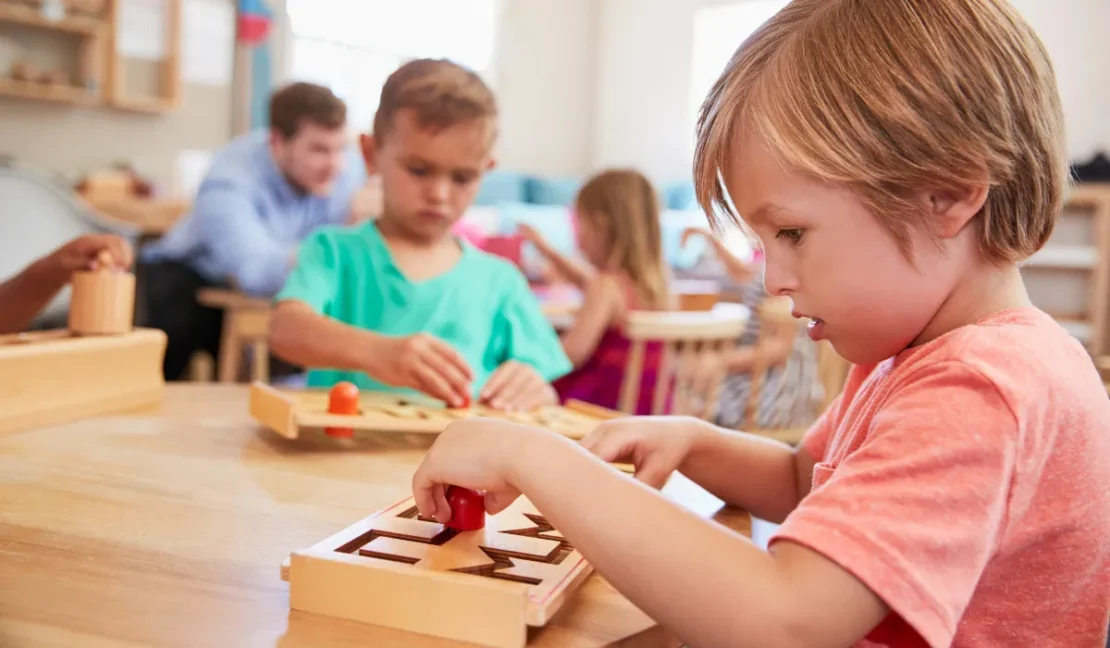
Montessori education flips this model completely upside down. Children choose their own activities from carefully prepared environments. Teachers observe and guide rather than direct instruction constantly. Mixed-age classrooms allow children to learn at their own pace. The curriculum follows the child’s interests and developmental readiness. Assessment focuses on individual progress rather than standardized testing.
Understanding these fundamental differences is absolutely crucial when weighing montessori vs traditional for your family.
Philosophy Behind Montessori vs Traditional Approaches
The philosophy driving montessori vs traditional comes from very different views about how children learn. Montessori philosophy trusts that children are naturally motivated learners. It believes children have an inner drive to explore, discover, and master skills. When you remove obstacles and provide the right environment, learning happens naturally.
Traditional philosophy emphasizes structured instruction and guided learning. It assumes children need clear direction and external motivation. Teachers are experts who transmit knowledge to students. Students absorb information through listening, reading, and practicing. This approach values consistency, standards, and measurable outcomes.
Neither philosophy is wrong or right in absolute terms. They just start from different assumptions about childhood learning. These philosophical differences shape everything about montessori vs traditional, from daily classroom activities to how progress is measured.
How Learning Happens in Montessori vs Traditional Settings
In montessori vs traditional classrooms, learning unfolds in strikingly different ways daily. In traditional settings, the teacher decides what everyone learns and when. The teacher explains concepts, demonstrates skills, assigns practice work, and checks understanding. Students move through the curriculum together at a set pace. Some children race ahead while others fall behind.
In Montessori settings, children drive their own learning journey. They choose activities based on their interests and readiness. They work with materials designed to teach specific concepts through hands-on exploration. A child might spend hours with one activity or move through several quickly. The teacher observes carefully and gently guides without controlling.
When we discuss montessori vs traditional at Apple Tree Pre-School BSD, we help parents understand these practical daily differences. Your child experiences completely different routines, rhythms, and learning patterns in montessori vs traditional environments.

Image Source: Canva
The Strengths of Montessori Education
Montessori approaches have genuine strengths that make many parents excited about this path. Understanding what montessori does well is essential when evaluating montessori vs traditional for your situation.
Independence and Self-Direction in Montessori Programs
One of Montessori’s greatest strengths is fostering genuine independence in children. Children make choices about activities, timing, and pace daily. They manage their own work without constant teacher direction. They learn to solve problems independently before asking for help.
This independence matters tremendously for your child’s development. Children in Montessori settings develop confidence in their own decision-making. They learn to trust their instincts and follow their interests. They become self-directed learners who take responsibility for their education. This skill serves them beautifully throughout life.
Parents often tell us their Montessori children handle new situations with remarkable independence. These children figure things out themselves. They don’t wait passively for instructions. They tackle problems with confidence and creativity.
Individualized Learning in Montessori vs Traditional
Montessori education adapts completely to each child’s unique learning pace and style. There’s no pressure to keep up with a set curriculum. There’s no feeling of falling behind when you process information differently. Each child progresses through materials at their own speed.
This individualization creates real benefits for certain learners. Gifted children can move ahead without waiting for the group. Struggling learners can take time they need without embarrassment. Children with learning differences find approaches that work for their brains.
Hands-On Learning and Concrete Understanding
Montessori materials are designed brilliantly for hands-on, sensory learning. Children touch, manipulate, and explore real objects. They build concrete understanding before abstract concepts. Math becomes tangible with golden beads. Language becomes real with sandpaper letters.
This concrete approach creates deeper understanding for many learners. Children internalize concepts through their senses and muscles. They remember what they’ve handled and explored. They build strong foundations before moving to symbolic thinking.
The Strengths of Traditional Education
Traditional education also has genuine strengths that make it an excellent choice for many families. When evaluating montessori vs traditional, don’t overlook what traditional approaches do remarkably well.
Structure and Clear Learning Outcomes in Traditional Education
Traditional education provides clear structure and defined learning outcomes. Everyone knows what will be learned and when. Progress is measurable against clear standards. Parents understand exactly where their child stands academically.
This structure appeals to many families and works beautifully for many children. Some learners thrive with clear expectations and defined goals. They appreciate knowing exactly what’s expected. They work hard to meet clear benchmarks. For these children, traditional education’s structure feels supportive rather than restrictive.
Proven Academic Achievement and Standardized Success
Traditional education has a long track record of academic achievement. Standardized tests measure progress consistently. College admissions understand traditional credentials. Universities prepare students effectively for further traditional education.
If academic achievement measured by standardized methods matters to your family, traditional education delivers. Your child will be prepared for conventional academic advancement. Test scores provide clear accountability. Credentials are widely recognized and understood.
Social Preparation for Conventional Environments
Traditional classrooms prepare children for conventional workplaces and social structures. Your child learns to follow instructions from authority figures. They adapt to group schedules and expectations. They practice working within systems and rules. These skills transfer directly to most traditional schools and workplaces.
For families prioritizing this kind of social preparation, traditional education excels. Children develop skills that match conventional expectations. They learn to function successfully in hierarchical environments. They understand how to work within established structures.
Strengths of Traditional Education:
- Clear learning objectives and measurable progress tracking
- Structured curriculum with defined standards everyone understands
- Preparation for conventional school and workplace environments
- Efficient coverage of broad subject matter and content
- Teacher expertise directing learning toward specific competencies
- Group instruction creating shared learning experiences
The Limitations of Each Approach
Just as each approach has strengths, each also has real limitations worth considering in montessori vs traditional decisions.
Montessori Limitations Parents Should Know
Montessori education isn’t perfect for every child or family situation. Some limitations exist that matter when weighing montessori vs traditional carefully. Montessori materials and training are expensive. Quality Montessori schools cost significantly more than traditional options. This can limit access for some families.
Montessori’s lack of structure unsettles some learners deeply. Children who need clear direction struggle without teacher-led instruction. Some kids feel anxious choosing activities independently. These children actually thrive with traditional structure rather than Montessori freedom.
Montessori’s preparation for standardized testing is limited too. If your child will take conventional tests eventually, Montessori may not prepare them optimally. Test-taking skills require practice with test formats. Traditional education emphasizes this preparation more directly.
Montessori can also create uneven skill development across subjects. A child might excel in one area while neglecting others. There’s no guarantee all important subjects receive adequate attention.
Traditional Education Limitations Parents Should Consider
Traditional education also carries real limitations when evaluating montessori vs traditional honestly. Traditional classrooms often create passive learners who wait for answers. Students don’t develop strong independence or self-direction. They struggle when facing open-ended problems without clear instructions.
One-size-fits-all pacing in traditional education doesn’t serve all learners well. Gifted children get bored waiting for the group. Struggling learners fall further behind trying to keep pace. Individual learning styles and speeds receive little accommodation.
Traditional education can stifle creativity and independent thinking sometimes. The emphasis on right answers and following procedures limits exploration. Children learn to comply rather than question and discover. This doesn’t serve all learners’ developmental needs equally.
Motivation in traditional settings comes from external rewards and punishments. Children learn to study for grades rather than genuine learning. Intrinsic motivation develops less naturally than in Montessori environments. This affects long-term love of learning differently.
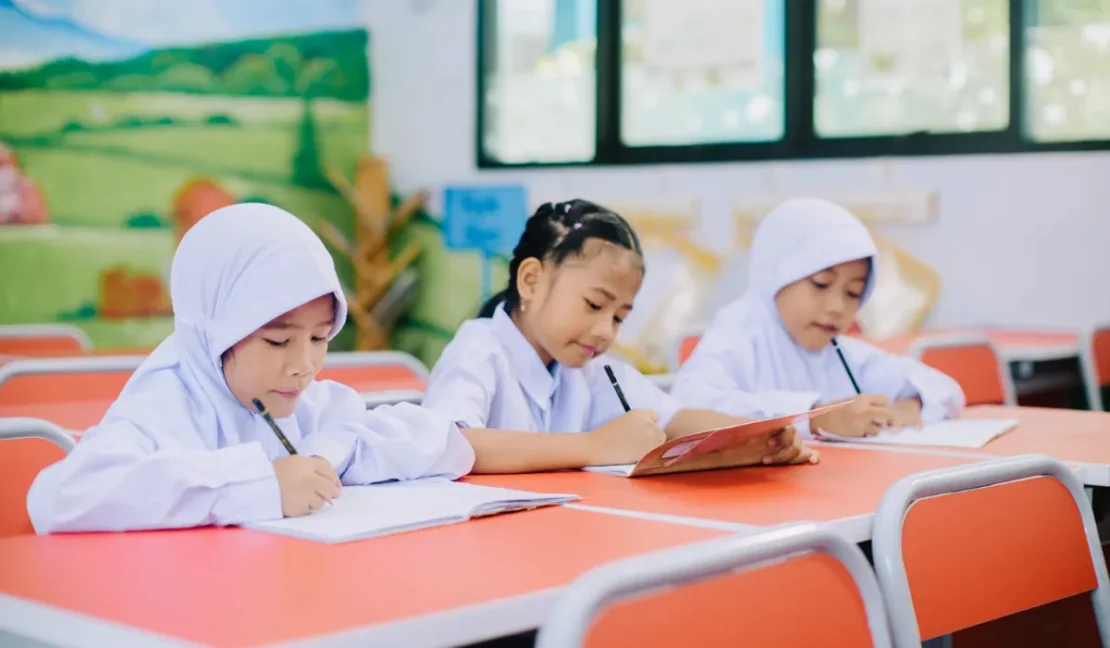
Image Source: Canva
Montessori vs Traditional: Which Path Fits Your Child?
The real question isn’t which approach is objectively better overall. It’s which approach aligns better with your specific child and family values. When deciding montessori vs traditional, consider these important factors carefully.
Consider Your Child’s Learning Style
Think about how your child naturally learns best. Does your child thrive with clear direction or prefer independence? Does structure feel supportive or restrictive? Does your child explore materials independently or wait for instructions? Does your child move at the group’s pace or need customization?
Children who are naturally independent explorers often flourish in Montessori. Children who need clear direction and structure often do better traditionally. Pay attention to how your child naturally approaches learning and problem-solving.
Reflect on Your Family Values
What matters most to your family about education? Do you prioritize academic achievement measured by tests? Do you value independence and self-direction equally or more? Does structure appeal to you or concern you? What kind of learner do you want your child to become?
Your family values should guide your montessori vs traditional decision significantly. Your beliefs about childhood, learning, and education matter. Choosing an approach that conflicts with your core values creates unnecessary tension.
Evaluate Practical Considerations
Consider logistics and costs when weighing montessori vs traditional practically. Where do quality programs exist near you? What can your family afford comfortably? What’s the commute like? Do program schedules work for your family rhythm?
These practical matters influence your satisfaction and success with either approach. An excellent Montessori program far away might not serve your family better than a good traditional program nearby.
Look at Individual School Quality
The individual school matters as much as the approach itself honestly. A mediocre Montessori program might not serve your child better than an excellent traditional school. A poorly implemented traditional classroom might frustrate your child unnecessarily.
When evaluating montessori vs traditional, research specific schools carefully. Visit classrooms, talk with teachers, meet families. The quality and philosophy of the specific school matters tremendously.
At Apple Tree, We Bridge Both Worlds
At Apple Tree Pre-School BSD, we’ve thought deeply about montessori vs traditional approaches. We use our Singapore curriculum thoughtfully, combining the best of both philosophies. We provide structure and clear learning objectives that traditional education values. We also create choice, independence, and hands-on exploration that Montessori emphasizes.
Our programs for ages 1.5 through 6 balance structure with freedom. Children have guided activities and independent exploration time. Teachers provide instruction and observation equally. Children learn specific skills and discover independently. We believe children thrive with both support and autonomy.
Our Toddler, Pre-Nursery, Nursery, Kindergarten 1, and Kindergarten 2 programs incorporate both approaches thoughtfully. We don’t see montessori vs traditional as either-or. We see both as valuable, with different benefits for different children.
Frequently Asked Questions About Montessori vs Traditional
Q: Can my child transition from Montessori to traditional school later?
Yes, children transition successfully both directions. Montessori children often thrive in traditional settings because they’re independent learners. They adapt to structure relatively easily. Traditional children also adapt to Montessori, though it takes adjustment. The transition works better when you prepare your child intentionally.
Q: Which approach produces higher academic achievement?
Research shows both produce academically strong students. Montessori students often excel in creative and independent thinking. Traditional students often perform well on standardized tests initially. Over time, the individual student matters more than the approach. Your child’s personality, effort, and family support matter most.
Q: Is Montessori too unstructured for young children?
Montessori is highly structured differently than traditional settings. The environment is carefully prepared. Activities progress from concrete to abstract methodically. Teachers guide subtly while maintaining structure. Young children actually benefit from Montessori’s thoughtful organization.
Q: Will my child be unprepared for “real school” in Montessori?
This is a common concern but largely unfounded. Montessori children adapt to traditional environments successfully. Their independence often gives them advantages. They’re creative problem-solvers and self-directed learners. These skills transfer beautifully to any educational setting.
Q: How do I know which approach is right before committing?
Visit schools using each approach. Observe actual classrooms in action. Talk with families currently using each approach. Trust your instincts about what feels right for your child. Remember that you can adjust if your first choice doesn’t work out perfectly.
Making Your Montessori vs Traditional Decision
The montessori vs traditional choice doesn’t have to feel overwhelming. You’re not choosing between failure and success. You’re choosing between two legitimate, valid educational approaches. Both can nurture smart, happy, capable children beautifully.
Trust your knowledge of your child. Consider your family values honestly. Research the specific schools available to you. Remember that good educators exist in both traditional and Montessori settings. Your active involvement in your child’s education matters more than which philosophy you choose.
At Apple Tree Pre-School BSD, we’re here to help you think through this important decision. We offer a thoughtful balance of both approaches through our Singapore curriculum. Our small class sizes, experienced teachers, and individualized attention ensure your child thrives.Ready to explore the right educational path for your child? Visit our programs at the Educenter BSD Building and see our balanced approach in action. Observe how we blend structure with freedom, guidance with independence. Watch children learning happily through hands-on exploration and clear objectives. Send us a WhatsApp message or call us at +62 888-1800-900 to discuss which program fits your child best. Come meet our teachers and experience our classrooms. Register your child today and give them the perfect blend of structure and freedom! 🌱📚✨