You’re at a birthday party watching your three-year-old eye the cake table with the same intensity usually reserved for toy stores. Another mom asks cheerfully, “Any allergies I should know about?” and suddenly you’re launching into your well-practiced explanation about eggs, tree nuts, and that one terrifying incident with peanut butter toast that ended with EpiPens and emergency rooms. Meanwhile, other parents are nodding knowingly because managing food allergies kids face today has become almost a universal parenting experience. The mom next to you pulls out her own emergency medication and you both share that look, the one that says “welcome to the club nobody wanted to join but here we are keeping each other’s children alive at social events.”
Here’s what’s both frustrating and important to understand: food allergies kids experience aren’t just inconvenient dietary restrictions you can work around with careful menu planning. They’re serious medical conditions requiring constant vigilance, education of everyone in your child’s environment, emergency preparedness, and a level of label-reading skills that would impress a pharmaceutical researcher. At Apple Tree Pre-School BSD, we work with families navigating food allergies kids develop, creating safe environments where children can learn, play, and eat without parents living in constant fear of exposure.
The challenge isn’t just managing what your child eats at home where you control everything. It’s managing food allergies kids have in preschool settings, at friends’ houses, during celebrations, and in every situation where well-meaning adults might offer snacks without understanding the stakes. Ready to understand how to keep your child safe while still allowing them to participate fully in childhood?
Understanding Food Allergies Kids Develop Today
Before diving into management strategies, let’s understand what we’re dealing with and why food allergies kids face seem more common than in previous generations.
What Are Food Allergies and Why Are They Increasing?
Food allergies occur when the immune system mistakenly identifies certain food proteins as threats and launches an attack against them. This isn’t pickiness or food preference; it’s a genuine immune response that can range from mild discomfort to life-threatening anaphylaxis. Current research shows that food allergies kids experience have increased by about 50% in the past two decades, now affecting approximately 1 in 13 children.
The most common food allergies kids face are milk, eggs, peanuts, tree nuts, soy, wheat, fish, and shellfish. These account for about 90% of all allergic reactions. In our classrooms at the Educenter BSD Building, we typically have multiple children with food allergies in each program from our Toddler classes with 12 children through our Kindergarten programs with 20 children each.
Theories about why food allergies kids develop are increasing include the hygiene hypothesis (overly clean environments don’t train immune systems properly), delayed allergen introduction in infancy, changes in food processing, vitamin D deficiency, and gut microbiome changes. While researchers continue investigating, what matters most for parents is learning to manage the reality of food allergies kids live with today.
Recognizing Food Allergy Symptoms
Understanding food allergies kids experience requires recognizing symptoms, which can range from mild to severe and may not always be obvious.
Mild to moderate symptoms:
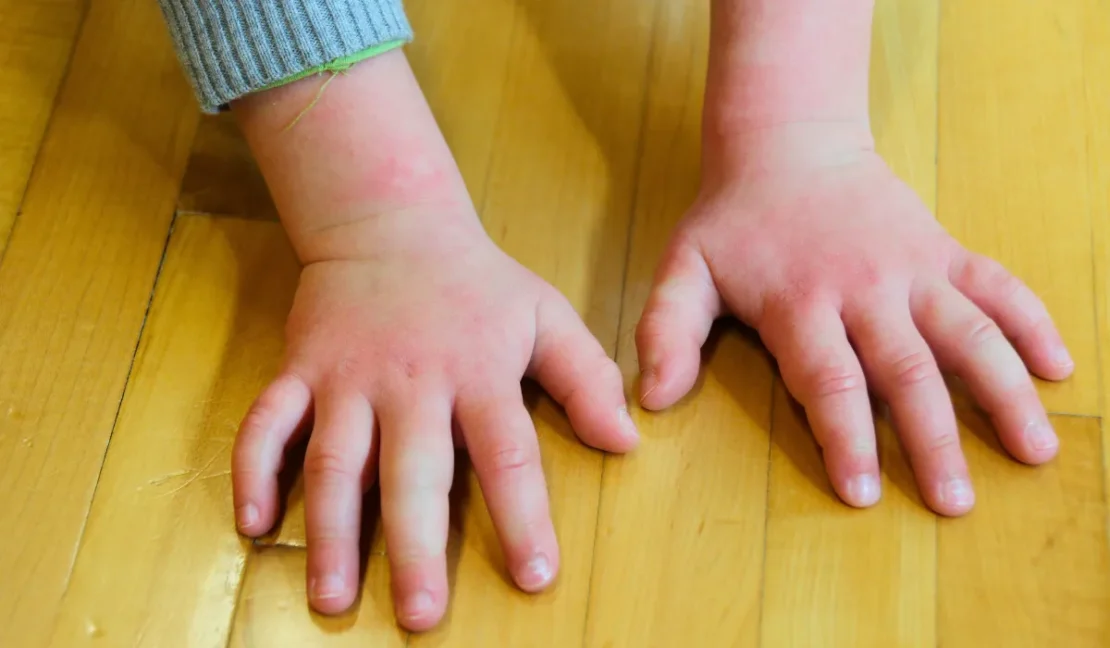
- Hives, rash, or itchy skin
- Swelling of lips, face, or tongue
- Stomach pain, nausea, vomiting, or diarrhea
- Runny or stuffy nose
- Itchy, watery eyes
- Tingling or itching in the mouth
Severe symptoms (anaphylaxis):
- Difficulty breathing or wheezing
- Swelling of throat or tongue affecting breathing
- Rapid pulse
- Dizziness or feeling faint
- Loss of consciousness
- Significant drop in blood pressure
Anaphylaxis is a medical emergency requiring immediate epinephrine and emergency services. Parents managing food allergies kids have must recognize these symptoms instantly and respond without hesitation. We train all our educators to recognize allergic reactions and respond appropriately, with clear protocols and readily accessible emergency medications.
Food Allergies vs. Food Intolerances
Many parents confuse food allergies kids have with food intolerances, but they’re medically different and require different responses.
Food allergies involve the immune system and can be life-threatening. Even tiny amounts can trigger reactions. Food intolerances involve the digestive system and while uncomfortable, they’re not life-threatening. Larger amounts are typically needed to cause symptoms, and these develop gradually rather than immediately.
Lactose intolerance, for example, isn’t the same as milk allergy. A child with lactose intolerance might get stomach aches from milk but won’t have anaphylaxis. A child with milk allergy could have a life-threatening reaction to a tiny splash of milk. Understanding this distinction is crucial when managing food allergies kids actually have versus digestive sensitivities.

Image Source: Canva
Managing Food Allergies Kids Have at Home
Creating a safe home environment is the foundation of managing food allergies kids face. This is where you have maximum control and can establish habits and systems that protect your child.
Reading Labels Like a Pro
Managing food allergies kids experience starts with becoming an expert label reader. Allergens hide in unexpected places under various names.
Label-reading essentials:
- Always read labels, even on familiar products (manufacturers change formulas)
- Check for allergen statements (“contains milk” or “may contain peanuts”)
- Learn alternative names for allergens (casein is milk, albumin is egg)
- Watch for “processed in a facility with” warnings
- Be aware that “natural flavors” can hide allergens
- When in doubt, contact the manufacturer or skip it
We teach children in our English and Science curricula to start understanding their allergies age-appropriately. Even young children can learn to recognize their allergen on labels or ask adults to check for them.
Kitchen Safety and Cross-Contamination
For severe food allergies kids have, cross-contamination is a serious concern. Even traces of allergens from shared surfaces or utensils can trigger reactions.
Preventing cross-contamination:
- Use separate cutting boards, utensils, and cookware for allergen-free foods
- Thoroughly wash hands, surfaces, and tools after handling allergens
- Store allergen-free foods separately and clearly labeled
- Prepare allergen-free foods first when cooking multiple dishes
- Consider making your home completely free of the allergen if reactions are severe
- Be cautious with shared containers like butter, peanut butter, or jam
Many families managing severe food allergies kids face choose to eliminate the allergen from their home entirely. This is especially common with peanut and tree nut allergies where even residue can be dangerous.
Teaching Your Child About Their Allergies
Age-appropriate education is crucial. Children need to understand their food allergies without living in constant fear.
What to teach at different ages:
- Toddlers (1.5-3): “This food makes you sick, always check with grown-ups”
- Preschoolers (3-4): Name of their allergen, need to ask before eating anything
- Kindergarten (4-6): Recognizing their allergen, understanding reactions, knowing to get help immediately
In our Moral education and Social Studies curriculum, we help children understand differences including food allergies, building empathy and inclusion rather than making allergic children feel isolated or “other.”
Emergency Preparedness at Home
Every family managing food allergies kids have needs an emergency action plan and the knowledge to execute it without panicking.
Home emergency essentials:
- Epinephrine auto-injectors (at least two) that aren’t expired
- Emergency action plan posted where caregivers can see it
- Emergency contacts readily accessible
- All caregivers trained on recognizing reactions and administering epinephrine
- Practice using trainer devices so everyone is comfortable
- Plan for getting to emergency care quickly
Remember, if you use epinephrine, you call emergency services immediately even if symptoms improve. Reactions can be biphasic, meaning they return after initially resolving.
Managing Food Allergies Kids Face in Preschool Settings
This is where managing food allergies kids have becomes more complex because you’re not there to control everything. Choosing the right preschool and establishing clear communication is essential.
Choosing an Allergy-Aware Preschool
Not all preschools are equally equipped to manage food allergies kids bring to their programs. When touring schools, ask specific questions.
Questions to ask potential preschools:
- What is your food allergy policy?
- How do you prevent cross-contamination during snacks and meals?
- Are teachers trained in recognizing allergic reactions?
- Are teachers trained in administering epinephrine?
- How do you handle birthday celebrations and special events?
- Where is emergency medication stored and how quickly accessible?
- How do you include allergic children without isolating them?
- What is your emergency action protocol?
At Apple Tree Pre-School BSD, we take food allergies kids have very seriously. All our educators are trained in allergy awareness and emergency response. We maintain detailed records of each child’s allergies, keep emergency medications readily accessible, implement strict food policies, and communicate regularly with parents about upcoming food-related activities.
Creating an Allergy Action Plan with School
Successful management of food allergies kids experience at school requires detailed planning and communication between parents and educators.
Essential components:
- Written emergency action plan with your child’s photo
- List of allergens and safe alternatives
- Emergency contact information
- Symptoms to watch for and how to respond
- Clear instructions for epinephrine administration
- Physician’s signature and parent authorization
- Regular updates as needed
We require these plans for all children with food allergies in our programs from Toddler through Kindergarten 2. These plans are reviewed with all staff who interact with the child and posted in relevant areas while respecting privacy.
Snacks, Celebrations, and Social Events
This is where managing food allergies kids have gets emotionally complex. Children want to participate in celebrations and feel included, but safety must come first.
Strategies for inclusive celebrations:
- Provide safe alternatives for your child for every event
- Offer to provide allergy-friendly treats for the whole class
- Focus on non-food celebrations when possible
- Educate other parents about your child’s allergies
- Pack safe treats in your child’s bag for unexpected food situations
- Teach your child to politely decline offered foods
In our Creativity and Social Studies programs, we emphasize celebrations that don’t center entirely on food, incorporating art projects, music, games, and activities that all children can enjoy regardless of dietary restrictions. When we do have food at celebrations, we carefully plan with parents of allergic children to ensure safe options.
Communication and Advocacy
Parents managing food allergies kids face must become advocates, educating teachers, other parents, and even administrators about their child’s needs.
Effective advocacy strategies:
- Provide clear, written information about your child’s allergies
- Offer to present to the class about food allergies age-appropriately
- Supply safe snack options for the classroom
- Maintain regular communication with teachers
- Build relationships with other parents
- Approach conversations collaboratively rather than confrontationally
- Express appreciation for accommodations and vigilance
We partner with parents at Apple Tree to create environments where food allergies kids have are managed through shared responsibility. Teachers, parents, and even the children themselves all play roles in keeping everyone safe.
Food Allergies Kids Experience During Social Situations
Beyond school, food allergies kids have must be managed during playdates, birthday parties, family gatherings, and travel. These situations require planning and clear communication.
Playdates and Birthday Parties
These are some of the trickiest situations for managing food allergies kids face because other parents may not understand the seriousness or necessary precautions.
Playdate safety strategies:
- Communicate your child’s allergies clearly before the playdate
- Offer to send safe snacks for your child
- Provide emergency medication and instructions
- Explain signs of reaction and when to call you or emergency services
- For severe allergies, consider asking the host to avoid the allergen during the visit
- Stay nearby or on-site for young children with severe allergies
For birthday parties, consider arriving early to speak with hosts, bringing safe alternatives for your child, staying at the party for young children, and teaching your child to check with you before eating anything. Some families with severe allergies choose to host parties at their own homes where they control the environment completely.
Extended Family and Cultural Expectations
Managing food allergies kids have can be complicated by family members who don’t take allergies seriously or cultural traditions centered on specific foods.
Navigating family situations:
- Educate family members about the medical seriousness of allergies
- Provide written information from doctors if needed
- Offer to bring safe dishes to family gatherings
- Suggest alternative traditional foods that are safe
- Set firm boundaries even if it causes discomfort
- Consider hosting at your home when possible
We’ve heard from parents navigating food allergies kids experience in Indonesian family contexts where certain traditional foods are central to celebrations. Finding safe alternatives that honor traditions while protecting children requires creativity and sometimes difficult conversations.
Travel and Dining Out
Traveling with food allergies kids have requires extra planning but is absolutely possible with preparation.
Travel safety tips:
- Research restaurants in advance and call ahead
- Carry emergency medications in carry-on luggage
- Bring safe snacks for planes, cars, or situations without safe options
- Learn how to communicate allergies in local languages
- Wear medical alert jewelry
- Have emergency action plans accessible
- Research nearest hospitals at your destination
When dining out with food allergies kids face, speak directly with managers or chefs, not just servers. Ask detailed questions about ingredients and preparation. Don’t be afraid to leave if you’re not confident in the restaurant’s ability to provide safe food.

Image Source: Canva
Psychological and Emotional Aspects of Food Allergies Kids Face
Beyond physical safety, managing food allergies kids have involves emotional and psychological wellbeing for both children and parents.
Helping Children Feel Normal, Not Different
Children with food allergies can feel isolated or different from peers. How you frame their allergies matters enormously for their self-esteem and emotional health.
Promoting positive self-image:
- Emphasize what they can eat, not just restrictions
- Avoid making food allergies their primary identity
- Connect them with other children who have allergies
- Celebrate their responsibility and self-advocacy skills
- Include them fully in activities with appropriate accommodations
- Model confidence and matter-of-fact attitudes about allergies
In our programs, we normalize differences including food allergies kids experience. We teach all children about various dietary needs, building understanding and inclusion rather than treating allergic children as problems to be solved.
Managing Parental Anxiety
Parents managing food allergies kids have often carry significant anxiety, and understandably so. The stakes are literally life and death. However, excessive anxiety can limit children’s experiences or transfer fear to them.
Balancing vigilance with normalcy:
- Stay informed and prepared without catastrophizing
- Build support networks with other allergy parents
- Consider therapy if anxiety becomes overwhelming
- Allow age-appropriate independence as children mature
- Trust your preparation and your child’s growing competence
- Focus on all the things your child can do, not just restrictions
We’ve seen parents grow in confidence as their children become more independent in managing their food allergies kids experience. By Kindergarten 2 with our 20 children per class, many allergic children are actively participating in their own safety, checking ingredients, and advocating for themselves.
Sibling Considerations
Food allergies kids have affect siblings too, who may feel resentful about restrictions or worried about their brother or sister.
Supporting siblings:
- Explain the seriousness age-appropriately
- Acknowledge their feelings about restrictions
- Create special sibling-only treats they don’t have to share
- Praise their helpfulness and protectiveness
- Ensure they get individual attention beyond allergy management
- Teach them to be advocates and protectors without burdening them with responsibility
In our Mathematics and Science programs, we sometimes incorporate food allergy awareness in age-appropriate ways, helping all children understand why some friends have different food needs.
Medical Management and Working with Healthcare Providers
Effective management of food allergies kids have requires ongoing medical care and partnership with healthcare providers.
Diagnosis and Testing
Proper diagnosis is essential. If you suspect food allergies kids might have, work with allergists who can conduct appropriate testing.
Diagnostic approaches:
- Skin prick tests
- Blood tests (specific IgE)
- Oral food challenges (under medical supervision)
- Elimination diets followed by controlled reintroduction
Never diagnose food allergies kids might have on your own or based on internet research alone. Proper medical evaluation prevents both under-treatment of real allergies and over-restriction based on unfounded concerns.
Outgrowing Allergies
Some food allergies kids develop in early childhood are eventually outgrown, though this varies by allergen and individual.
Likelihood of outgrowing common allergies:
- Milk: About 80% outgrow by age 16
- Egg: About 68% outgrow by age 16
- Soy: About 50% outgrow by school age
- Wheat: Most outgrow by school age
- Peanut: About 20% outgrow
- Tree nuts: About 9% outgrow
- Fish and shellfish: Usually lifelong
Regular follow-up with allergists can determine if your child is ready for supervised food challenges to test whether they’ve outgrown their allergies. Never test this at home; reactions can be severe even in children who’ve previously tolerated small amounts.
Emerging Treatments
While avoidance remains the primary treatment for food allergies kids face, emerging therapies offer hope.
Newer treatment approaches:
- Oral immunotherapy (gradually increasing doses of allergen)
- Sublingual immunotherapy
- Epicutaneous immunotherapy (patch therapy)
- Biological medications being studied
These treatments are still relatively new and not appropriate for all children. Discuss with your allergist whether your child might be a candidate.
Why This Matters at Apple Tree Pre-School BSD
Everything we’ve discussed about managing food allergies kids have is directly relevant to our commitment at Apple Tree Pre-School BSD to create safe, inclusive environments where all children can thrive. We understand that food allergies kids experience require constant vigilance, clear communication, and partnership between educators and parents.
Our Singapore curriculum covering English, Mathematics, Chinese, Science, Creativity, Social Studies, Bahasa, Moral, Music, Physical Education, and Phonics is delivered in an environment where safety is never compromised. From our Toddler programs with 12 children per class through Kindergarten 2 with 20 children, we maintain detailed allergy records, train all staff, implement careful food policies, and communicate proactively with families.
At our Educenter BSD Building campus, children with food allergies participate fully in all activities, from cooking in Science class (with safe ingredients) to celebrations in Social Studies, to snack time conversations about different dietary needs in our Moral education curriculum. We don’t just manage food allergies kids have; we create a culture where differences are understood, respected, and accommodated with care.
Looking for a preschool that takes food allergies kids experience seriously while creating inclusive, joyful learning environments? At Apple Tree, we partner with families to keep allergic children safe while ensuring they never feel isolated or limited in their learning and friendships. Discover how we help all children grow smart and happy in a safe, allergy-aware environment or call us at +62 888-1800-900.
Join our Apple Tree family where every child’s safety and inclusion matter! 🍎