
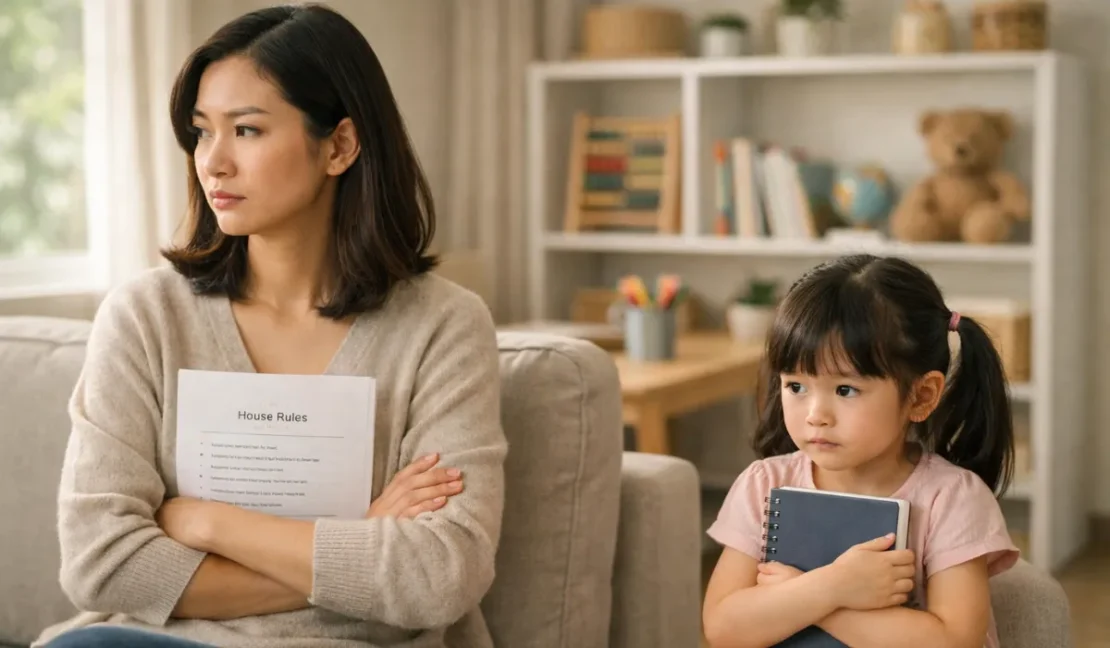
During parent-teacher conferences last month, I had a conversation with Mrs. Chen about her five-year-old daughter, Lily. Mrs. Chen mentioned that Lily rarely speaks up in class, seems anxious about making mistakes, and often freezes when asked to make simple choices like picking which activity to join. What caught my attention wasn’t Lily’s behavior itself, but what Mrs. Chen shared about home: strict rules, lots of “because I said so” responses, and punishment-focused discipline. This moment perfectly illustrates why understanding authoritarian parenting impact on children’s development is so crucial for parents who want to raise confident, emotionally healthy kids.
Here at Apple Tree Pre-School BSD, we work closely with families to help them understand how different parenting approaches shape not just behavior, but personality, confidence, and emotional wellbeing. While many parents grew up with authoritarian parenting styles and turned out fine, we’re learning more and more about how authoritarian parenting impact extends far deeper into adulthood than we once realized.
The research is clear, consistent, and sometimes surprising. Children raised with authoritarian parenting styles often develop distinct personality patterns that can affect their relationships, academic performance, career choices, and mental health throughout their lives. The good news is that understanding these effects helps parents make informed choices about their approach and consider alternative strategies that build strong families while supporting healthy child development.
1. Understanding Authoritarian Parenting and Its Core Characteristics
Authoritarian parenting is a style focused on strict discipline, obedience, and parental control with minimal explanation or emotional warmth. The authoritarian parenting impact on children stems from this combination of high control with low responsiveness, creating an environment where rules are paramount and children’s voices are rarely heard.
This parenting approach is characterized by clear rules and high expectations, but children are expected to follow these rules without questioning or understanding the reasoning behind them. There’s often little room for negotiation, and punishment rather than problem-solving is used to address misbehavior. At our location in the Educenter BSD Building, we’ve observed that children from authoritarian homes often arrive with distinct behavioral patterns that set them apart from their peers.
Core Characteristics of Authoritarian Parenting:
- Strict rules with little flexibility or explanation
- High expectations with limited emotional support
- Punishment-focused discipline strategies
- Limited two-way communication or discussion
- Emphasis on obedience rather than understanding
- Minimal warmth or emotional expression
- Decisions made by parents without child input
- Little tolerance for questioning or disagreement
Understanding these characteristics helps parents recognize whether they’re leaning toward authoritarian approaches and consider how this might affect their child’s development.
Authoritarian Parenting Styles Across Cultures
It’s important to note that authoritarian parenting is common in many cultures and has been the traditional approach for generations. In many Asian communities, including Indonesia, authoritarian parenting styles reflect cultural values around respect for authority, discipline, and academic achievement. However, the authoritarian parenting impact research applies across cultures and shows consistent patterns in how children develop.
Cultural context matters, but neuroscience and psychology show that children’s brains respond to the same patterns regardless of cultural background. The key difference is that awareness of cultural values can help parents find ways to maintain those values while using more responsive, warm approaches that protect children’s emotional development.
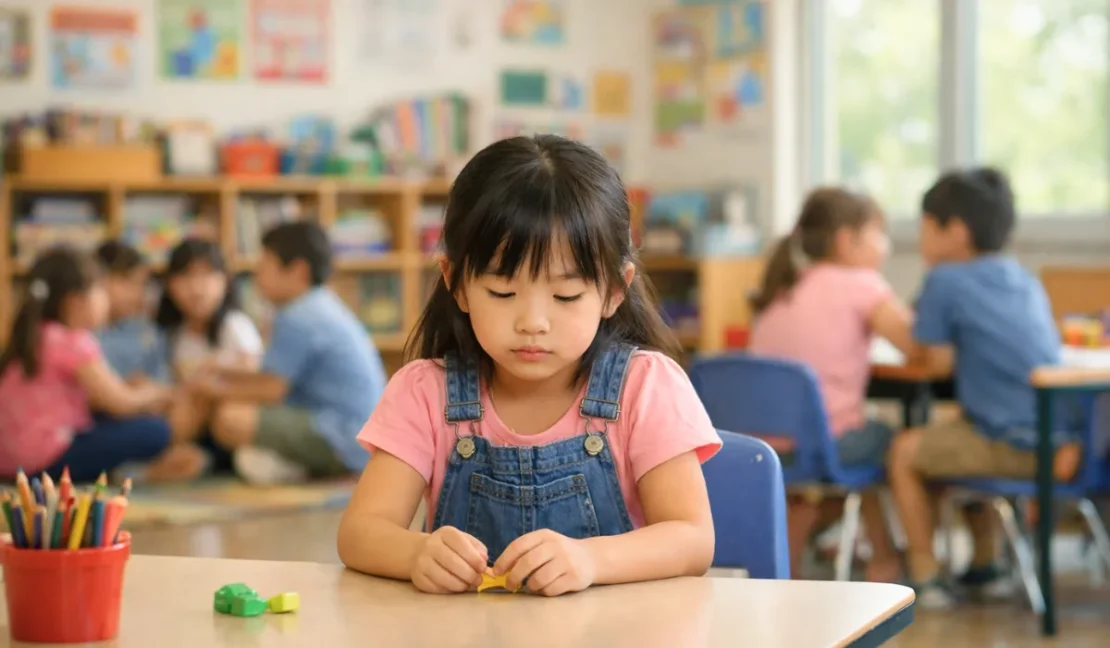
Image Source: Ai
2. Emotional and Personality Effects of Authoritarian Parenting Impact
One of the most significant aspects of authoritarian parenting impact is how it shapes children’s emotional development and personality traits. Children raised with authoritarian parenting styles often develop distinctive patterns that follow them into adulthood.
Reduced Confidence and Increased Anxiety
Research consistently shows that authoritarian parenting impact includes lower self-confidence and higher anxiety levels in children. When children grow up in environments where mistakes are punished rather than treated as learning opportunities, they become afraid to take risks or try new things.
Children experiencing authoritarian parenting impact often struggle with decision-making because they’ve never had practice making choices with guidance and support. They may hesitate before speaking, worry excessively about doing things perfectly, and feel intense anxiety when facing uncertainty or judgment.
This anxiety isn’t about the child’s personality, it’s a direct result of the authoritarian parenting impact. Children who are told what to think, what to do, and how to behave without explanation develop brains that are constantly scanning for approval and fearing disapproval.
Common Emotional Effects of Authoritarian Parenting:
- Anxiety and nervousness in unfamiliar situations
- Low self-esteem and self-doubt
- Fear of failure and perfectionism
- Difficulty with independent decision-making
- Emotional withdrawal or difficulty expressing feelings
- Resentment toward authority figures
- Difficulty trusting their own judgment
- Heightened stress response systems
Difficulty with Creativity and Independent Thinking
Children shaped by authoritarian parenting impact often struggle with creative thinking and independent problem-solving. When children are told exactly how to do things and never encouraged to explore alternatives, their brains don’t develop the neural pathways associated with creativity and innovation.
The authoritarian parenting impact extends to how children approach challenges. Rather than seeing problems as opportunities to learn and experiment, they see them as situations where they might fail and be punished. This fundamentally changes how their brains approach tasks and challenges throughout life.
In our programs, we often see that children from authoritarian homes need extra time and encouragement to participate in creative activities, make suggestions, or take gentle risks with their learning.
3. Social and Relationship Effects of Authoritarian Parenting Impact
How children learn to interact with others is deeply shaped by their family experiences. The authoritarian parenting impact on social development is profound and often visible in children’s peer relationships.
Difficulty with Peer Relationships and Social Skills
Children who experience authoritarian parenting impact often struggle with friendships because they’ve learned that relationships are hierarchical, based on obedience, and involve fear of punishment. They may either be overly submissive to peers or struggle to cooperate and compromise.
Authoritarian parenting impact can result in children who either withdraw from social situations entirely, fearing judgment, or become overly aggressive as a way of trying to control situations the way they were controlled at home. Both extremes make it harder for children to form healthy, balanced friendships.
The authoritarian parenting impact on social skills includes difficulty reading social cues, taking turns in conversation, and understanding reciprocal relationships. These are learned skills that develop through warm, communicative family interactions, which are often lacking in authoritarian homes.
Social Challenges Associated with Authoritarian Parenting:
- Difficulty cooperating with peers
- Trouble understanding reciprocal friendships
- Either withdrawn or aggressive behavior with others
- Poor communication and negotiation skills
- Difficulty expressing needs and boundaries
- Challenges with empathy and perspective-taking
- Tendency to seek approval excessively
- Struggle with healthy competition and losing
Long-term Relationship Patterns
The authoritarian parenting impact extends far into adulthood, affecting how people approach romantic relationships, work relationships, and parenting. Adults who experienced authoritarian parenting often either recreate the same patterns with their own children or swing to the opposite extreme, struggling to set healthy boundaries.
Understanding the authoritarian parenting impact helps break intergenerational cycles. Parents who recognize how authoritarian approaches affected them can make conscious choices to parent differently, even if that means going against patterns they grew up with.
4. Academic Performance and Cognitive Effects
While authoritarian parenting sometimes correlates with academic achievement in the short term, the authoritarian parenting impact on long-term learning and cognitive development is more complex and often negative.
Short-term Achievement with Long-term Costs
Children from authoritarian homes may perform well on tests and follow instructions precisely because they’ve learned strict obedience and fear of consequences. However, the authoritarian parenting impact often means they struggle with higher-level thinking, creative problem-solving, and intrinsic motivation.
The distinction is important: children can learn facts and follow directions without understanding why or developing genuine interest in learning. The authoritarian parenting impact creates children who are compliance-focused rather than mastery-focused, which eventually limits their academic potential and enjoyment of learning.
Research shows that while authoritarian parenting impact might produce good test scores in elementary school, by middle and high school, students from authoritarian homes often fall behind peers who developed genuine interest in learning and independent thinking skills.
Academic Effects of Authoritarian Parenting:
- Good compliance and following instructions
- Short-term test performance may be strong
- Weak intrinsic motivation for learning
- Poor performance on creative and open-ended tasks
- Difficulty with higher-level thinking and analysis
- Lower overall academic engagement long-term
- Reduced curiosity and love of learning
- Challenges with independent research and projects
Impact on Motivation and Persistence
The authoritarian parenting impact on motivation is one of the most significant long-term effects. When children’s motivation comes from fear of punishment rather than interest in learning or desire for competence, motivation is fragile and disappears once the threat is removed.
Children experiencing authoritarian parenting impact often give up quickly when faced with challenges because they haven’t developed resilience through supportive problem-solving. They’re used to being told what to do, not developing their own strategies for overcoming obstacles.
5. Mental Health and Psychological Effects of Authoritarian Parenting Impact
Perhaps most concerning are the mental health implications of authoritarian parenting impact that emerge over time. The chronic stress of living in an authoritarian environment, combined with low emotional support, affects children’s psychological development in significant ways.
Depression, Anxiety, and Emotional Regulation Issues
Adults who grew up with authoritarian parenting impact report higher rates of depression and anxiety compared to those raised with more balanced parenting approaches. The chronic stress of trying to live up to rigid expectations while receiving little emotional support literally shapes how children’s brains develop emotionally.
The authoritarian parenting impact includes poor emotional regulation skills because children haven’t learned to identify and process emotions in healthy ways. Instead, they’ve learned to suppress emotions or express them in dysfunctional ways inherited from their family patterns.
Many adults reflect back on the authoritarian parenting impact in their childhood and realize they developed anxiety disorders, depression, or other mental health challenges directly connected to their upbringing.
Mental Health Effects of Authoritarian Parenting:
- Higher rates of depression and anxiety disorders
- Difficulty identifying and expressing emotions
- Poor emotional regulation skills
- Higher stress and cortisol levels
- Increased risk of substance abuse in adolescence
- Greater likelihood of eating disorders
- Difficulty with emotional intimacy
- Higher rates of perfectionism and its associated issues
Difficulty with Self-Compassion and Self-Worth
The authoritarian parenting impact creates a harsh inner critic that continues the punitive, demanding voice of authority figures throughout adulthood. Children who were constantly criticized and corrected learn to do the same to themselves, resulting in low self-worth and constant self-judgment.
This internal critic, shaped by authoritarian parenting impact, makes it difficult for adults to recover from mistakes, accept themselves as imperfect humans, and develop genuine self-compassion. The voice telling them they’re not good enough is eerily similar to the voice they heard from authority figures in childhood.
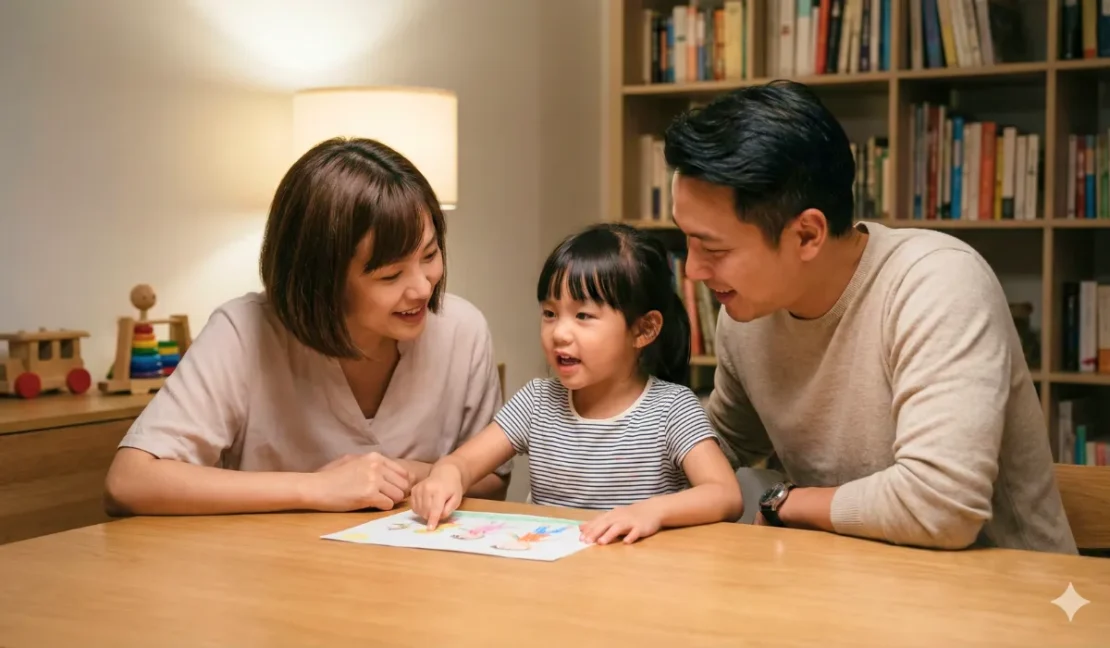
Image Source: Ai
6. Breaking the Cycle and Choosing Responsive Parenting
The encouraging news is that understanding authoritarian parenting impact helps parents make different choices. Many parents who experienced authoritarian parenting themselves can recognize the patterns and consciously choose more responsive, supportive approaches.
Moving Toward Authoritative Parenting
Authoritative parenting, which combines clear expectations with warmth, responsiveness, and explanation, is consistently shown to produce the healthiest outcomes for children. This approach maintains structure and expectations while including the emotional warmth and two-way communication missing from authoritarian approaches.
Shifting from authoritarian parenting impact patterns doesn’t mean becoming permissive or abandoning discipline. Instead, it means explaining rules, listening to children’s perspectives, and focusing on teaching rather than punishing.
Authoritative Parenting Alternatives:
- Clear expectations with explanation and reasoning
- High warmth and responsiveness combined with structure
- Problem-solving focused discipline
- Active listening and consideration of child’s perspective
- Encouragement of questions and discussion
- Emotional support and validation of feelings
- Recognition of effort and improvement, not just results
- Natural consequences rather than punishment
Seeking Support and Professional Guidance
For parents who grew up with authoritarian parenting impact and want to parent differently, seeking support through parenting classes, counseling, or reading research-based parenting books can be transformative. Recognizing patterns takes awareness, but changing them takes practice and often outside support.
At Apple Tree Pre-School BSD, we work with families to support healthier parenting approaches that help children develop confidence, creativity, and emotional wellbeing alongside strong values and expectations.
FAQ About Authoritarian Parenting Impact
Q: Is all authoritarian parenting harmful?
A: While authoritarian parenting impact is consistently associated with negative long-term outcomes in research, the severity varies based on factors like warmth within the relationship and the specific practices used. However, the research suggests that even “moderate” authoritarian approaches carry some of these effects.
Q: My parents used authoritarian parenting and I turned out fine. Isn’t that proof it works?
A: Survivorship bias makes this tricky. You did turn out okay, but research suggests you might have thrived even more with a different approach. Additionally, the long-term effects of authoritarian parenting impact often don’t fully emerge until adulthood, affecting relationships, mental health, and parenting patterns in ways you might not immediately recognize.
Q: Can I be authoritarian about some things and responsive about others?
A: Yes, this is actually a good approach. Most healthy families use a blend, being more authoritative about safety issues while being more responsive and collaborative about other areas. The key is ensuring children experience enough warmth, explanation, and voice that the authoritarian parenting impact is minimized.
Q: How do I know if my parenting style is affecting my child negatively?
A: Signs include excessive anxiety, reluctance to try new things, difficulty making decisions, withdrawal from social situations, perfectionism, or difficulty expressing emotions. If you notice these patterns, it’s worth reflecting on your parenting approach and considering whether shifts might help.
Q: Is it too late to repair the authoritarian parenting impact if my child is already older?
A: It’s never too late, though earlier intervention is easier. Older children and teens can benefit from increased warmth, listening, and explanation. However, repairing a relationship damaged by years of authoritarian parenting takes time, consistency, and often professional support.
Q: How do I parent firmly while avoiding authoritarian parenting impact?
A: The difference is explanation and warmth. You can maintain high expectations and firm boundaries while explaining why those boundaries exist, listening to your child’s perspective, and showing emotional support. Children can feel your expectations without feeling controlled and criticized.
What If There’s a Gentler Way Forward for Your Family?
Understanding the long-term effects of authoritarian parenting impact is one of the most important things parents can do for their children’s wellbeing. At Apple Tree Pre-School BSD, we believe that raising confident, emotionally healthy children means creating environments where structure and expectations exist alongside warmth, responsiveness, and genuine listening.
The good news is that even small shifts toward more responsive, authoritative parenting can significantly reduce the authoritarian parenting impact and help children develop into their best selves. It’s never too late to make changes that benefit your family.
If you’re curious about how a warmer, more collaborative approach might look in practice, we’d love to chat. Many of the families we work with have shared similar concerns about breaking traditional parenting cycles, and they’ve found that seeing children flourish in a supportive environment has shifted their perspective on what’s possible.
Our educators are trained in child development and genuinely understand the importance of supportive family environments. Explore our programs to see how we complement positive parenting approaches by fostering confidence, joy, and genuine enthusiasm for learning in every child.
If you’d like to learn more about how we support families or simply want to visit and see what our classrooms feel like, we’re here. No pressure, no sales pitch, just a genuine invitation to explore whether we might be a good fit for your child’s growth and happiness.
Send us a WhatsApp message or give us a call at +62 888-1800-900. We’d be happy to chat about your family’s journey and what might support you best.
Come play and learn with other children, because every child deserves to grow in an environment filled with warmth, understanding, and genuine support! 💚🌟✨