I remember sitting with my daughter after her first day at preschool. She was chatting away about her friends, her teachers, and what she learned. Then she suddenly asked, “Mommy, why did Miss Sarah hug me?” The question caught me off guard. It made me realize I’d never really talked to her about body safety for kids.
That conversation changed everything for our family. Body safety for kids isn’t something we should avoid or feel embarrassed discussing. It’s one of the most important conversations we’ll ever have with our children. Teaching body safety for kids early gives them the confidence and vocabulary to stay safe. It empowers them to recognize uncomfortable situations and speak up.
As educators at Apple Tree Pre-School BSD, we see how powerful these conversations become. When children understand body safety for kids, they feel more confident and protected. They know it’s okay to say no to adults. They understand that their body belongs to them. They have language to describe what’s happening around them. Body safety for kids truly is the foundation of child protection.
Many parents feel nervous about discussing body safety for kids. They worry about saying the wrong thing or scaring their children. They’re unsure where to start or what information is appropriate. We understand these concerns completely. The good news is that teaching body safety for kids doesn’t have to be complicated, scary, or uncomfortable. It can be natural, age-appropriate, and even empowering for everyone involved.
In this article, we’ll share practical strategies for explaining body safety to kids. We’ll help you find the right words and create ongoing conversations. We’ll give you tools to teach body safety for kids that work at home and at school. Together, we can help every child feel safe, respected, and protected.
Understanding Body Safety for Kids Starts With You
Body safety for kids begins with understanding what we’re teaching and why it matters. Body safety for kids means children know they own their bodies. It means they understand which parts are private and why. It means they have permission to say no to unwanted touch. It means they know trusted adults who will listen and believe them.
Teaching body safety for kids isn’t about creating fear or anxiety. It’s about giving children tools and knowledge to stay safe. Research shows that children who understand body safety for kids are less vulnerable to abuse. They’re more likely to tell a trusted adult if something uncomfortable happens. They develop healthy boundaries and respect for themselves and others.
We’ve worked with hundreds of families at the Educenter BSD Building. We’ve learned that parents who talk openly about body safety for kids raise more confident, resilient children. These conversations don’t have to happen all at once. Body safety for kids develops through ongoing, age-appropriate discussions over time. Each conversation builds on the last, creating layers of understanding and protection.
The foundation of teaching body safety for kids starts with you as the parent. Your comfort level matters because children pick up on your emotions. If you seem embarrassed or scared, your child will too. If you approach body safety for kids naturally and calmly, your child will accept it as normal information. Take time to get comfortable with the concepts before talking to your child about body safety for kids.
Starting Early With Body Safety for Kids
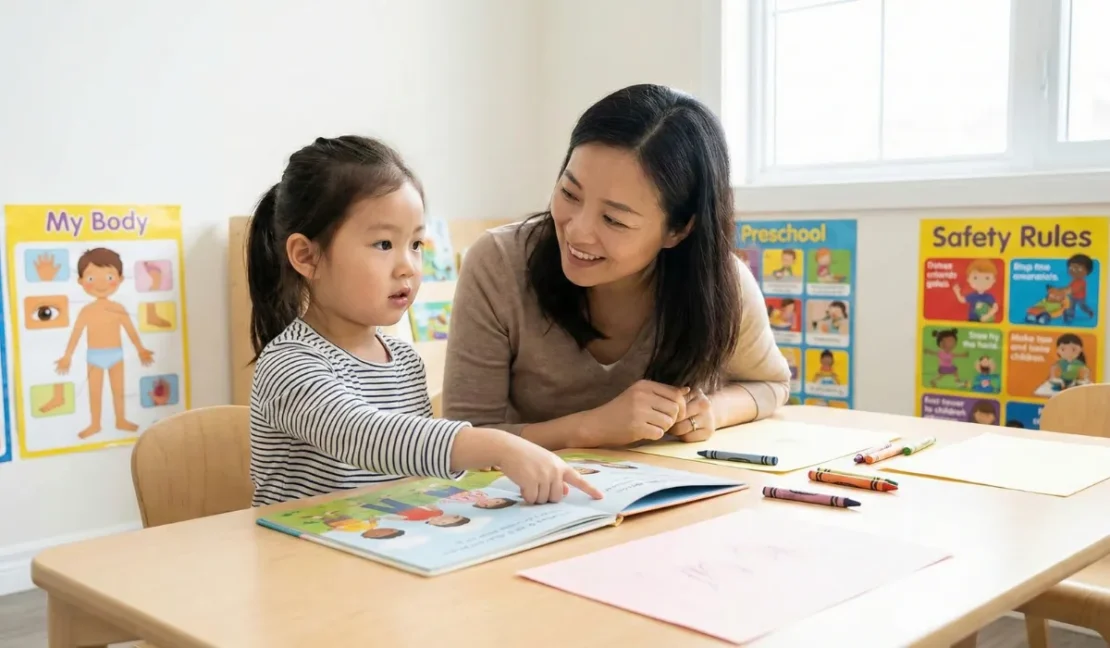
Body safety for kids doesn’t start when they’re teenagers or even in elementary school. It begins in the toddler and preschool years when children are still learning about their bodies. Young children benefit from knowing correct names for body parts. They benefit from understanding that some parts are private. Body safety for kids at this stage is simple, matter-of-fact, and completely age-appropriate.
During our Toddler and Pre-Nursery programs, we naturally incorporate body safety for kids into daily routines. When children change clothes, we use correct anatomical terms. We teach them that their genitals are private, just like we say people use bathrooms privately. We explain that their body belongs to them and no one should touch them in ways that make them uncomfortable. Body safety for kids at this age is simply about comfort, privacy, and ownership.
Young children asking questions about their bodies is completely normal and healthy. When your toddler asks about body parts or points to their genitals, that’s a perfect moment to teach body safety for kids. Simply answer their questions factually and move on. You don’t need long explanations. Body safety for kids develops through brief, honest answers that normalize these topics completely.
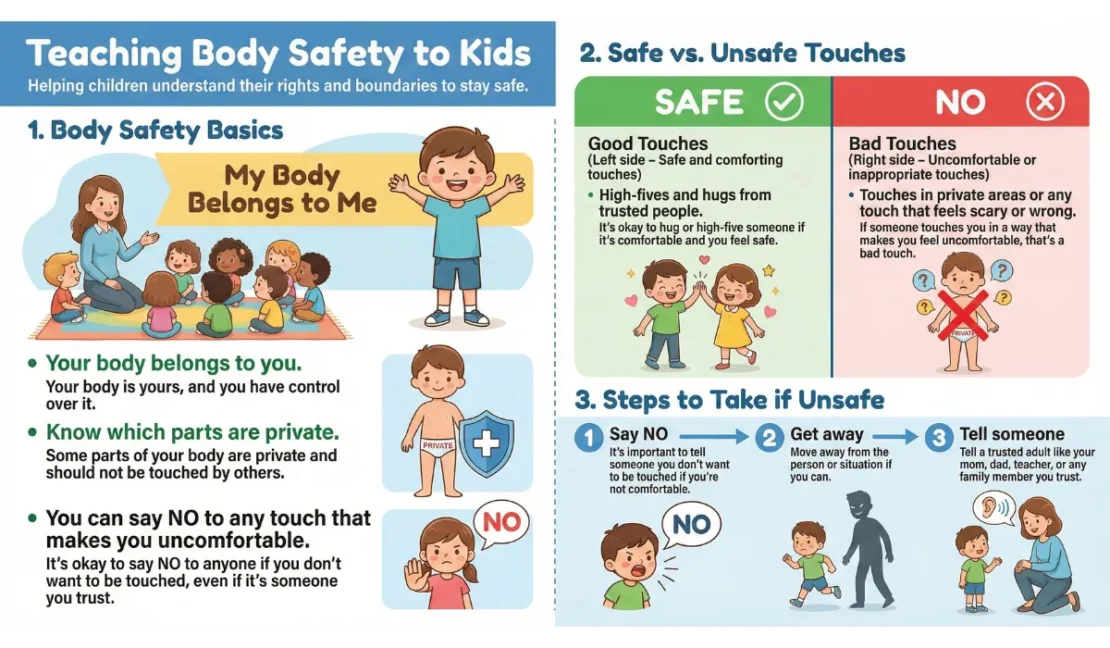
Image Source: Ai
Teaching Body Safety for Kids With the Right Language
Using correct terminology is essential when teaching body safety for kids. Many of us grew up with silly names for body parts. We might have called genitals “down there” or “private parts.” When teaching body safety for kids, using vague language actually creates problems. Children need to know the correct words so they can communicate clearly if something happens.
At Apple Tree Pre-School BSD, we use terms like “penis,” “vulva,” “breasts,” and “bottom.” Yes, these words might feel awkward at first. But when teaching body safety for kids, these correct terms are essential. Children who know the real names feel less embarrassed discussing body safety. They’re more likely to report problems using clear, specific language. Body safety for kids depends on having a shared vocabulary.
Teaching body safety for kids also means explaining what touch is appropriate and what isn’t. You might say, “Your body is yours. Sometimes people hug or hold hands because we care about each other. But you can say no to hugs if you don’t want them.” This simple statement about body safety for kids gives children permission to set boundaries. It tells them their comfort matters more than adults’ feelings.
Key Language for Teaching Body Safety to Kids
When explaining body safety to kids, certain phrases help create protection and empowerment:
- “Your body belongs to you and only you”
- “You can say no to any touch that makes you uncomfortable”
- “There are no secrets about body safety in our family”
- “If someone touches you in a way that feels wrong, tell me”
- “I will always believe you and never blame you”
- “It’s never a child’s fault if an adult does something inappropriate”
- “Your private parts are private, just like bathrooms are private”
- “Good touch makes you feel happy and safe”
- “Bad touch makes you feel scared, sad, or confused”
- “Tricky people might try to trick children about body safety”
These phrases help when teaching body safety to kids because they’re clear and empowering. They give children the language they need. They establish that you’re available to listen. Body safety for kids improves dramatically when children hear these messages repeatedly from trusted adults.
Understanding Appropriate Versus Inappropriate Touch
Teaching body safety to kids includes helping them distinguish between appropriate and inappropriate touch. Appropriate touch includes hugs from family members, high fives from friends, and necessary care like bathing or doctor visits. Inappropriate touch includes any touch on private areas except for health or hygiene reasons. Body safety for kids requires clear explanations of the difference.
When teaching body safety to kids, explain that some touches are confusing. An adult might tell them to keep secrets about touch or say nobody will believe them. Body safety for kids means helping children recognize these warning signs. It means teaching them that adults shouldn’t ask children to keep secrets about touch. Body safety for kids includes understanding that real safety doesn’t require silence.
Creating a Safe Environment for Discussing Body Safety to Kids
Body safety for kids thrives when children know they can talk to you without judgment. Create an environment where discussing body safety to kids feels normal and safe. Answer questions straightforwardly. Don’t make a big deal out of body safety conversations. Don’t act embarrassed or upset when teaching body safety to kids. Your calm, matter-of-fact approach teaches children that body safety to kids is just another important topic.
Talk about body safety to kids during natural moments, not forced conversations. You might discuss body safety to kids during bath time, while changing clothes, or when a character on television hugs someone. These everyday moments are perfect for casual teaching about body safety to kids. Body safety for kids develops through many small conversations, not one big talk.
At our programs in the Educenter BSD Building, we regularly check in with children about body safety. We ask, “Did anyone make you feel uncomfortable today?” We listen carefully without overreacting. We validate their feelings about body safety. We help them understand what happened. This ongoing dialogue about body safety for kids creates trust and openness. Children learn they can come to us with anything.
Building Trust So Kids Will Tell You About Body Safety Concerns
Children only share body safety concerns with adults they trust completely. Building this trust happens through consistent, calm responses to what they share. When your child tells you something about body safety, listen without interrupting. Believe them. Thank them for telling you. Don’t ask leading questions or pressure them for details. Body safety for kids depends on children feeling safe reporting concerns.
Never punish a child for reporting body safety problems. Never suggest they’re lying or misunderstanding. Never blame them for what happened. Body safety for kids means adults take all reports seriously. Even if you’re shocked or upset, stay calm while talking to your child. Your calm response helps them feel safe reporting body safety concerns. Body safety for kids is protected when children trust you completely.
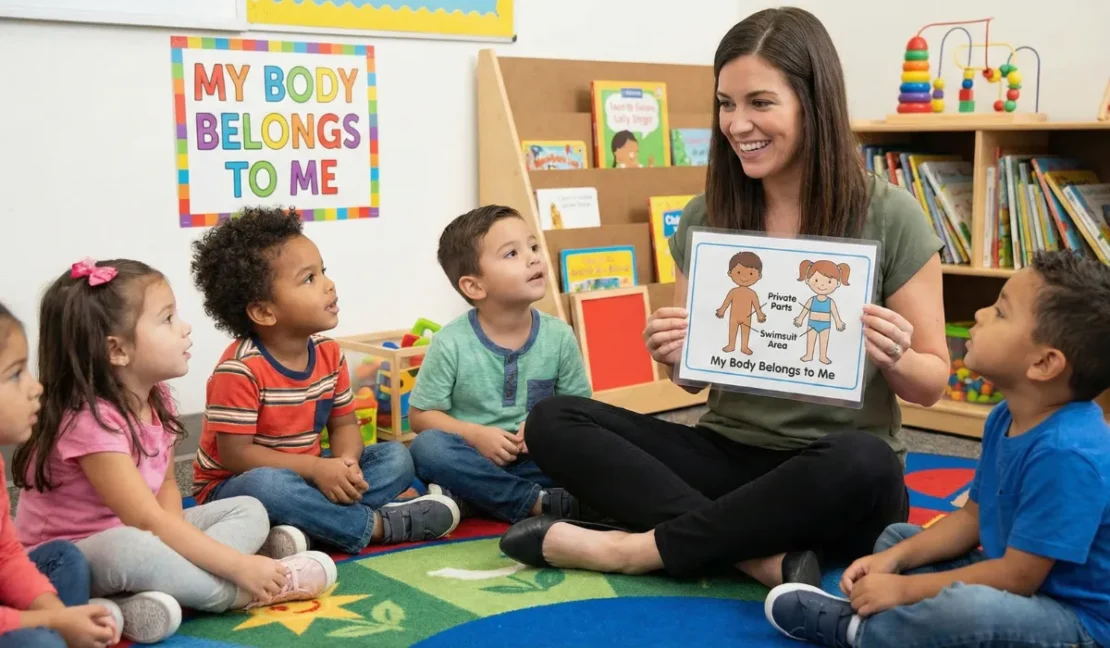
Image Source: Ai
Frequently Asked Questions About Body Safety for Kids
Q: At what age should I start teaching body safety to kids?
Start discussing body safety to kids as soon as they start learning body parts, typically around age one. Simple conversations about naming body parts and privacy are perfect for teaching body safety to kids early. Body safety for kids builds gradually as children grow. Kindergarten age children can understand more detailed concepts about body safety. Body safety to kids is an ongoing conversation throughout their childhood.
Q: What if my child asks uncomfortable questions about body safety?
Answer them honestly and calmly without over-explaining. Your child asking about body safety to kids is wonderful and healthy. Brief, straightforward answers teach body safety to kids best. Don’t make body safety conversations awkward. Keep your tone light and matter-of-fact. Body safety for kids develops naturally when adults treat these questions as normal and important.
Q: How do I explain body safety to kids without scaring them?
Frame body safety for kids as empowering, not frightening. Focus on helping them understand their bodies and set boundaries. Body safety for kids isn’t about scary strangers. Most abuse comes from people children know and trust. When teaching body safety to kids, focus on feelings and instincts. Teach body safety for kids by saying, “Trust your feelings. If something feels wrong, tell me.” Body safety to kids improves when children feel empowered, not afraid.
Q: What should I do if my child reports a body safety problem?
Believe them immediately. Thank them for telling you. Reassure them it’s not their fault. Stay calm even if you’re upset inside. Body safety for kids depends on children trusting that adults will respond supportively. Report the situation to appropriate authorities if needed. Body safety to kids must be taken seriously every single time. Get support from professionals who understand body safety concerns for kids.
Q: How do I talk about body safety to kids with different caregivers involved?
Consistency matters greatly when teaching body safety to kids. Talk with all caregivers about body safety approaches. Make sure everyone uses the same terminology. Body safety for kids requires all adults reinforcing the same messages. Ensure babysitters, grandparents, and teachers understand your approach to body safety. Body safety to kids is stronger when everyone communicates the same messages consistently.
Q: Can body safety lessons for kids cause problems or make them anxious?
Age-appropriate body safety lessons for kids do not cause anxiety or problems. Research shows the opposite is true. Children who understand body safety feel more confident and secure. Body safety for kids actually reduces anxiety by giving them knowledge and language. Body safety lessons for kids taught calmly and positively build confidence. Body safety to kids creates empowered, aware children who feel safer and more protected.
Supporting Body Safety for Kids at School and Home
Body safety for kids is a partnership between home and school. At Apple Tree Pre-School BSD, we integrate body safety messages into our daily routines naturally. During our programs, we use correct terminology. We teach children about boundaries and consent. We practice asking permission before hugging or touching. Body safety for kids becomes part of our school culture.
We also communicate with families about body safety for kids. We share what we’re teaching so parents can reinforce these lessons at home. We encourage parents to have ongoing conversations about body safety. We invite parents to share concerns about body safety with us. Body safety for kids strengthens when school and home work together with consistent messages.
Your child’s body safety matters deeply to us. We take responsibility for keeping children safe seriously. We conduct thorough background checks on staff. We maintain professional boundaries with children. We teach children about appropriate versus inappropriate touch. We encourage children to speak up about anything that makes them uncomfortable. Body safety for kids is central to everything we do at Apple Tree.
Protecting Body Safety for Kids Together
Body safety for kids is every adult’s responsibility. It’s not something to feel embarrassed discussing or teaching. Children who understand body safety are protected, empowered, and confident. Body safety for kids creates resilient children who know they can speak up. Body safety for kids is one of the greatest gifts we can give our children.
Teaching body safety to kids doesn’t require being a perfect parent or expert. It requires openness, honesty, and willingness to have these important conversations. Body safety for kids develops through repeated, calm, age-appropriate discussions over time. Body safety for kids is strengthened by your commitment to listening without judgment.
Ready to support your child’s body safety and wellbeing? Our programs at Apple Tree Pre-School BSD in the Educenter BSD Building create safe, respectful environments where body safety for kids is prioritized. We partner with families to ensure every child feels safe, valued, and protected. Send us a WhatsApp message or call us at +62 888-1800-900 to learn more about our approach to body safety and child protection.Come visit our classrooms and see how we create safe, respectful environments for children. Meet our caring teachers who prioritize your child’s wellbeing and safety. Visit the Educenter BSD Building and experience our commitment to body safety for kids firsthand. Register your child today and join a community dedicated to protecting and empowering young learners! 🌟💙✨