Your three-year-old just launched a full-scale meltdown in the supermarket because you bought the “wrong” crackers (they’re literally the same crackers, just a different box design). An older woman nearby comments loudly, “In my day, a quick smack would’ve stopped that nonsense.” Meanwhile, you’re on the floor at eye level, taking deep breaths and using your calmest voice to validate feelings about crackers while internally screaming. Welcome to gentle parenting techniques in action, where you’re simultaneously praised by progressive parents and judged by traditional relatives who think you’re raising tiny tyrants who will never respect authority or learn consequences.
Here’s the truth about gentle parenting techniques: they’re often misunderstood, misrepresented, and honestly harder than traditional authoritarian parenting in the short term while being more effective in the long term. Gentle parenting isn’t permissive parenting where children run wild without boundaries, and it’s not about never saying no or protecting children from all discomfort. It’s a research-backed approach focusing on respect, empathy, boundaries, and understanding while raising children who are emotionally intelligent, self-regulated, and cooperative rather than merely compliant through fear. At Apple Tree Pre-School BSD, we’ve built our entire educational philosophy around gentle parenting techniques because we see daily how children flourish when treated with respect while still having clear, consistent boundaries.
The challenge for parents trying to implement gentle parenting techniques is that most of us weren’t raised this way, so we’re essentially learning a new language of parenting without childhood models to draw from. Ready to understand what gentle parenting actually means and how to implement it in real life, not just in Instagram-perfect scenarios?
Understanding Gentle Parenting Techniques: What They Are and Aren’t
Before diving into implementation, let’s clear up massive misconceptions about gentle parenting techniques that lead to either dismissing the approach or implementing it ineffectively.
What Gentle Parenting Actually Means
Gentle parenting techniques are built on mutual respect between parent and child, recognizing children as whole people deserving dignity while acknowledging they need guidance, boundaries, and teaching.
Core principles of gentle parenting:
- Respect for the child as an individual with valid feelings and perspectives
- Empathy and understanding of developmental stages and capabilities
- Clear, consistent boundaries and expectations
- Natural consequences instead of arbitrary punishments
- Connection before correction
- Modeling the behavior you want to see
At our Educenter BSD Building campus, gentle parenting techniques inform how our educators interact with children from our Toddler programs with 12 children per class through Kindergarten 2 with 20 children. We maintain structure, expectations, and discipline while treating children with respect and dignity.
What Gentle Parenting Is NOT
The biggest misconceptions about gentle parenting techniques make people dismiss the approach entirely or implement it in ways that don’t actually work.
Gentle parenting is NOT:
- Permissive parenting with no boundaries or rules
- Letting children do whatever they want to avoid upsetting them
- Never saying no or protecting children from all consequences
- Being your child’s friend instead of parent
- Endless negotiations and explanations
- Sacrificing your own needs entirely for your child’s wants
Gentle parenting techniques include firm boundaries, immediate responses to unsafe behavior, and children experiencing disappointment and frustration. The difference is in how boundaries are set and enforced, and how we support children through difficult emotions rather than punishing them for having feelings.
The Science Behind Gentle Parenting Techniques
Gentle parenting techniques aren’t just trendy parenting philosophy; they’re backed by decades of developmental psychology and neuroscience research.
What research shows:
- Authoritarian parenting (harsh discipline, obedience-focused) creates compliant children but damages emotional development and parent-child relationships
- Permissive parenting (few boundaries, child-led) creates children who struggle with self-regulation and respect for others
- Authoritative parenting (the research term for what we call gentle parenting) with warmth plus boundaries creates secure, confident, emotionally intelligent children
- Harsh punishment activates fear responses that shut down learning and problem-solving
- Connection and co-regulation build brain circuitry for emotional regulation
In our comprehensive curriculum covering English, Mathematics, Chinese, Science, Creativity, Social Studies, Bahasa, Moral education, Music, Physical Education, and Phonics, we see how gentle parenting techniques support learning by creating psychological safety where children can take risks and learn from mistakes.

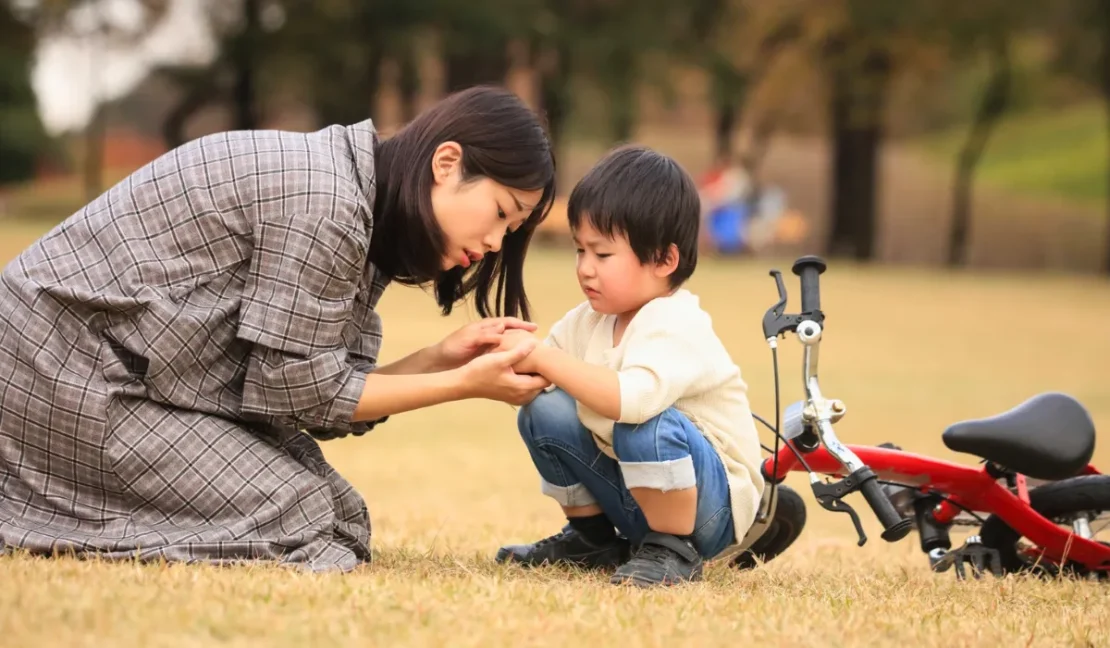
Image Source: Canva
Core Gentle Parenting Techniques for Daily Life
Understanding the philosophy is one thing; implementing gentle parenting techniques in the chaos of daily life is another. Here’s how to actually do it.
Connection Before Correction
The foundation of gentle parenting techniques is connecting with your child before jumping to discipline or correction. This isn’t coddling; it’s ensuring their brain is in a state where learning can happen.
How to connect first:
- Get down to your child’s physical level
- Make eye contact and use a calm tone
- Acknowledge their feelings: “You’re really upset right now”
- Take a breath together if emotions are high
- Then address the behavior
When your child hits their sibling, gentle parenting techniques mean first acknowledging “You’re really angry” before teaching “We don’t hit. Use words to tell him you’re upset.” The connection helps their prefrontal cortex come back online so they can actually learn instead of just react to punishment.
Setting Clear, Consistent Boundaries
Despite misconceptions, gentle parenting techniques require firm boundaries. The difference is how those boundaries are communicated and enforced.
Effective boundary setting:
- State boundaries clearly and simply: “Toys stay inside”
- Explain the why at an age-appropriate level: “Toys get lost outside”
- Be consistent every single time (inconsistency creates more testing)
- Follow through immediately and calmly
- Offer choices within boundaries: “You can play with blocks or puzzles. Which do you choose?”
In our classrooms, children thrive with clear expectations and routines. Gentle parenting techniques don’t mean wishy-washy boundaries; they mean boundaries are explained and enforced with respect rather than anger or shame.
Using Natural and Logical Consequences
Instead of arbitrary punishments, gentle parenting techniques use consequences that relate directly to the behavior and teach the lesson you want children to learn.
Natural consequences happen automatically without parent intervention: “You didn’t wear a jacket, now you’re cold.” Logical consequences are parent-imposed but directly related: “You threw your toy, so I’m putting it away for the rest of the day.”
Examples of natural and logical consequences:
- Won’t eat dinner? They’re hungry, but can try again at next meal (not punished, just experiencing the natural result)
- Colors on the wall? They help clean it (logical consequence teaching responsibility)
- Refuses to get dressed? Go to car in pajamas with clothes in a bag (natural consequence of the choice)
These gentle parenting techniques teach much more effectively than arbitrary punishments like “you threw your toy so no TV tonight” which don’t help children understand the connection between actions and consequences.
Emotion Coaching and Validation
One of the most powerful gentle parenting techniques is teaching children about emotions rather than suppressing or punishing feelings.
How to coach emotions:
- Name the emotion: “You’re feeling frustrated”
- Validate it: “It’s really hard when things don’t work the way you want”
- Set limits on behavior, not feelings: “You can be angry, but you can’t hit”
- Teach alternative expressions: “You can stomp your feet or ask for help”
- Co-regulate by staying calm yourself
In our Moral education and Social Studies curriculum, we explicitly teach emotional literacy. Children who learn to identify, express, and manage emotions through gentle parenting techniques become teenagers and adults who don’t explode or shut down when stressed.
Collaborative Problem Solving
Instead of parent dictating solutions, gentle parenting techniques involve children in problem-solving appropriate to their age.
Collaborative problem-solving steps:
- Identify the problem together: “We both want to use the red marker”
- Brainstorm solutions: “What could we do? You could use it first, I could find another red marker…”
- Choose a solution together: “Let’s try taking turns. One minute each.”
- Try it and adjust if needed: “That worked!” or “That didn’t work, let’s try something else”
Even toddlers can participate at basic levels. By Kindergarten in our programs with 20 children per class, we see children independently using these gentle parenting techniques with peers to resolve conflicts.
Implementing Gentle Parenting Techniques by Age
Gentle parenting techniques look different at different developmental stages. Here’s age-appropriate implementation.
Toddlers (Ages 1.5 to 3): Foundations
Toddlers are learning boundaries, testing constantly, and have massive emotions with zero emotional regulation. Gentle parenting techniques with toddlers require patience and realistic expectations.
Toddler-specific techniques:
- Heavy use of redirection: “Not for throwing. Here’s a ball you can throw”
- Very simple language: “Gentle hands” instead of long explanations
- Physical environment control: childproofing to reduce “no”
- Staying calm during meltdowns and offering co-regulation
- Lots of repetition (they’re not defiant, they’re learning)
In our Toddler and Pre-Nursery programs with 12 to 16 children per class, gentle parenting techniques mean creating environments where toddlers can succeed rather than constantly failing against expectations beyond their capabilities.
Preschoolers (Ages 3 to 5): Building Skills
Preschoolers have more language and understanding, allowing more sophisticated gentle parenting techniques while still needing support and clear boundaries.
Preschooler techniques:
- More explanation of boundaries and reasons
- Offering choices within limits: “Red shirt or blue shirt?”
- Using when/then statements: “When you clean up, then we can read stories”
- Teaching emotion vocabulary and regulation strategies
- Involving them in simple problem-solving
Our Nursery and Kindergarten 1 programs with 20 children each build on gentle parenting techniques as children develop self-regulation and social skills.
Kindergarteners (Ages 5 to 6): Independence
By kindergarten, children can understand more complex cause and effect, take more responsibility, and participate meaningfully in problem-solving.
Kindergarten techniques:
- Natural consequences more often with less parent intervention
- More sophisticated emotion coaching
- Expectations of responsibility and repairing harm
- Family meetings for collaborative rule-setting
- Increased independence with maintained connection
In our Kindergarten 2 program, gentle parenting techniques prepare children for the increased independence and expectations of primary school.
Common Challenges in Implementing Gentle Parenting Techniques
Even parents committed to gentle parenting techniques face obstacles. Here’s how to navigate common challenges.
Your Own Childhood Programming
Most parents weren’t raised with gentle parenting techniques, so default reactions under stress revert to how you were parented.
Overcoming childhood patterns:
- Notice your triggers: what behaviors make you react most strongly?
- Pause before responding when triggered
- Apologize and repair when you react harshly
- Consider therapy to address your own childhood wounds
- Practice self-compassion; you’re learning new skills
We’ve never met a perfect parent implementing gentle parenting techniques flawlessly. The goal is progress and repair, not perfection.
Judgment from Others
Gentle parenting techniques look “soft” to people raised with or practicing authoritarian parenting, leading to judgment and criticism.
Handling judgment:
- Remember you’re raising your child, not managing others’ opinions
- Have simple responses ready: “This works for our family”
- Limit exposure to highly judgmental people when possible
- Build community with like-minded parents
- Trust the research and your observations of your child
At Apple Tree, we create community among families implementing gentle parenting techniques so you don’t feel isolated.
Inconsistency Between Caregivers
When parents, grandparents, helpers, or teachers use different approaches, gentle parenting techniques are undermined.
Creating consistency:
- Have explicit conversations with all caregivers about your approach
- Provide specific scripts and strategies
- Accept some inconsistency while maintaining your approach when you’re present
- Choose childcare aligned with your values when possible
- Don’t undermine the other parent in front of children, discuss disagreements privately
This is why choosing a preschool implementing gentle parenting techniques matters. Our programs ensure consistency between home and school.
When Gentle Parenting Techniques “Aren’t Working”
Sometimes parents feel gentle parenting techniques aren’t working because they’re not seeing immediate compliance.
Realistic expectations:
- Gentle parenting builds long-term skills, not immediate obedience
- Young children need many repetitions to learn
- Development happens in fits and starts
- Behavioral “regression” during stress is normal
- Focus on the relationship and learning, not perfect behavior
We remind parents that gentle parenting techniques aim to raise adults with emotional intelligence and internal motivation, not children who obey through fear.

Image Source: Canva
Gentle Parenting Techniques in Different Situations
Here’s how to apply gentle parenting techniques in specific challenging scenarios parents face.
Public Meltdowns
The supermarket tantrum is where gentle parenting techniques get tested most publicly.
Handling public meltdowns:
- Stay calm (model regulation even when judged)
- Remove to a quieter space if possible
- Get down to their level and validate feelings
- Offer comfort and co-regulation
- Set boundary calmly: “I know you’re upset, but we’re not buying that today”
- Leave the store if necessary, following through on boundaries
The goal isn’t stopping the meltdown instantly (impossible) but teaching emotional regulation through your calm presence. Yes, people will judge. Your child’s emotional development matters more.
Sibling Conflicts
Gentle parenting techniques with multiple children means teaching conflict resolution, not just separating or punishing.
Sibling conflict strategies:
- Don’t automatically take sides
- Acknowledge both children’s feelings: “You’re both frustrated”
- Coach through problem-solving: “What could work for both of you?”
- Teach repair: apologizing, making amends
- Separate if too emotionally dysregulated, then return to problem-solve
- Watch for patterns needing individual attention
In our mixed-age classrooms, we teach these gentle parenting techniques explicitly, and children become skilled at peer conflict resolution.
Bedtime and Morning Routines
Transitions are hard for young children. Gentle parenting techniques make routines smoother.
Routine strategies:
- Predictable sequence every time
- Visual schedules children can follow
- Advance warnings: “5 more minutes, then bath time”
- Offering choices within the routine: “Bath or pajamas first?”
- Natural consequences: dawdling means less story time
- Staying calm and consistent even when they resist
Our daily schedules at Apple Tree use these gentle parenting techniques to help children navigate transitions successfully.
Dangerous Behavior
When safety is at risk, gentle parenting techniques include immediate, firm responses while still respectful.
Safety situations:
- Immediate physical intervention: grab child running toward street
- Firm, serious tone: “I will not let you run into the street. That’s dangerous.”
- Brief explanation: “Cars can hit you and really hurt you”
- Teaching alternative: “Hold my hand in parking lots”
- Empathy after safety is secured: “I know you wanted to run. It’s frustrating to wait.”
Gentle parenting techniques don’t mean explaining calmly while your child is in danger. Safety first, then teaching and connection.
Why This Matters at Apple Tree Pre-School BSD
Everything we’ve explored about gentle parenting techniques connects to our mission at Apple Tree Pre-School BSD to help children grow smart and happy. Children learn best when they feel safe, respected, and connected, which is exactly what gentle parenting techniques create.
Our Singapore curriculum covering English, Mathematics, Chinese, Science, Creativity, Social Studies, Bahasa, Moral education, Music, Physical Education, and Phonics is delivered through gentle parenting techniques that maintain high expectations and clear boundaries while treating children with dignity and respect. From our Toddler programs with 12 children per class through Kindergarten with 20 children, we create environments where children develop emotional intelligence, self-regulation, and intrinsic motivation rather than mere compliance.
At our Educenter BSD Building campus, parents find community with other families implementing gentle parenting techniques, creating consistency between home and school that helps children thrive.
Ready to partner with educators who share your gentle parenting values? At Apple Tree, we create learning environments built on respect, empathy, clear boundaries, and emotional intelligence. Discover how we help children grow smart and happy through gentle parenting techniques or call us at +62 888-1800-900.
Join our Apple Tree family where children are respected, boundaries are clear, and everyone grows together! 🍎