This morning, two-year-old Lily discovered something magical in our Toddler class that made everyone stop what they were doing. She found a simple wooden shaker and started creating her own rhythm, swaying side to side with the biggest grin plastered across her face. Before we knew it, half the class had joined in, each child adding their own beat to create the most beautiful cacophony of joy you’ve ever heard.
That’s the power of music with toddlers. It doesn’t need to be perfect, polished, or even recognizable as an actual song. Music activities for toddlers are all about exploration, expression, and pure, uninhibited fun. At Apple Tree Pre-School BSD, we’ve learned that the best musical moments happen when we throw expectations out the window and simply let children experience the wonder of sound and rhythm.
You don’t need to be the next Mozart or have a house full of expensive instruments to bring music into your toddler’s world. Some of our most successful music activities happen with items you probably have lying around your kitchen right now. The magic ingredient isn’t fancy equipment, it’s enthusiasm and a willingness to get a little silly.
The Amazing Benefits of Musical Play for Little Ones
Before we dive into the fun stuff, let’s talk about why music activities for toddlers are so incredibly valuable for development. We see it every single day in our classrooms at the Educenter BSD Building, children who engage regularly with music develop stronger language skills, better coordination, and enhanced emotional regulation.
Music naturally supports language development in ways that might surprise you. The rhythm and melody patterns in songs help toddlers recognize the natural cadence of speech. When children sing simple songs or chant nursery rhymes, they’re practicing pronunciation, learning new vocabulary, and developing phonological awareness that will later support reading skills.
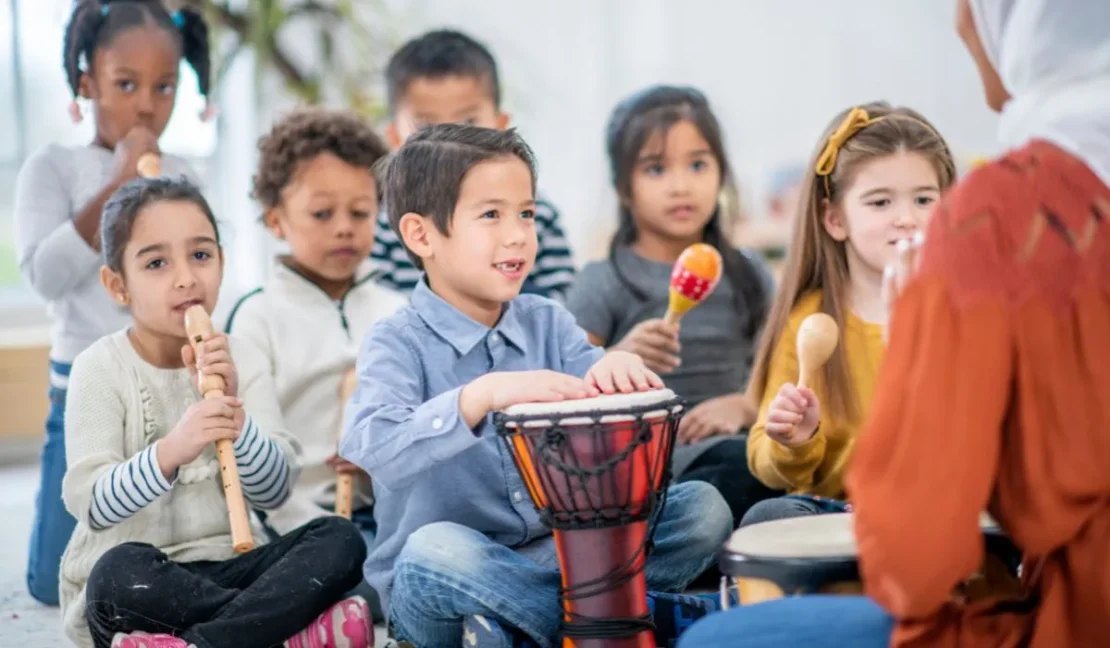
The mathematical concepts embedded in music are mind-blowing when you think about it. Counting songs, rhythm patterns, and even the structure of verses and choruses introduce early math concepts in completely natural ways. Last week, we watched eighteen-month-old Marcus unconsciously tap out complex rhythm patterns while totally absorbed in a simple drumming activity.
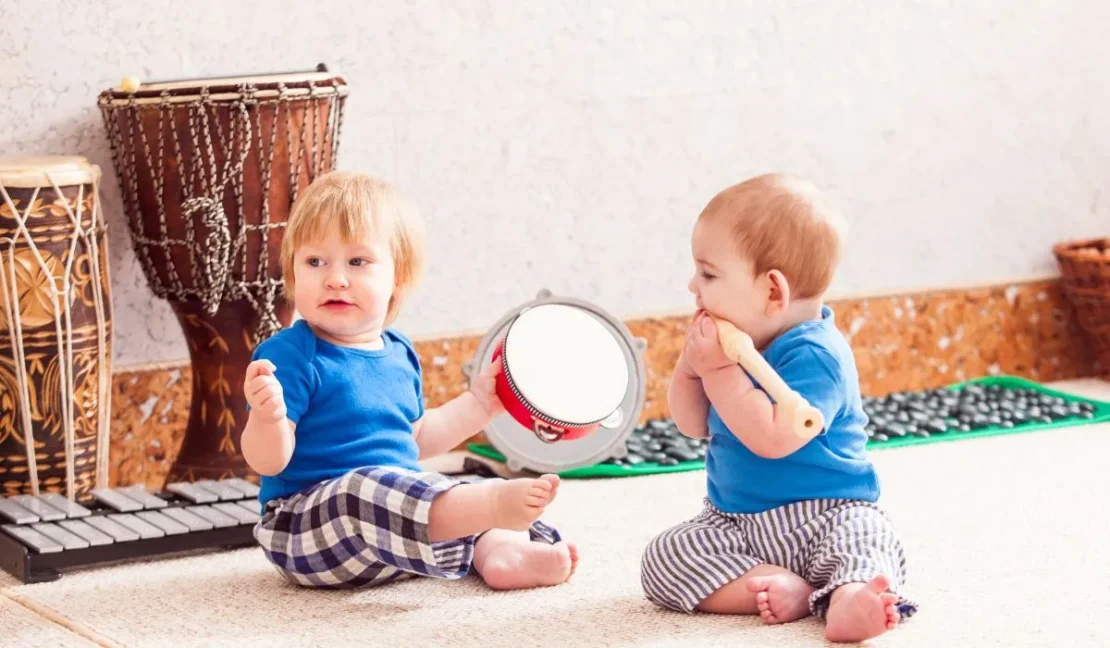
Image Source: Canva
Simple Rhythm Games That Toddlers Adore
Kitchen Band Exploration
Transform your kitchen into a musical playground with this incredibly popular activity. Gather pots, pans, wooden spoons, and measuring cups, then let your toddler experiment with different sounds and rhythms. The variety of tones and textures available in your average kitchen drawer is absolutely amazing.
Start by demonstrating different ways to create sounds: gentle tapping, enthusiastic banging, scraping, or swirling. Then step back and let your little musician take the lead. We’re constantly amazed by the complex rhythms toddlers create when they’re given freedom to experiment without judgment or direction.
Don’t worry about the noise level, embrace it! This kind of sensory-rich musical exploration builds neural pathways that support everything from motor skills to creative thinking. Plus, it’s practically guaranteed to result in giggles from everyone involved.
Body Percussion Adventures
Your toddler’s body is the perfect musical instrument, and body percussion activities help children develop body awareness while having musical fun. Start with simple actions like clapping hands, patting knees, or stomping feet, then gradually add more complex movements as their coordination develops.
We love creating “body songs” where different body parts represent different instruments. Clapping might be the drums, finger snapping could be cymbals, and foot stomping becomes the bass drum. These activities naturally develop bilateral coordination and rhythm skills while being absolutely delightful to participate in.
Creative Movement and Dance Games
Scarf Dancing and Free Movement
Lightweight scarves or even dish towels become magical dancing partners for toddlers. Put on music with different tempos and energies, then watch as your child naturally responds to the musical changes through movement. Fast songs might inspire energetic twirling, while slower melodies often lead to gentle swaying or flowing movements.
The beauty of scarf dancing lies in how it makes movement visible and helps toddlers connect their physical actions to the music they’re hearing. There’s something mesmerizing about watching fabric float through the air that captures even the shortest attention spans.
Encourage different types of movement by varying your music choices. Classical pieces might inspire graceful, flowing movements, while upbeat children’s songs often result in bouncing, marching, or spinning. Every response is perfect because it’s authentic to your child’s interpretation of the music.
Animal Movement Songs
Combining music with animal movements creates irresistible activities that toddlers request over and over again. Songs that invite children to hop like bunnies, waddle like ducks, or stomp like elephants naturally integrate music, movement, and imaginative play in delightful ways.
These activities support gross motor development while introducing musical concepts like tempo changes and dynamic variations. When the music gets faster, the animals move faster. When it gets quieter, they move more gently. This cause-and-effect relationship helps toddlers understand how music and movement connect.
Singing Games and Vocal Exploration
Interactive Nursery Rhymes with Actions
Traditional nursery rhymes remain popular because they perfectly match toddler developmental needs. The repetitive nature, simple melodies, and predictable structures make them easy for young children to learn and remember. Adding actions and gestures transforms passive listening into active participation.
“Head, Shoulders, Knees and Toes” becomes a full-body experience that teaches body parts while developing coordination. “The Itsy Bitsy Spider” with hand movements tells a story while building fine motor skills. These classic songs have stood the test of time because they work so well for young learners.
Don’t feel pressure to have a perfect singing voice. Toddlers care much more about enthusiasm and connection than vocal quality. In fact, children often respond better to authentic, imperfect singing than to polished performances because it feels more accessible and relatable.
Sound Exploration and Vocal Play
Encourage your toddler to experiment with different vocal sounds, pitches, and volumes through playful exploration. Making animal sounds, experimenting with whispers and loud voices, or playing with different vocal tones helps develop vocal control and phonemic awareness.
We love games where children echo different sounds back and forth, gradually building complexity and variety. Start with simple “oohs” and “aahs,” then add animal sounds, silly nonsense syllables, or even attempted words. This back-and-forth vocal play supports language development while being genuinely fun for both participants.
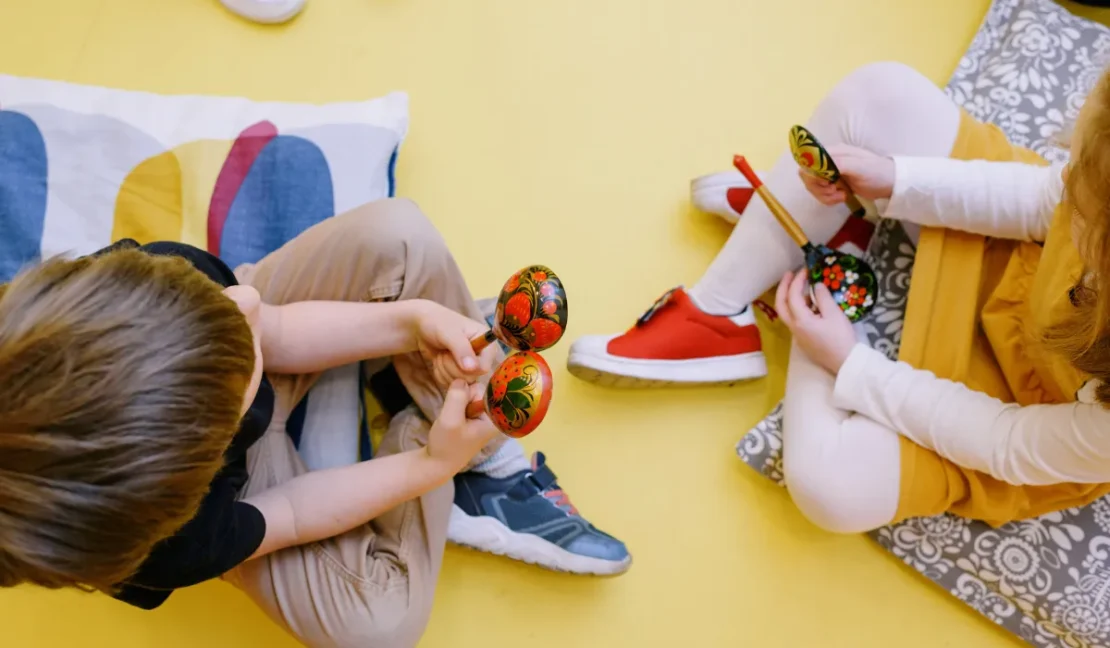
Image Source: Canva
DIY Musical Instruments for Toddlers
Creating simple instruments from household items adds a craft element to music activities while teaching cause and effect. Rice-filled containers become shakers, rubber bands stretched over boxes create guitars, and paper tubes transform into horns or kazoos.
The process of making instruments is often as valuable as playing with them. Toddlers learn about materials, experience cause and effect, and develop fine motor skills while creating their musical tools. Plus, instruments made together hold special meaning and often become treasured possessions.
Safety considerations are important when making DIY instruments. Ensure all materials are securely fastened, avoid small parts that could present choking hazards, and supervise closely during both creation and play. Simple tape and careful construction can make almost any household item into a safe musical tool.
Music activities for toddlers offer incredible opportunities for development, connection, and pure joy. At Apple Tree Pre-School BSD, we’ve discovered that the most meaningful musical experiences happen when adults and children explore sound and rhythm together without worrying about perfection or performance.
The goal isn’t to create the next child prodigy, but to nurture a lifelong love of music and self-expression. When toddlers feel free to experiment, create, and move to music in their own unique ways, they develop confidence, creativity, and joy that extends far beyond musical activities.
Our comprehensive programs integrate music naturally throughout each day, supporting development while keeping learning playful and engaging.
Ready to discover how music can enrich your child’s learning journey? We’d love to show you how our music-rich environment supports happy, confident learners who express themselves freely and joyfully. Send us a WhatsApp message or give us a call at +62 888-1800-900.
Come play and learn with other children, because every child deserves to experience the magic of music! 🎵🎶✨

