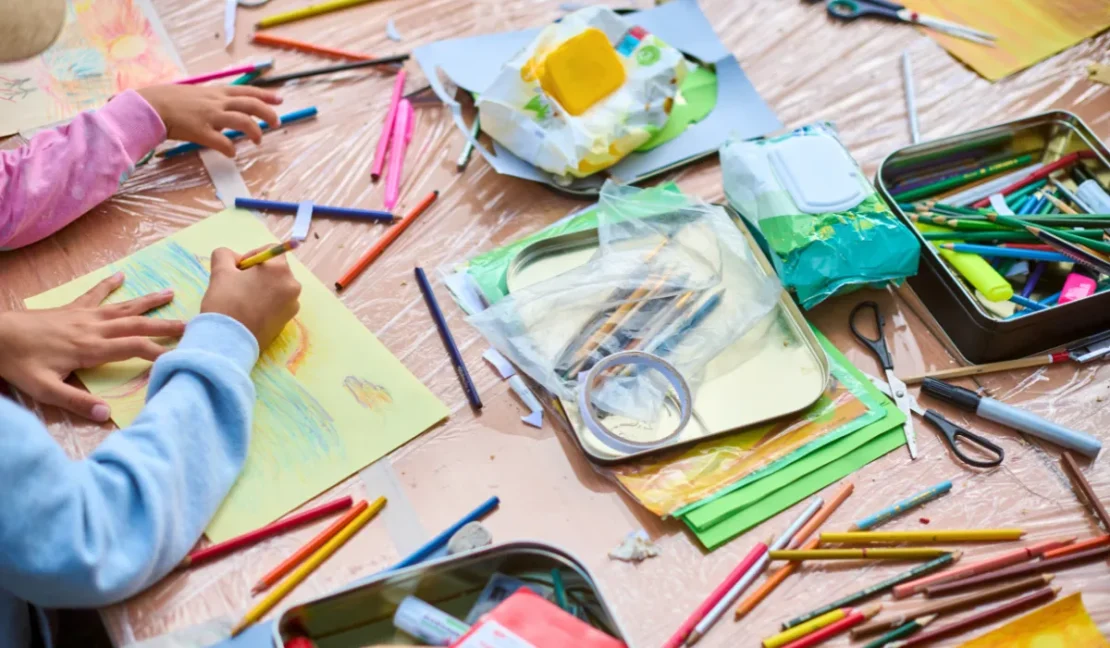
The box of crayons tips over, and suddenly there are 64 colors rolling across your kitchen floor. Your five-year-old is sprawled out with a coloring sheet, tongue sticking out in concentration, completely oblivious to the waxy rainbow explosion happening around her. You’re wondering if this mess is worth it, or if coloring is just another way kids create chaos while you pretend it’s educational.
Here’s what we’ve learned after years at Apple Tree Pre-School BSD: coloring activities kindergarten teachers use aren’t just about keeping little hands busy. They’re actually powerful learning tools disguised as fun. When done intentionally, coloring builds fine motor skills, reinforces academic concepts, encourages creativity, and even helps with emotional regulation. Yes, all of that from staying inside the lines!
At our Educenter BSD Building campus, coloring activities kindergarten students engage in are carefully designed to support every area of development. From our Creativity curriculum to Mathematics and Science, we’ve discovered that strategic coloring transforms simple art time into serious learning. Ready to discover which coloring activities actually matter for your kindergartener? Let’s explore beyond the basic coloring book!
Why Coloring Activities Kindergarten Teachers Love Actually Work
Before we dive into specific activities, let’s talk about why coloring deserves a place in your child’s daily routine and isn’t just busy work.
Building Fine Motor Skills Through Coloring
Every time your child grips a crayon and tries to color within boundaries, they’re developing the fine motor control needed for writing. The pincer grasp, hand strength, and hand-eye coordination required for coloring directly translate to holding pencils and forming letters.
In our Kindergarten 1 and 2 classes with 20 children each, we see clear differences between children who color regularly and those who don’t. The kids with strong coloring practice simply have better control when it comes to writing tasks. Miss Sarah always says, “Show me a child who can color neatly, and I’ll show you a child who’ll have an easier time learning to write.”
Supporting Academic Learning
Coloring activities kindergarten programs incorporate aren’t random. They’re strategic tools for reinforcing concepts. Color-by-number reinforces number recognition and sequencing. Coloring sight words builds reading skills. Even simple coloring pages about animals or plants can reinforce Science lessons.
At Apple Tree, our Singapore curriculum covers everything from English and Mathematics to Bahasa and Chinese. We’ve found that coloring activities related to these subjects boost retention significantly. There’s something about the tactile, visual, and creative combination that makes learning stick.
Encouraging Focus and Patience
In our world of instant everything, coloring requires something precious: sustained attention. Children must focus on one task, work carefully, and see a project through to completion. These are crucial skills for academic success.
We use coloring activities kindergarten style during transitions in our Nursery and Kindergarten programs. After energetic play, 10 minutes of focused coloring helps children regulate their energy and prepare for learning activities.
Providing Emotional Expression
Sometimes children can’t articulate what they’re feeling, but they can color it. The colors they choose, the pressure they apply, the subjects they’re drawn to, all of these provide windows into their emotional world.
In our Moral and Social Studies curriculum, we often use coloring as a reflection tool. “Draw how you felt when…” or “Color a picture of your happy place” gives children non-verbal ways to process emotions.
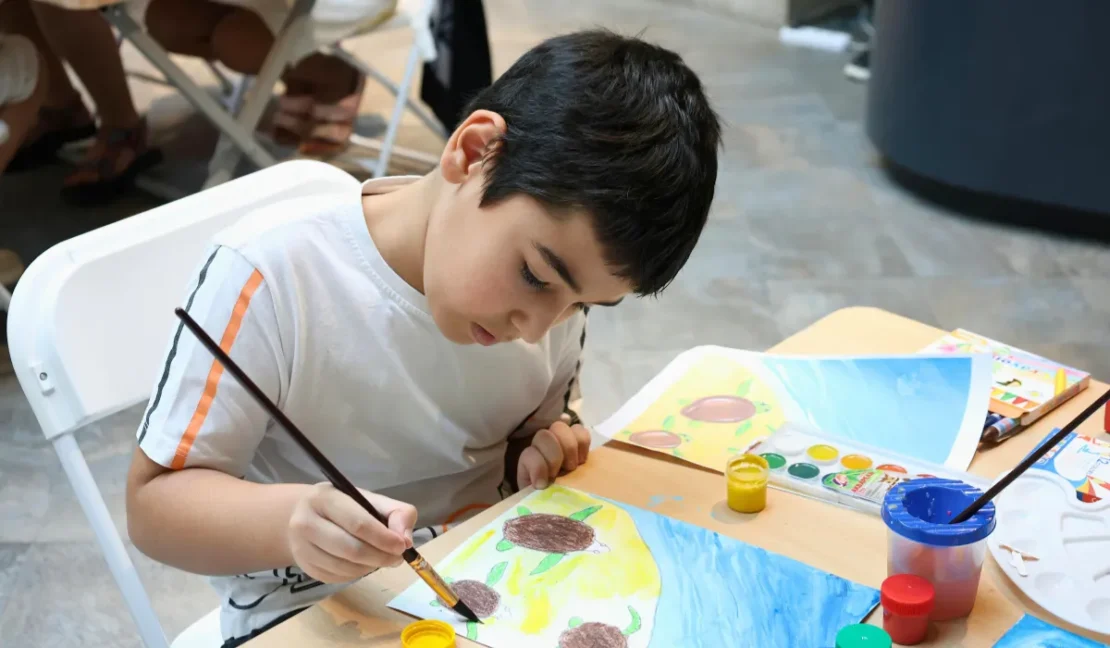
Image Source: Canva
Best Coloring Activities Kindergarten Students Love
Not all coloring activities are created equal. Here are the ones that provide maximum learning benefit while keeping kindergarteners engaged and excited.
Color-by-Number for Math Skills
These classic coloring activities kindergarten teachers have used for generations are brilliant for several reasons. They require number recognition, following directions, and sustained attention. Plus, the reward is a colorful picture that emerges like magic!
How to level up: Start with simple 1 to 10 number ranges for beginners. As children master these, move to higher numbers or even simple addition problems. “Color spaces that equal 5” makes them solve 2+3, 4+1, etc.
In our Mathematics classes, we create custom color-by-number sheets that align with whatever concept we’re teaching. Learning about shapes? Color by the number of sides. Studying patterns? Color by odd and even numbers.
Alphabet and Sight Word Coloring
Combining literacy with art creates powerful learning. Coloring activities kindergarten reading programs use often feature letters to color, words hidden in pictures, or scenes that reinforce vocabulary.
Activity ideas:
- Coloring letters while practicing letter sounds
- Finding and coloring specific sight words in a picture
- Coloring pictures that start with the letter of the week
- Creating alphabet coloring books with one letter per page
Our English and Phonics curriculum includes daily coloring activities that connect visual art with letter and word recognition. When children color the letter B while saying “B says buh,” they’re creating multi-sensory learning pathways.
Science-Themed Coloring Pages
Why just color random pictures when you could be learning about the world? Coloring activities kindergarten science programs use include diagrams of plants, life cycles of butterflies, weather patterns, or parts of the body.
Make it interactive: Before coloring, discuss the subject. “What color should we make the butterfly’s wings? Are all butterflies the same?” This turns coloring into an opportunity for inquiry and discovery.
At Apple Tree, our Science curriculum comes alive through strategic coloring. After learning about how plants grow, children color the stages of a seed sprouting. The act of coloring each stage reinforces the sequence in their memory.
Cultural and Social Studies Coloring
In BSD’s diverse community, celebrating different cultures matters. Coloring activities kindergarten social studies use might include traditional clothing from various countries, cultural festivals, or community helpers.
Why it matters: These coloring activities build cultural awareness and empathy. When children color a picture of a child in traditional Chinese clothing or Indonesian batik, they’re learning about diversity in an accessible way.
We incorporate this heavily in our Social Studies and Moral curriculum. Our students learn about respect, kindness, and appreciation for differences, and coloring helps make these abstract concepts concrete.
Mindfulness and Meditation Coloring
Mandala coloring and other intricate, repetitive patterns are surprisingly calming for kindergarteners. These coloring activities kindergarten students use to self-soothe and regulate emotions.
When to use: After upsetting events, during overwhelming moments, or as part of a calming bedtime routine. The focused, repetitive nature of coloring patterns is genuinely therapeutic.
Miss Emma uses mandala coloring in her Kindergarten 2 class when she notices the group energy getting chaotic. Ten minutes of quiet coloring with soft music literally changes the entire classroom atmosphere.
Collaborative Group Coloring
Who says coloring must be solitary? Large collaborative coloring activities kindergarten classrooms use build teamwork and social skills. Hang a large poster or mural, and let multiple children work on it together.
Skills developed: Sharing space, negotiating who colors which section, respecting others’ creative choices, and working toward a common goal. These are crucial social-emotional skills.
At Apple Tree, we often have class projects where everyone contributes to one large coloring mural. The pride children feel seeing their individual contribution as part of something bigger is beautiful to witness.
Coloring for Story Sequencing
Create or find coloring pages that show different scenes from a story. Children color each scene, then arrange them in the correct order. These coloring activities kindergarten literacy programs use build comprehension and sequencing skills.
Extension activity: After coloring and sequencing, have children retell the story using their colored pictures. This reinforces narrative structure and oral language skills.
We use this technique extensively in our English classes. After reading a story together, children color key scenes. Later, they use these colored pictures to retell the story in their own words.
Making Coloring Activities Kindergarten-Ready at Home
You don’t need fancy materials or complicated setups. Here’s how to maximize the learning potential of coloring activities kindergarten style at home.
Stock the Right Materials
Having quality supplies matters. Invest in good crayons, colored pencils, and markers. Cheap ones break constantly and create frustration. Crayola, Faber-Castell, and similar brands are worth the extra money.
What you need:
- Crayons in various sizes (thick for beginners, thin for detail work)
- Washable markers (trust us on the washable part!)
- Colored pencils for older kindergarteners who want detail
- Plain paper and coloring books
- Clipboards or lap desks for firm surfaces
Create a Coloring Station
Designate a specific spot for coloring activities kindergarten children can access independently. Having materials organized and available encourages spontaneous coloring.
At Apple Tree in our Creativity classes, materials are always within reach. When children can independently access what they need, they develop autonomy and decision-making skills. The same principle works at home.
Connect Coloring to Other Learning
Don’t let coloring exist in isolation. Link coloring activities kindergarten learning to other subjects your child is working on.
Learning numbers? Color-by-number. Studying animals? Color animal pictures and discuss their habitats. Working on emotional vocabulary? Color faces showing different feelings and discuss when we feel those emotions.
Set Up for Success
Younger kindergarteners need simpler images with larger spaces. As skills develop, offer more detailed coloring activities kindergarten students can handle. Frustration kills the joy, so match difficulty to ability.
If your child struggles with traditional coloring books, try dot-to-dot activities first. These build the same skills but provide more structure. Alternatively, use coloring apps on tablets that are forgiving and allow easy correction.
Make It Social Sometimes
While independent coloring has value, don’t underestimate the power of coloring alongside your child. These become precious moments of connection and conversation.
We notice in our programs that children often open up about their day, their feelings, or their worries while coloring. There’s something about having hands busy and eyes on the paper that makes talking easier.
Image Source: Canva
Age-Appropriate Coloring Activities Kindergarten Programs Use
Not all kindergarteners have the same skills. Here’s how to match coloring activities to developmental stage.
Early Kindergarten (Ages 4 to 5)
At this stage, children are still developing grip strength and control. Coloring activities kindergarten programs use for this age focus on large spaces, thick lines, and simple images.
Appropriate activities:
- Coloring simple shapes (circles, squares, triangles)
- Large animal or object outlines
- Color sorting activities (color everything blue)
- Tracing and coloring combined
In our Kindergarten 1 class, we start the year with very forgiving coloring activities. Success builds confidence, which motivates children to try more challenging tasks.
Late Kindergarten (Ages 5 to 6)
By this stage, fine motor control has improved significantly. Children can handle more detailed coloring activities kindergarten students this age enjoy.
Appropriate activities:
- Color-by-number with numbers up to 20
- More detailed scenes with smaller spaces
- Coloring with different mediums (crayons, markers, colored pencils)
- Creating their own coloring pages for others
Our Kindergarten 2 students often create coloring pages for our younger students. This reversal, where they become the creators rather than just the colorers, builds incredible pride and ownership.
Common Mistakes with Coloring Activities Kindergarten Teachers Notice
Even with the best intentions, parents sometimes inadvertently undermine the benefits of coloring. Here’s what to avoid.
Being Too Critical
“Stay in the lines!” “That’s not the right color!” “Grass isn’t purple!” These comments, while well-meaning, kill creativity and make coloring stressful rather than joyful.
Coloring activities kindergarten style should balance skill-building with creative expression. Yes, sometimes we want them to practice control and stay in lines. But sometimes, purple grass is perfectly fine and shows imagination.
Only Offering Random Pictures
While any coloring is better than no coloring, intentionally choosing coloring activities kindergarten learning objectives align with maximizes educational benefit. Think about what your child is learning and find related coloring opportunities.
Rushing the Process
“Are you done yet?” “Just finish it quickly.” Coloring is one of the few activities in a child’s day that doesn’t need to be rushed. Let them take their time and enjoy the process.
At Apple Tree, we never rush art and creativity. The process matters more than the product. This philosophy applies to all coloring activities kindergarten students engage in.
Comparing to Others
“Look how nicely Emma colored hers. Why can’t yours look like that?” Comparisons destroy confidence and joy. Every child develops at their own pace.
In our classes with 16 to 20 children depending on the program, we see huge variation in coloring ability. We celebrate individual progress, not relative achievement.
Beyond Basic Coloring: Advanced Activities
Once children master basic coloring, these advanced coloring activities kindergarten students can grow with offer new challenges.
Creating Color Mixing Charts
Give children primary colors and have them experiment with mixing. Then they can color charts showing what they discovered. This is art meeting science!
Our Creativity and Science curricula overlap beautifully here. Children learn about primary and secondary colors through hands-on experimentation, then document their findings through coloring.
Coloring to Music
Play different types of music and let children choose colors that match the mood. Fast music might inspire bright, energetic coloring. Slow music might lead to calm, gentle coloring.
This combines our Music curriculum with art in fascinating ways. Children learn to make connections across disciplines, which is higher-level thinking.
Symmetry Coloring
Fold paper in half, color one side, fold again while the color is still wet to transfer the image. Or provide half of a butterfly/heart/face and have children color the other half to match. These coloring activities kindergarten math concepts reinforce.
Symmetry is tricky for young children to grasp. Making it visual and tactile through coloring helps the concept click.
Story Creation Through Coloring
Children color a scene, then create a story about what’s happening in the picture. This builds narrative skills, imagination, and oral language.
We do this regularly in our English and Bahasa classes. The colored picture becomes a story prompt, and we’re always amazed at the creative tales children invent.
The Hidden Benefits of Coloring Activities Kindergarten Students Experience
Beyond the obvious skills, coloring provides benefits we don’t always recognize or celebrate.
Building Completion Skills
Finishing a coloring page teaches children to see tasks through to completion. In our instant gratification world, this perseverance is increasingly rare and valuable.
Creating Pride in Work
There’s genuine pride in completing a coloring page beautifully. Children learn that effort creates results they can feel good about. This work ethic foundation serves them throughout life.
Providing Screen-Free Entertainment
Coloring offers engaging entertainment that doesn’t involve screens. In our technology-saturated world, these analog activities are increasingly precious.
Developing Personal Style
Over time, children develop preferences in how they color. Some love vivid, bold colors. Others prefer pastels. Some color meticulously, others wildly. These preferences are early expressions of personal style and identity.
Transform Simple Coloring Into Powerful Learning
Coloring activities kindergarten programs use strategically are so much more than just keeping kids busy with crayons. They’re building fine motor skills that enable writing, reinforcing academic concepts across subjects, teaching patience and focus, encouraging creativity and self-expression, and providing emotional regulation tools.
The beauty is that children think they’re just having fun coloring. They have no idea they’re actually doing serious developmental work. That’s the best kind of learning!
At Apple Tree Pre-School BSD, coloring activities kindergarten students engage in are woven throughout our day and across subjects. From our Creativity curriculum to Mathematics, Science, English, and beyond, we use strategic coloring to deepen learning and make concepts stick. Our Singapore-based curriculum comes alive through hands-on, colorful, creative experiences.
Ready to give your child a kindergarten experience where learning is colorful, creative, and joyful? Our Kindergarten 1 and Kindergarten 2 programs at the Educenter BSD Building combine academic excellence with creative expression. Discover how we make learning an adventure your child will love or call us at +62 888-1800-900.Come see how we turn every activity, even coloring, into meaningful learning at Apple Tree! 🍎