Your five-year-old plants her hands on her hips and announces, “You can’t make me clean my room! I have rights!” Meanwhile, her toys are scattered across the floor like a tornado hit, and you’re standing there wondering where she learned about rights and why she conveniently forgot about responsibilities. Two minutes later, she’s demanding a snack, screen time, and a new toy, because apparently children’s rights only apply when they want something, never when you need their cooperation.
This tension between children rights responsibilities is one of the most challenging aspects of modern parenting. We want to raise children who know their worth, can advocate for themselves, and understand they deserve respect and safety. But we also need to raise children who contribute to the household, understand obligations, and recognize that rights come with responsibilities. Getting this balance right shapes whether children become entitled or empowered, demanding or collaborative.
At Apple Tree Pre-School BSD, teaching children rights responsibilities is woven into our daily routines across all programs from Toddler through Kindergarten 2. Through our Singapore curriculum covering everything from Moral education to Social Studies, we help children understand this crucial balance. Ready to discover how to teach both rights and responsibilities in ways that actually stick?
Understanding Children Rights Responsibilities at Home
Before we can teach children about their rights and responsibilities, we need to understand what these actually mean in the context of family life and early childhood.
What Are Children’s Rights at Home?
Children rights responsibilities start with understanding that even young children have legitimate needs and entitlements within the family. These aren’t legal rights in the formal sense, but fundamental human rights that apply to all people, including children.
Basic children’s rights at home include:
- The right to feel safe physically and emotionally
- The right to have basic needs met (food, shelter, clothing, healthcare)
- The right to be loved and valued
- The right to be heard and have opinions considered
- The right to play and rest
- The right to privacy appropriate to their age
- The right to make age-appropriate choices
- The right to make mistakes and learn from them
At our Educenter BSD Building campus, we honor these rights in our classrooms. Children know their voices matter, their feelings are valid, and they have agency within appropriate boundaries. This respect for children rights responsibilities creates an environment where children thrive.
What Are Children’s Responsibilities at Home?
The flip side of children rights responsibilities involves contributions, cooperation, and consideration for others. Even young children can begin understanding that being part of a family means helping out and thinking beyond themselves.
Age-appropriate responsibilities include:
- Treating family members with respect and kindness
- Helping with household tasks at their ability level
- Taking care of their belongings
- Following family rules and routines
- Considering how their actions affect others
- Cleaning up after themselves
- Being honest
- Trying their best at tasks and learning
We see the beautiful balance of children rights responsibilities in action in our Nursery and Kindergarten classes with 20 children each. Kids learn they have the right to play with toys but the responsibility to share and clean up. They have the right to express feelings but the responsibility to do so without hurting others.
Why the Balance Matters
Teaching only rights creates entitled children who believe the world revolves around them. Teaching only responsibilities creates resentful children who don’t value themselves. The magic happens when children rights responsibilities are taught together as two sides of the same coin.
Children who understand this balance develop into adults who can both advocate for themselves and contribute meaningfully to communities. They know their worth without being self-centered. They help others without being doormats.
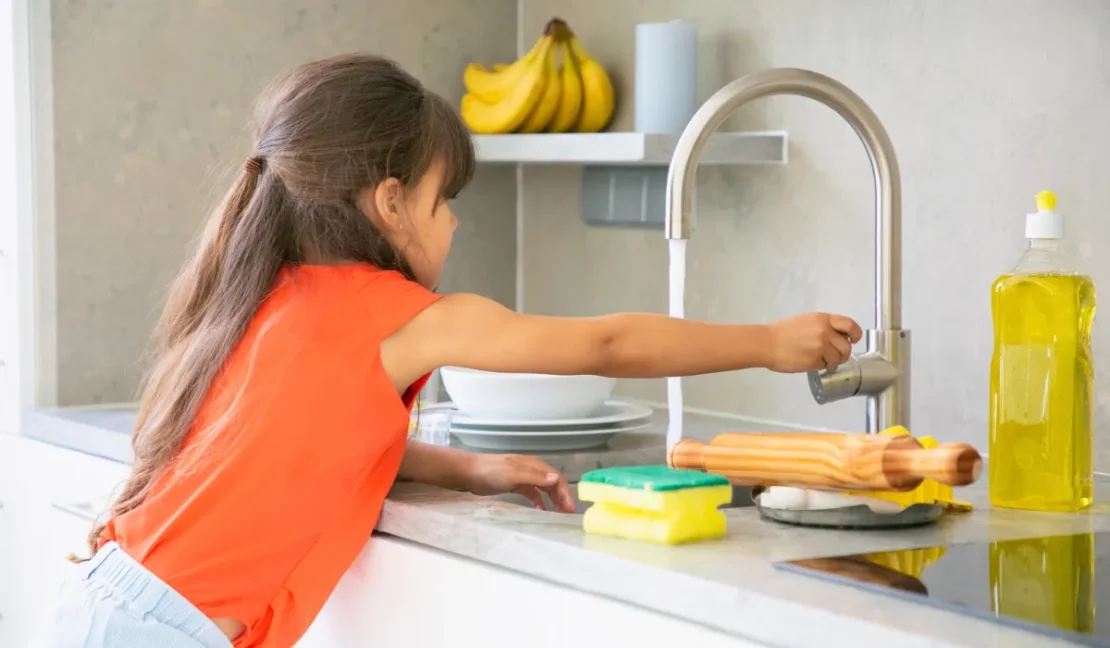
Image Source: Freepik
Age-Appropriate Children Rights Responsibilities
The balance of children rights responsibilities looks different at different developmental stages. What’s appropriate for a two-year-old differs dramatically from what works for a six-year-old.
Toddlers (Ages 1.5 to 2): Beginning Awareness
At this age, children rights responsibilities are extremely simple and mostly focused on beginning to understand cause and effect in social situations.
Rights toddlers can begin understanding:
- “You can choose which toy to play with”
- “Your body belongs to you” (foundation for consent)
- “You can say when you’re hungry or tired”
Responsibilities toddlers can begin learning:
- “We use gentle touches with friends”
- “We put toys in the basket when we’re done”
- “We sit at the table during snack time”
In our Toddler programs (offered 2x or 3x per week) with 12 children per class, we introduce these concepts through consistent routines and lots of gentle repetition. At this age, children rights responsibilities are absorbed through experience more than explanation.
Pre-Nursery and Nursery (Ages 2 to 4): Growing Understanding
As language develops, children rights responsibilities can be taught more explicitly. Two, three, and four-year-olds can begin understanding simple explanations and connections.
Rights for this age:
- “You can choose between these two activities”
- “You can tell me if something makes you uncomfortable”
- “You can have private time when you need to be alone”
- “You can express your feelings with words”
Responsibilities for this age:
- “Help set the table by putting out napkins”
- “Put your dirty clothes in the hamper”
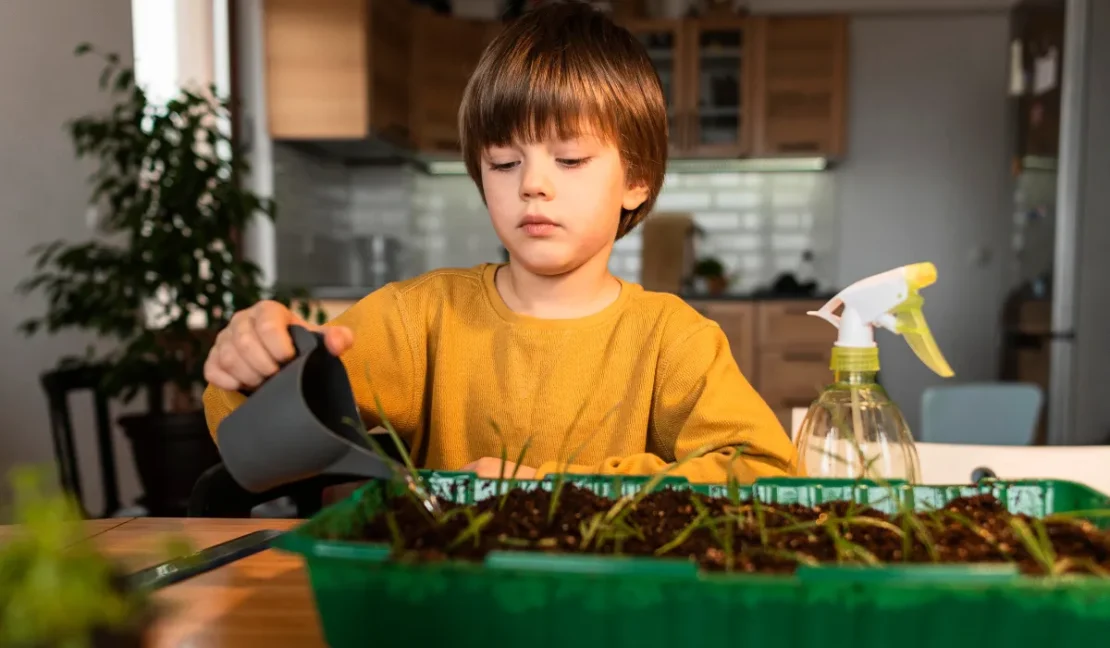
- “Feed the pet/water the plants”
- “Use kind words even when you’re upset”
- “Ask before taking something that belongs to someone else”
Our Pre-Nursery class with 16 children and Nursery program practice children rights responsibilities constantly. We role-play scenarios, read books about cooperation and respect, and guide real-time conflicts using this framework.
Kindergarten (Ages 4 to 6): More Complex Understanding
By kindergarten age, children rights responsibilities become more nuanced. Kids can understand that rights and responsibilities are interconnected and can think about fairness in more complex ways.
Rights for kindergarteners:
- “You can have input on decisions that affect you”
- “You deserve to be treated with respect”
- “You can disagree respectfully”
- “You can ask questions and express curiosity”
- “You have the right to develop your own interests”
Responsibilities for kindergarteners:
- “Complete homework and prepare your school bag”
- “Help younger siblings when they need assistance”
- “Clear your dishes after meals”
- “Keep your room reasonably tidy”
- “Follow through on commitments”
- “Apologize and make amends when you hurt someone”
In our Kindergarten 1 and 2 programs, children rights responsibilities are discussed explicitly. Our Moral and Social Studies curriculum includes lessons on fairness, rights, responsibilities, and citizenship. These abstract concepts become concrete through daily practice.
Teaching Children Rights Responsibilities Through Daily Life
The best lessons about children rights responsibilities don’t come from lectures. They come from how we structure family life and respond to everyday situations.
Model Respect for Rights
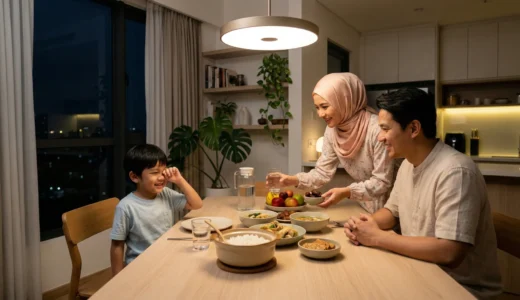
Children learn about their rights primarily by experiencing them. When you listen to your child’s perspective even when the answer is still no, you’re teaching that their voice matters. When you apologize after losing your temper, you’re showing that everyone deserves respect, including children.
At Apple Tree, we model respect constantly. We ask permission before helping a child who hasn’t asked for help. We acknowledge feelings even when we can’t change the situation. We give choices within boundaries. Children absorb these lessons about children rights responsibilities through hundreds of daily interactions.
Create Clear Expectations for Responsibilities
Children need to know exactly what’s expected. Vague instructions like “be helpful” don’t teach children rights responsibilities effectively. Specific expectations do.
Instead of: “Clean your room” Try: “Put all toys in bins, put dirty clothes in the hamper, and put books on the shelf”
We use this specific language approach in our classrooms across all subjects from English to Mathematics to Creativity. Clear expectations help children succeed, which builds confidence and motivation.
Use Natural Consequences When Possible
Natural consequences teach children rights responsibilities more effectively than arbitrary punishments. When consequences are logically connected to choices, children learn cause and effect.
“You didn’t put your toys away, so we don’t have time for a story before bed because we need that time to clean up together.” This teaches responsibility for choices without shaming or punishing.
Connect Rights to Responsibilities Explicitly
Help children see how children rights responsibilities are interconnected. “You have the right to play with your toys. That comes with the responsibility to take care of them and share with your sister.”
This framework makes abstract concepts concrete. In our Science and Social Studies lessons, we explore how communities work when everyone both contributes and benefits. These big ideas start at home with family dynamics.
Common Scenarios: Children Rights Responsibilities in Action
Let’s look at how to apply children rights responsibilities to real situations you face at home.
The Bedroom Battle
Scenario: Your child’s room is a disaster. She says it’s her space and she can keep it how she wants.
Rights perspective: She does have a right to some autonomy over her personal space and to make some choices about her environment.
Responsibilities perspective: She has a responsibility to maintain a reasonably clean, safe space and not create work or unpleasantness for others (like smells or lost items).
Balanced approach: “You’re right that this is your space, and you get to choose how to arrange it and which posters to hang. You also have the responsibility to keep it clean enough that we can walk safely, find what you need, and keep bugs away. Let’s figure out a system that respects both.”
This approach honors children rights responsibilities equally and teaches negotiation and problem-solving.
Chore Resistance
Scenario: Your child refuses to help with chores, saying it’s the parents’ job to take care of the house.
Rights perspective: Children do have the right to play, rest, and not be overburdened with adult responsibilities.
Responsibilities perspective: Everyone in a family contributes according to their ability. Being part of a household means helping.
Balanced approach: “You’re right that it’s my job to take care of our family, and I do! Part of taking care of you is teaching you skills you’ll need as an adult. Everyone in our family helps out. Your contributions matter and make our family work better. Let’s pick some jobs that match your abilities.”
At Apple Tree, we emphasize this in our Moral curriculum. Even in our youngest programs, children help with classroom jobs. This early practice with children rights responsibilities builds lifelong habits.
Screen Time Demands
Scenario: Your child demands more screen time, insisting it’s not fair that you control when and how much.
Rights perspective: Children do have a right to some autonomy and entertainment.
Responsibilities perspective: Parents have the responsibility to make decisions about health and development. Children have a responsibility to accept boundaries.
Balanced approach: “You have a right to have fun and relax, absolutely! I also have the responsibility to keep you healthy, and too much screen time isn’t good for growing brains and bodies. Within the limits we’ve set, you can choose when to use your screen time today. That gives you choice and control while I take care of the health side.”
This response acknowledges children rights responsibilities while maintaining appropriate parental authority.
Privacy vs. Safety
Scenario: Your kindergartener wants complete privacy in the bathroom and bedroom and gets upset when you check on her.
Rights perspective: Children absolutely have a right to privacy and bodily autonomy.
Responsibilities perspective: Parents are responsible for safety, which sometimes requires checking in.
Balanced approach: “You’re right that you deserve privacy. I always knock before entering. I also need to keep you safe, which means I check on you sometimes. As you show me you can handle more independence safely, I’ll give you more privacy. That’s how rights and responsibilities work together.”
We navigate this balance constantly at school too. In our Physical Education and general classroom management, we respect children’s dignity and privacy while maintaining safety. Understanding children rights responsibilities helps us find that balance.
Creating a Family Culture Around Children Rights Responsibilities
Rather than teaching children rights responsibilities as separate lessons, create a family culture where these values are simply how your household operates.
Family Meetings
Regular family meetings give everyone a voice and create space to discuss both rights and responsibilities. Even young children can participate in age-appropriate ways.
Topics might include: planning weekend activities, addressing conflicts, dividing up chores, setting family goals, celebrating successes, or discussing challenges. When children see their input genuinely considered, they experience their rights. When they contribute to solutions, they practice responsibilities.
We hold class meetings regularly in our Kindergarten programs. These teach children that their voices matter and that everyone contributes to solving problems. These lessons about children rights responsibilities transfer directly to family life.
Rights and Responsibilities Charts
Visual reminders help young children remember both sides of the equation. Create a simple chart showing rights on one side and corresponding responsibilities on the other.
Example chart:
- Right to play with toys / Responsibility to clean up
- Right to have feelings / Responsibility to express them kindly
- Right to make choices / Responsibility to accept consequences
- Right to privacy / Responsibility to be safe and honest
- Right to be heard / Responsibility to listen to others
Our classrooms use visual supports extensively across our curriculum from English to Mathematics to Music. Visual learners especially benefit from seeing children rights responsibilities displayed clearly.
Language That Reinforces the Balance
The words we use shape how children understand children rights responsibilities. Incorporate language that acknowledges both sides regularly.
“You have the right to feel angry. You also have the responsibility to express anger safely.” “You have the right to choose which activity. Once you choose, you have the responsibility to follow through.” “You have the right to privacy. You also have the responsibility to tell me if something makes you uncomfortable.”
This language becomes second nature over time and powerfully shapes children’s understanding.
Celebrate Both
Notice and celebrate when children advocate for their rights appropriately AND when they fulfill responsibilities well. Both deserve recognition.
“I love how you told your cousin you weren’t comfortable with that game. That’s using your voice and knowing your rights!” “Thank you for clearing the table without being asked. That’s being responsible and helpful!”
At Apple Tree, we celebrate both aspects constantly. In our programs covering Creativity, Science, Bahasa, Chinese, and all subjects, we notice when children advocate for themselves and when they contribute to the classroom community.
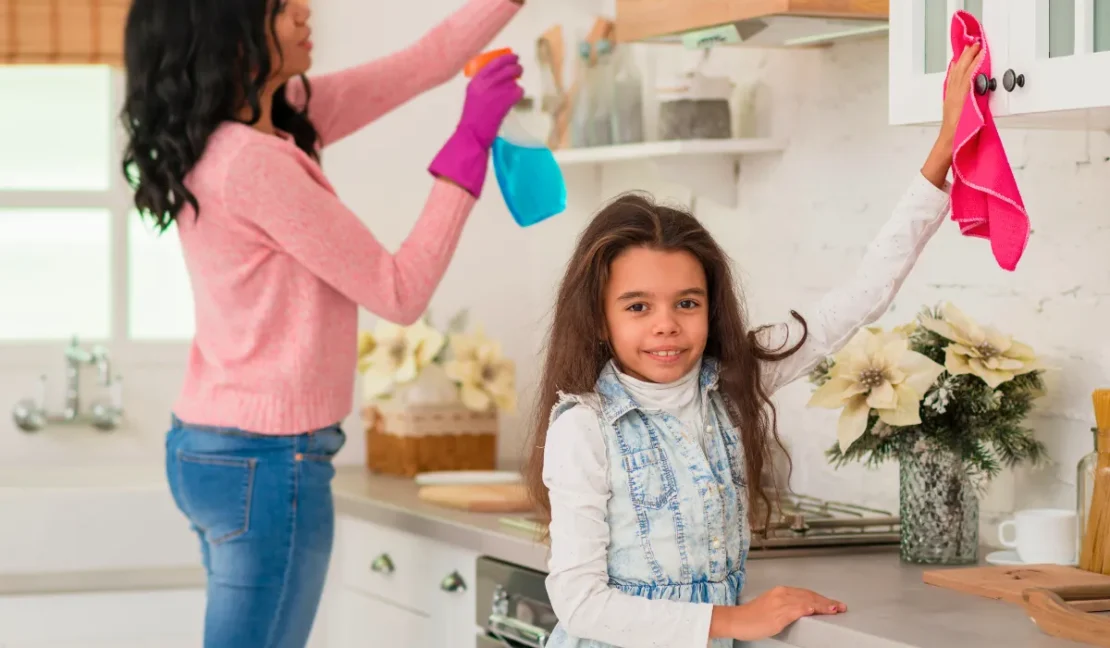
Image Source: Freepik
When Children Rights Responsibilities Get Out of Balance
Even with good intentions, the balance can tip too far in one direction. Here’s how to recognize and correct imbalances.
Too Much Focus on Rights
Signs you might be overemphasizing rights include: your child makes demands but resists any requests, everything is negotiable and nothing is simply expected, your child shows little consideration for others’ needs, or your child struggles when they don’t get their way.
Course correction: Increase expectations gradually. Assign specific responsibilities. Use natural consequences. Acknowledge feelings while maintaining boundaries. Emphasize that rights exist within community, not in isolation.
Too Much Focus on Responsibilities
Signs you might be overemphasizing responsibilities include: your child rarely expresses preferences or opinions, your child is a people-pleaser who can’t say no, your child seems anxious about making mistakes, or your child doesn’t advocate for themselves when treated unfairly.
Course correction: Ask for your child’s input more often. Offer choices throughout the day. Validate feelings and perspectives. Create safe space for disagreement. Emphasize that their voice and needs matter.
Finding Your Way Back to Balance
Most families drift out of balance sometimes. That’s normal! The key is noticing and adjusting. If you recognize yourself in either extreme, don’t panic or overhaul everything overnight.
Pick one small area to adjust. If you’ve been too focused on responsibilities, start asking your child’s opinion on one decision daily. If you’ve overemphasized rights, introduce one new age-appropriate responsibility. Small, consistent adjustments create sustainable change.
Cultural Considerations in Indonesia
We work with diverse families in BSD, and we recognize that children rights responsibilities can look different across cultures. Let’s address this thoughtfully.
Traditional Respect and Modern Rights
Many Indonesian and Asian families value hierarchical respect, with children expected to defer to elders. This cultural value can coexist with respecting children’s rights when approached thoughtfully.
Children can learn to speak respectfully to elders while still having their voices heard. They can honor family hierarchy while also having age-appropriate autonomy. Cultural values and children rights responsibilities aren’t necessarily in conflict.
Community vs. Individual
Western frameworks often emphasize individual rights, while many Indonesian families prioritize community and family over individual preferences. Children rights responsibilities can be framed within community values.
“You have the right to be cared for, and so does everyone in our family. You have the responsibility to contribute so everyone’s needs can be met.” This framing honors collectivist values while still respecting individual dignity.
Extended Family Input
In many Indonesian families, grandparents and extended family have significant input into child-rearing. This can create challenges when different generations have different views about children rights responsibilities.
Respectful conversation matters. “I appreciate your experience and wisdom. We’re trying to balance teaching respect with building confidence. Can we work together on this?” Finding common ground while maintaining your parenting approach requires patience and diplomacy.
The Long-Term Impact of Teaching Children Rights Responsibilities
Why invest all this energy in balancing children rights responsibilities? Because the payoff extends far beyond childhood.
Self-Advocacy Skills
Children who know their rights learn to advocate for themselves. They can speak up when treated unfairly, set boundaries in relationships, and ask for what they need. These skills protect against bullying, abuse, and exploitation throughout life.
Our students at Apple Tree learn self-advocacy from the beginning. By Kindergarten 2, they can clearly express needs, disagreements, and boundaries. This foundation in children rights responsibilities serves them forever.
Contribution to Community
Children who understand responsibilities become adults who contribute to workplaces, communities, and families. They don’t wait to be asked; they notice what needs doing and pitch in. They understand that functioning communities require everyone’s participation.
Healthy Relationships
Adults who experienced balanced children rights responsibilities in childhood build healthier relationships. They neither become doormats who ignore their own needs nor selfish partners who ignore others’ needs. They can negotiate, compromise, and maintain both autonomy and connection.
Strong Work Ethic
Understanding responsibilities early translates into strong work ethic later. These children become employees who show up, do their share, and take pride in contributing. They’re the coworkers everyone wants on their team.
Ethical Decision-Making
The framework of children rights responsibilities becomes a foundation for ethical thinking. “What are my rights here? What are my responsibilities? How do I balance my needs with others’ needs?” These questions guide moral decision-making throughout life.
In our comprehensive curriculum at Apple Tree covering English, Mathematics, Chinese, Science, Creativity, Social Studies, Moral education, Music, Physical Education, Bahasa, and Phonics, we weave these ethical frameworks throughout. Academic learning matters, but character development matters even more.
Practical Implementation: Your First Steps
Ready to start teaching children rights responsibilities more intentionally? Here’s how to begin without overwhelming yourself or your child.
Week One: Observation
Spend the first week simply noticing. When does your child express needs or wants (exercising rights)? When do they fulfill or resist responsibilities? Where is your family’s balance currently? What works well? What needs adjustment?
Don’t change anything yet; just observe and gather information. This groundwork helps you make targeted, effective changes.
Week Two: One New Right
Introduce one new way your child can exercise appropriate autonomy. Maybe they choose their clothes each day, or pick the weekend activity, or decide the dinner menu one night per week.
Explain: “You have the right to make some decisions about your life. I’m giving you more choice about [specific area].” Then follow through even when they make choices you wouldn’t make (within reason).
Week Three: One New Responsibility
Add one age-appropriate responsibility. Make it specific and achievable. Explain: “You’re growing up and becoming more capable. Your new job in our family is [specific task].”
Provide support initially but resist the urge to take over. Natural consequences teach better than rescuing.
Week Four: Connect Them Explicitly
Start connecting rights and responsibilities explicitly. “You have the right to play outside. You have the responsibility to put your bike away when you’re done.” “You have the right to choose your activities. When you choose something, you have the responsibility to participate fully.”
This language makes the connection clear and reinforces that children rights responsibilities work together.
Why This Matters at Apple Tree Pre-School BSD
Everything we’ve discussed about children rights responsibilities is practiced daily at Apple Tree Pre-School BSD. From our Toddler programs with 12 children through our Kindergarten classes with 20 children, we intentionally create environments where children’s voices matter and their contributions are expected.
Our Singapore-based curriculum is academically rigorous, but we know that academic skills alone don’t create successful, happy humans. Children who understand their worth and their obligations, who can advocate for themselves and contribute to community, who balance personal needs with collective responsibility, these are the children who truly thrive.
In every subject from Mathematics to Music to Moral education, we reinforce that everyone has rights and everyone has responsibilities. We model this balance, teach it explicitly, and practice it constantly.
Ready to partner with a school that takes character development as seriously as academic excellence? At our Educenter BSD Building campus, children rights responsibilities form the foundation of everything we do. Discover how we help children grow smart and happy while learning to be both confident and considerate or call us at +62 888-1800-900.Come join our Apple Tree family where children learn they matter and so does everyone else! 🍎