
It’s 8:30 PM. You’ve survived dinner, bath time, and the great pajama negotiation. Your little one is finally in bed, but sleep? Not happening. They’re bouncing off the walls, asking for water, needing one more hug, insisting their stuffed elephant is lonely. You’re exhausted, they’re wired, and bedtime feels like a battle you’re losing.
Here’s what we’ve learned after years at Apple Tree Pre-School BSD: the right bedtime stories can be absolute game changers. Not just any stories thrown at them while you scroll your phone, but carefully chosen tales that actually calm busy minds and create that magical bridge between playtime chaos and peaceful sleep. At our Educenter BSD Building campus, we see firsthand how stories shape young minds, and bedtime is prime real estate for this magic.
Whether you’ve got a wiggling toddler or a chatty preschooler, the perfect bedtime stories are out there waiting to transform your evenings. Ready to reclaim bedtime and maybe even enjoy it? Let’s explore what actually works!
Why Bedtime Stories Matter for Young Children
Before we dive into specific titles, let’s talk about why bedtime stories aren’t just a nice tradition but actually crucial for your child’s development.
Building Language Skills Through Stories
Every time you read to your child, you’re literally wiring their brain for language success. Bedtime stories expose children to vocabulary they wouldn’t hear in everyday conversation. Where else would your toddler learn words like “slumbered” or “twilight”?
At Apple Tree, our English and Phonics curriculum emphasizes rich language exposure. We’ve noticed that children who have regular bedtime stories often have larger vocabularies and better comprehension skills. Miss Sarah always says, “The kids who get bedtime stories at home? You can hear it in how they express themselves at school.”
Emotional Bonding Time
In our crazy, overscheduled world, bedtime stories offer something precious: uninterrupted one-on-one time. No phones, no distractions, just you and your child snuggled up with a good book.
This consistent bonding time builds emotional security. Your child learns that no matter how hectic the day was, there’s this calm, predictable moment of connection waiting at the end. That security? It’s worth its weight in gold.
Establishing Healthy Sleep Routines
Our bodies love predictability. When bedtime stories become a regular part of your routine, they signal to your child’s brain that sleep is coming. It’s like a gentle warning system: “Story time is starting, which means cozy sleep is next!”
We use similar routine-based approaches in our Toddler and Pre-Nursery programs. Children thrive on knowing what comes next, and bedtime stories create that comforting structure at home.

Image Source: Canva
What Makes a Great Bedtime Story
Not all stories are created equal when it comes to bedtime. That exciting adventure book about pirates? Probably better saved for afternoon reading. Here’s what to look for in bedtime stories.
Age-Appropriate Content
This might seem obvious, but it’s worth emphasizing. Toddlers need simpler stories with clear pictures and basic plots. Preschoolers can handle more complex narratives but still need content that won’t give them nightmares.
Scary or overly exciting bedtime stories defeat the whole purpose. Save the dinosaur battles and monster chases for daytime. Bedtime is for gentle, soothing tales.
Engaging but Calming
Here’s the tricky balance: bedtime stories need to be interesting enough to hold attention but calming enough to encourage sleep. Look for stories with peaceful themes, gentle rhythms, and soothing illustrations.
Miss Emma from our Nursery class explains it perfectly: “You want their minds engaged but their bodies relaxed. It’s like slowly turning down the volume on their day.”
Repetitive and Predictable Elements
Young children find comfort in repetition. Stories with repeated phrases or predictable patterns are perfect for bedtime. Think “Goodnight Moon” with its rhythmic repetition or “The Very Hungry Caterpillar” with its predictable sequence.
These patterns are soothing and help children feel safe. Plus, after a few readings, they can “help” tell the story, which builds confidence and language skills.
Best Bedtime Stories for Toddlers (1.5 to 3 Years)
Toddlers need short, simple bedtime stories with lots of pictures and minimal text. Their attention spans are still developing, so think quality over length.
Classic Favorites That Never Fail
“Goodnight Moon” by Margaret Wise Brown This is the gold standard of bedtime stories for a reason. The simple, rhythmic text and the ritual of saying goodnight to everything creates a calming atmosphere. We recommend this to every parent in our Toddler program with 12 children per class, and it’s universally loved.
“The Going to Bed Book” by Sandra Boynton Boynton’s silly animals going through their bedtime routine are adorable and relatable. The simple rhymes and bright illustrations keep toddlers engaged while the bedtime theme subtly prepares them for sleep.
“Time for Bed” by Mem Fox The gentle rhyming text about baby animals settling down for the night is absolutely perfect. The rhythmic language is soothing, and the “time for bed” refrain becomes almost like a lullaby.
Interactive Board Books for Active Toddlers
Some toddlers need a bit more engagement before they can settle. These interactive bedtime stories work wonderfully:
“Pajama Time!” by Sandra Boynton Yes, another Boynton because she’s brilliant for this age! The bouncy rhythm and silly pajama-wearing animals are engaging enough to capture attention but ultimately lead to bedtime.
“Llama Llama Red Pajama” by Anna Dewdney Little Llama’s bedtime worries are so relatable for toddlers. The story validates their feelings while showing that everything’s okay. Parents love this one because it addresses common bedtime anxieties.
“Where Is Baby’s Bedtime Book?” by Karen Katz The lift-the-flap format gives busy toddler hands something to do. Each flap reveals a bedtime routine step, making it both interactive and instructive.
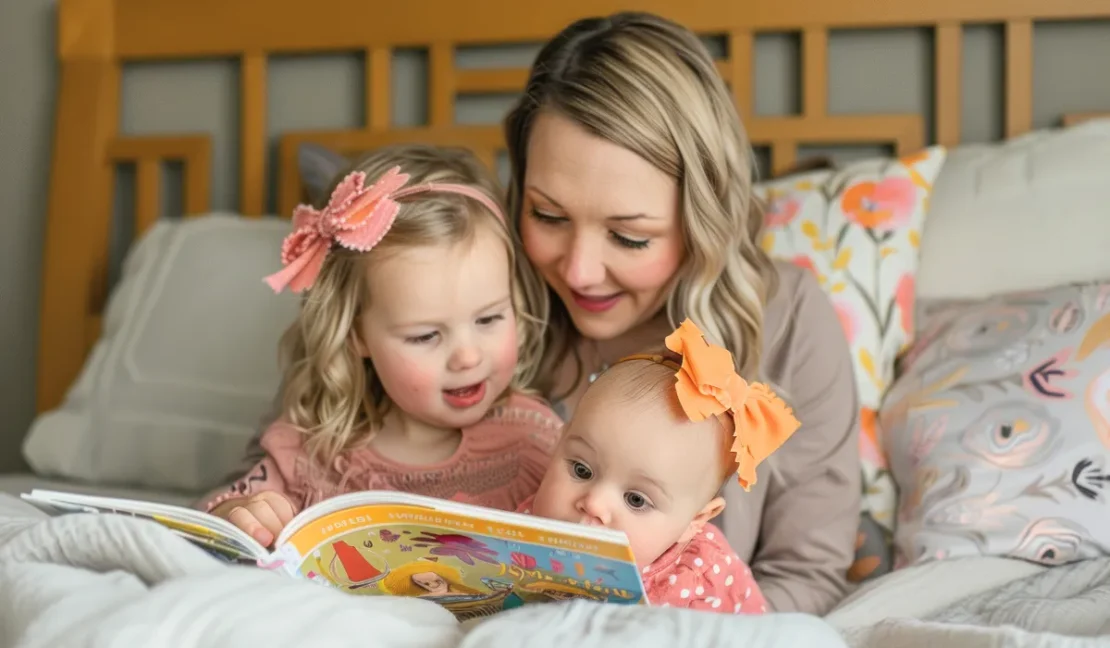
Image Source: Canva
Best Bedtime Stories for Preschoolers (3 to 6 Years)
Preschoolers can handle longer, more complex bedtime stories. They enjoy narratives with actual plots and can follow stories that unfold over multiple pages.
Imaginative Adventures (That Still Calm)
“The Rabbit Who Wants to Fall Asleep” by Carl-Johan Forssén Ehrlin This one’s specifically designed to make children sleepy using psychological techniques. Some parents swear by it, others find it a bit odd, but it’s worth trying if you’ve got a child who really struggles to wind down.
“Dragons Love Tacos” by Adam Rubin Okay, hear us out. This isn’t technically a bedtime story, but many preschoolers love it so much that they’ll happily settle down for bed if it’s part of the routine. The silly humor and absurd plot are engaging without being overstimulating.
“Room on the Broom” by Julia Donaldson Donaldson’s rhythmic storytelling is pure magic. The story of a kind witch and her growing group of friends is gentle, funny, and the rhyming text has a lullaby quality. We use many of Donaldson’s books in our Kindergarten 1 and 2 classes.
Stories That Teach Values
“The Kissing Hand” by Audrey Penn This touching story about a little raccoon nervous about school is perfect for bedtime. It offers comfort and security, teaching that love stays with us even when we’re apart. Many parents at our Apple Tree programs use this before big transitions.
“Guess How Much I Love You” by Sam McBratney The gentle competition between Little Nutbrown Hare and Big Nutbrown Hare to express their love is sweet and reassuring. It reinforces unconditional love right before sleep.
“The Napping House” by Audrey Wood A cumulative tale where everyone and everything is sleeping, piled on top of each other. The illustrations get progressively sleepier, and the rhythm is wonderfully soporific.
How to Make Bedtime Stories More Effective
Having great bedtime stories is just the start. How you read them matters just as much as what you read.
Create a Consistent Routine
Story time should happen at the same time each night, in the same cozy spot. This consistency signals to your child’s brain that it’s time to wind down.
In our classes covering Social Studies and Moral education, we emphasize the importance of routines. The same principle applies at home. Predictability creates security, and security helps children relax into sleep.
Make It Interactive (But Keep It Calm)
Ask gentle questions about the story, but keep the energy low. “Can you find the moon in the picture?” or “What do you think will happen next?” engages their mind without ramping up their energy.
Miss Linda, who teaches our Pre-Nursery class of 16 children, suggests whispering towards the end of the story. “When I start reading more softly, they naturally calm down too. It’s like I’m pulling them into this quiet, sleepy space.”
Set the Mood Right
Dim the lights. Maybe use a small reading lamp or nightlight. The lighting should be enough to see the pictures but low enough to promote melatonin production.
Keep the room cool and cozy. Some families like soft background music or white noise, but keep it subtle. The focus should be on your voice reading the bedtime stories.
Common Bedtime Story Mistakes to Avoid
Even with the best intentions, there are some pitfalls parents fall into with bedtime stories.
Letting Them Choose a Different Book Every Night
While choice is generally good, at bedtime, too many options can actually prolong the process. “Let’s read THIS one! No, wait, this one! Actually…” Sound familiar?
Offer a choice between two or three pre-selected bedtime stories. This gives them autonomy without decision fatigue.
Reading Too Many Stories
“Just one more book, please?” is the siren song of bedtime. If you always give in, you’re teaching them that boundaries are negotiable, and bedtime never actually arrives.
Decide in advance how many stories you’ll read (one or two is usually plenty) and stick to it. You can be warm and loving while still being firm.
Picking Exciting or Scary Stories
We mentioned this earlier, but it bears repeating. Stories about monsters, adventures, or anything that gets the heart racing are not bedtime stories, no matter how much your child loves them. Save those for daylight hours.
Rushing Through to Get It Over With
Kids can tell when you’re just going through the motions. If you’re speed-reading while mentally making tomorrow’s to-do list, the magic disappears. This time is for connection, not just checking a box.
Building a Home Library of Bedtime Stories
You don’t need hundreds of books to have successful bedtime stories. A core collection of 10 to 15 favorites that rotate is perfect.
Visit your local library regularly to try new bedtime stories without the investment. In the BSD area, there are great libraries where you can explore options before buying.
Consider books in multiple languages too. At Apple Tree, we teach English, Chinese, and Bahasa Indonesia. Exposing children to bedtime stories in different languages enriches their linguistic development. Even if you’re not fluent, there are wonderful bilingual books available.
The Connection Between Stories and Learning
At Apple Tree Pre-School BSD, we see daily how literacy exposure at home supports classroom learning. Our Singapore curriculum covers English, Mathematics, Science, Creativity, and more, but the foundation for all learning is language.
Children who have regular bedtime stories tend to start school with stronger pre-reading skills. They understand that books have a front and back, that text flows left to right, and that stories have a beginning, middle, and end.
Miss Clara from our Kindergarten 2 class tells us, “I can always tell which children have bedtime stories at home. They approach books with joy and confidence. They’re not intimidated by text because books are already their friends.”
When Bedtime Stories Become Special Memories
Here’s something beautiful about bedtime stories: they create lasting memories. Years from now, your child won’t remember most toys or what they ate for dinner on random Tuesdays. But they’ll remember snuggling with you, hearing your voice read their favorite stories.
Parents who attended our school often tell us, “I still remember the books my mom read me at bedtime. Now I’m reading the same ones to my daughter.” That’s the magic we’re talking about.
These quiet moments, repeated night after night, become the foundation of a lifetime love of reading and learning.
Transform Bedtime Into the Best Part of Your Day
Bedtime stories have the power to transform the most challenging part of your day into the most treasured. Yes, you’re tired. Yes, you have a million things to do. But these minutes with your child, this ritual of winding down together with beloved stories, is building something far more valuable than a clean kitchen or answered emails.
At Apple Tree Pre-School BSD, located in the Educenter BSD Building, we’re passionate about fostering a love of reading and learning from the earliest ages. Our comprehensive programs from Toddler through Kindergarten 2 incorporate daily story time because we know how powerful it is.
Through our curriculum covering everything from Phonics to Music to Physical Education, we create well-rounded learners. But it all starts with stories, with language, with that fundamental joy of books.
Ready to give your child a foundation of learning and literacy that starts with bedtime stories? Our nurturing environment and expert teachers are here to support your child’s journey. Discover how we bring stories and learning to life every day or call us at +62 888-1800-900.
Come join our Apple Tree family, where every child’s story matters! 🍎