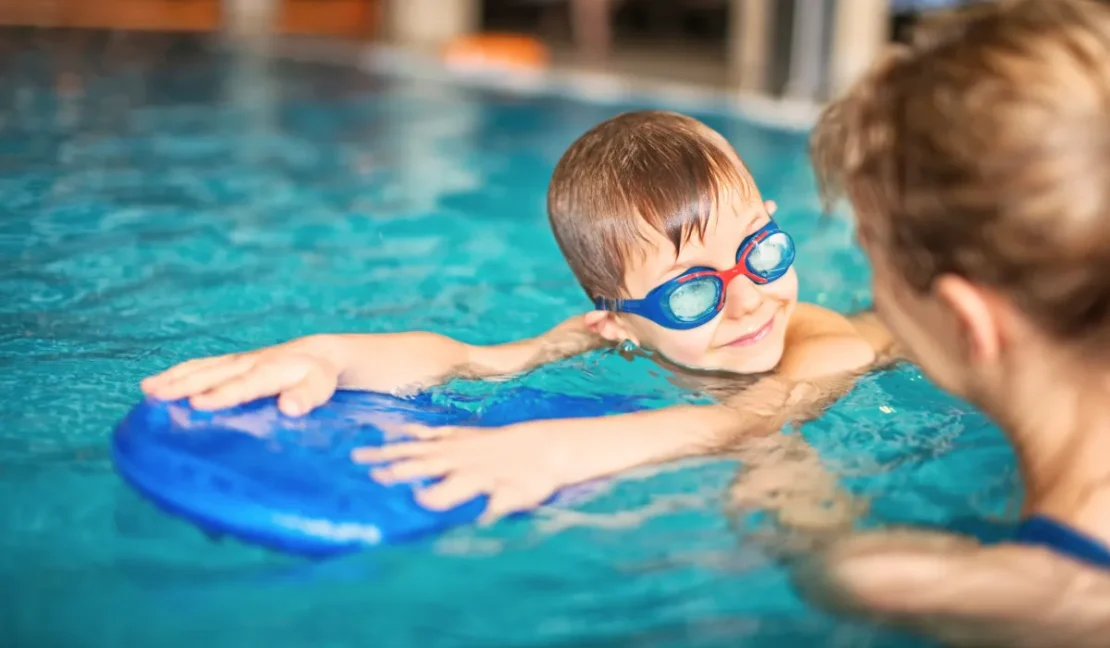
Five-year-old Raffi from our Kindergarten 2 class achieved something remarkable in our mini pool yesterday that left all of us educators beaming with pride. After weeks of practicing basic floating and kicking, he suddenly put it all together, glided across the pool with perfect form, and announced with the biggest grin, “Miss, I’m flying in the water!” That magical moment when swimming techniques for kids finally click into place is exactly why we’re so passionate about our aquatic program here at Apple Tree Pre-School BSD.
Our mini pool facility allows us to introduce children to advanced swimming skills in a safe, controlled environment where they can build confidence while mastering proper techniques. What we’ve discovered is that children who learn correct swimming form early develop stronger water safety skills, better coordination, and increased self-confidence that extends far beyond the pool.
Here’s what might surprise you about teaching swimming techniques to young children. It’s not just about getting them to move through the water, it’s about building body awareness, breath control, and problem-solving skills while having an absolute blast. When children master advanced swimming techniques, they’re developing physical and mental capabilities that support success in all areas of their development.
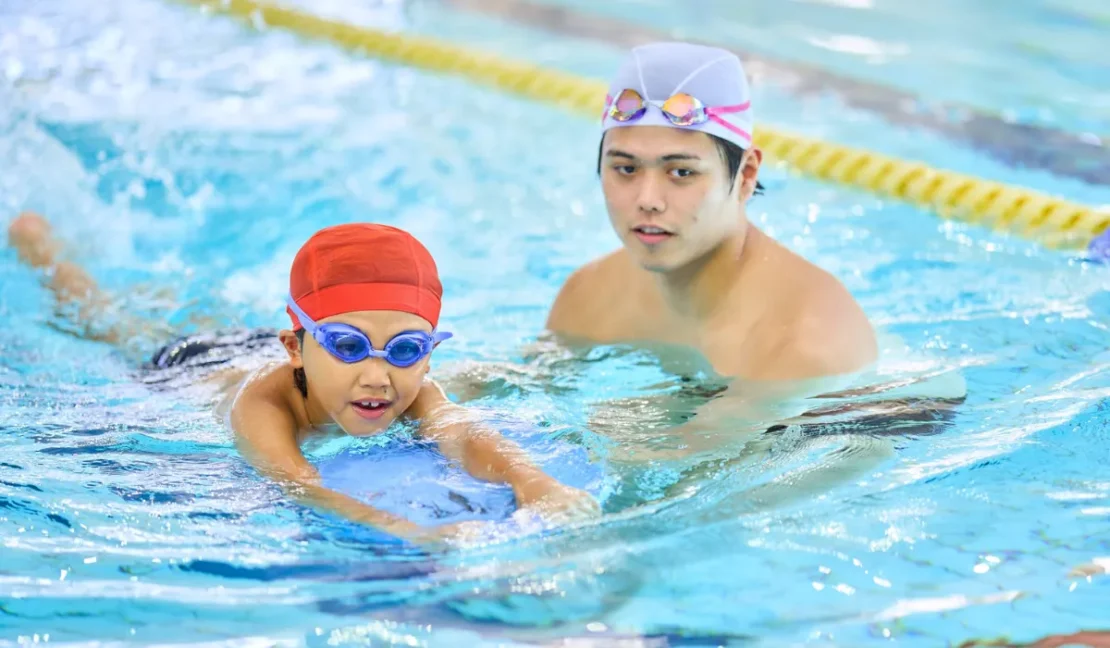
Image Source: Canva
Building Strong Foundation Skills for Water Mastery
Advanced swimming techniques for kids must be built on solid foundational skills that prioritize safety, comfort, and proper body positioning in the water. In our mini pool at the Educenter BSD Building, we see children progress from hesitant water entry to confident swimmers who understand how their bodies work in aquatic environments.
Water comfort forms the absolute foundation for all advanced swimming development. Children who feel relaxed and safe in water learn techniques much more quickly than those who remain tense or fearful. We spend considerable time helping children develop positive associations with water through games, songs, and playful activities that build confidence naturally.
Proper breathing techniques become crucial as children advance beyond basic swimming skills. We teach children to coordinate breathing with their stroke patterns, helping them understand when to inhale, when to exhale, and how to maintain rhythm while swimming. This breath control supports both technique development and endurance building.
Progressive Skill Development Approaches
Our swimming program follows carefully designed progressions that build upon each previous skill while introducing new challenges at developmentally appropriate times. Children master floating before attempting stroke work, develop kicking skills before adding arm movements, and perfect individual techniques before learning combination strokes.
We believe in celebrating each milestone, no matter how small, because swimming confidence builds through accumulated successful experiences. When three-year-old Anya finally managed to put her face underwater for three seconds, that achievement was just as important as more advanced swimmers perfecting their freestyle techniques.
Individual pacing remains crucial because children develop swimming skills at different rates depending on their physical development, previous water experiences, and personal comfort levels. Our small class sizes allow instructors to provide personalized attention that meets each child exactly where they are.
Safety-First Teaching Methodologies
Every swimming technique we teach prioritizes safety awareness and water respect alongside skill development. Children learn to assess pool conditions, understand their own limitations, and make smart decisions about when and how to enter water environments.
We integrate water safety concepts naturally into technique instruction, teaching children to always look before entering water, understand how to exit pools safely, and recognize when they need adult assistance. These safety habits become automatic through consistent practice and reinforcement.
Emergency response skills appropriate for young children, such as floating when tired and calling for help, are woven throughout our curriculum so children develop both swimming abilities and crucial safety awareness simultaneously.
Age-Appropriate Stroke Techniques and Refinement
Different age groups require different approaches to stroke development that match their physical capabilities and attention spans. Our Toddler classes focus on water familiarity and basic movements, while older children tackle more complex coordination challenges and technique refinement.
Freestyle swimming techniques begin with simple alternating arm movements and flutter kicks, gradually building coordination between upper and lower body movements. We use visual cues, games, and hands-on guidance to help children understand proper arm entry, pull patterns, and rotation timing.
Backstroke development often comes more naturally to young children because breathing remains easier, making it an excellent technique for building confidence and endurance. Children learn to maintain body position, coordinate arm movements, and develop rhythm without the complexity of coordinated breathing patterns.
Breathing Coordination for Young Swimmers
Teaching children to breathe properly while swimming requires breaking down complex movements into manageable components. We practice breathing patterns on deck before attempting them in water, helping children understand the timing and rhythm required for different strokes.
Side breathing during freestyle becomes much easier when children first master the component skills separately. We practice head turning, bubble blowing, and rhythm patterns individually before combining them into flowing swimming motions.
Breath holding and underwater swimming skills are taught gradually and safely, always emphasizing comfort and control over distance or duration. Children learn to gauge their own limits and make smart decisions about underwater activities.
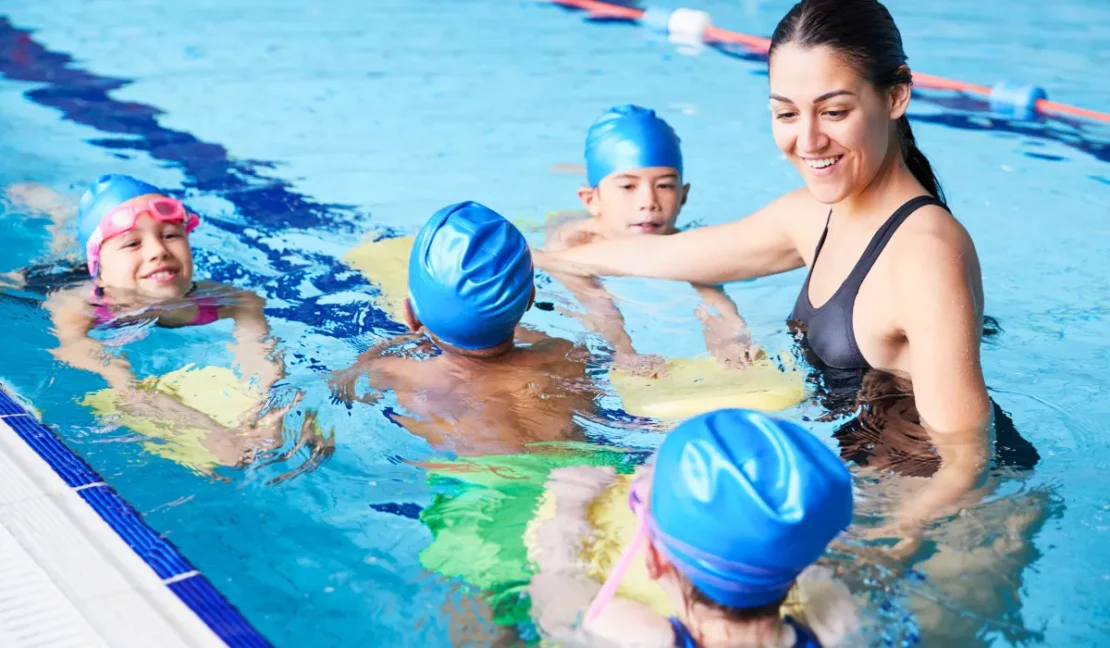
Image Source: Canva
Enhancing Coordination Through Advanced Movements
Swimming techniques for kids naturally develop bilateral coordination as children learn to coordinate opposite arm and leg movements while maintaining proper body position. This complex coordination supports brain development and transfers to improved performance in other physical activities.
Advanced swimming movements challenge children to think about multiple body parts simultaneously while maintaining rhythm and efficiency. When six-year-old Dimas successfully coordinates his freestyle stroke with proper breathing, he’s demonstrating sophisticated motor planning and execution skills.
We incorporate swimming games and challenges that require children to adapt their techniques to different situations, building flexibility and problem-solving abilities alongside stroke refinement. Relay races, underwater treasure hunts, and stroke combination challenges keep skill development engaging and fun.
Building Endurance and Stamina
Endurance development in young swimmers focuses on building cardiovascular fitness gradually while maintaining proper technique throughout longer swimming sessions. We emphasize quality over quantity, ensuring children maintain good form even as they swim longer distances.
Interval training adapted for young children includes alternating periods of swimming and rest, teaching children to gauge their own energy levels and pace themselves appropriately. These self-regulation skills transfer to other physical activities and support overall fitness development.
We create endurance challenges that feel like games rather than work, such as swimming across the pool to collect items or completing swimming “adventures” that require sustained effort over longer periods.
Competition Readiness and Performance
For children who show interest and aptitude, we provide opportunities to develop competitive swimming skills through stroke refinement, race preparation, and performance optimization. However, we always maintain focus on personal improvement rather than comparison with others.
Technique analysis helps advanced young swimmers understand how small adjustments can improve their efficiency and speed. We use simple language and visual demonstrations to help children recognize and correct common technique errors.
Performance goal-setting appropriate for young children focuses on personal bests, technique improvement, and consistency rather than winning or beating others. This approach builds intrinsic motivation and long-term love for swimming.
Advanced swimming techniques for kids provide incredible opportunities for physical development, confidence building, and lifelong fitness habits. At Apple Tree Pre-School BSD, our mini pool facility allows us to offer comprehensive aquatic education that builds water safety awareness alongside advanced swimming capabilities.
The goal isn’t to create Olympic swimmers but rather to help children develop strong swimming skills, water confidence, and safety awareness that will serve them throughout their lives. When children master advanced swimming techniques in supportive, encouraging environments, they develop physical capabilities and self-confidence that extends far beyond the pool.
Our comprehensive programs integrate swimming instruction naturally with our academic curriculum, ensuring children develop well-rounded capabilities that support success in all areas of their development.
Ready to watch your child develop advanced swimming skills in our safe, supportive mini pool environment? We’d love to show you how our expert swimming instruction builds water confidence, safety awareness, and technical skills that last a lifetime. Send us a WhatsApp message or give us a call at +62 888-1800-900.
Come play and learn with other children, because confident swimmers are made through expert instruction and lots of joyful practice! 🏊♀️💧✨