My son came home from preschool last week absolutely thrilled. He’d spent the afternoon playing a dice game with his friends. He kept rolling and counting on his fingers with pure joy. That’s when it hit me, math games for kids don’t need to be boring worksheets or flashcards. They can be genuinely fun and engaging activities that kids actually look forward to. We’ve discovered that the best math games for kids happen naturally during playtime at home.
Here’s something that might surprise you, most kids think they don’t like math. But give them the right math games for kids, and they become little mathematicians without even realizing it. The secret is making learning feel like play rather than work. At Apple Tree Pre-School BSD, we’ve seen countless children develop a genuine love for numbers through playful math games for kids. We want to share these amazing ideas with you so your home becomes a space where math feels fun and accessible.
Math games for kids are one of the most powerful tools parents have. They build confidence, develop critical thinking, and strengthen number sense naturally. They create positive associations with mathematics that last a lifetime. The wonderful thing about math games for kids is that you probably already have everything you need at home. You don’t need expensive materials or fancy equipment. You need curiosity, creativity, and willingness to play together.
This article shares our favorite math games for kids that work beautifully at home. These aren’t complicated strategies requiring special training or preparation. They’re simple, enjoyable activities that transform learning into adventure. We’ve used these math games for kids with children from ages two through six. We’ve watched shy kids become confident mathematicians. We’ve seen reluctant learners become eager players. Let’s explore how math games for kids can transform your family’s relationship with numbers.
Math Games for Kids That Build Number Confidence
Before we dive into specific games, let’s talk about why math games for kids matter so much. Children learn through play, especially at younger ages. This isn’t just philosophy, it’s how their brains are wired. Math games for kids leverage this natural learning style. They make abstract concepts concrete and understandable. They create joyful memories around mathematics rather than anxiety.
Number sense is the foundation for all future math learning. It’s understanding what numbers mean and how they work together. Math games for kids build this essential skill through repetition and playfulness. Kids begin to see numbers as tools they control. They develop confidence approaching mathematical challenges. This confidence carries them through elementary school and beyond.
The beauty of math games for kids is flexibility. You can play them during breakfast, waiting at the doctor’s office, or on lazy afternoons. You can adjust difficulty as your child grows. You can revisit games repeatedly without boredom because the engagement comes from play, not novelty. Math games for kids fit naturally into your existing family rhythm.
Why Play Based Learning Works for Math
When children play math games for kids, their brains release dopamine. This chemical makes learning feel pleasurable and rewarding. They’re more likely to remember information learned through enjoyment. Math games for kids create positive neural pathways around numbers and calculations. This is dramatically different from anxiety producing worksheets.
Playing math games for kids also develops social skills and emotional intelligence. Kids learn patience, turn-taking, and celebrating others’ successes. They practice handling disappointment when they don’t win. They develop resilience trying challenging variations. Math games for kids aren’t just teaching math, they’re developing whole children.
10 Fun Math Game Ideas You Can Play at Home
Now let’s get to the good stuff, specific math games for kids you can start playing today. These are tried and tested games from our classrooms. We’ve watched children of all abilities enjoy them. Pick whichever ones appeal to your family and start playing.
Game 1: Dice Race Math Games for Kids
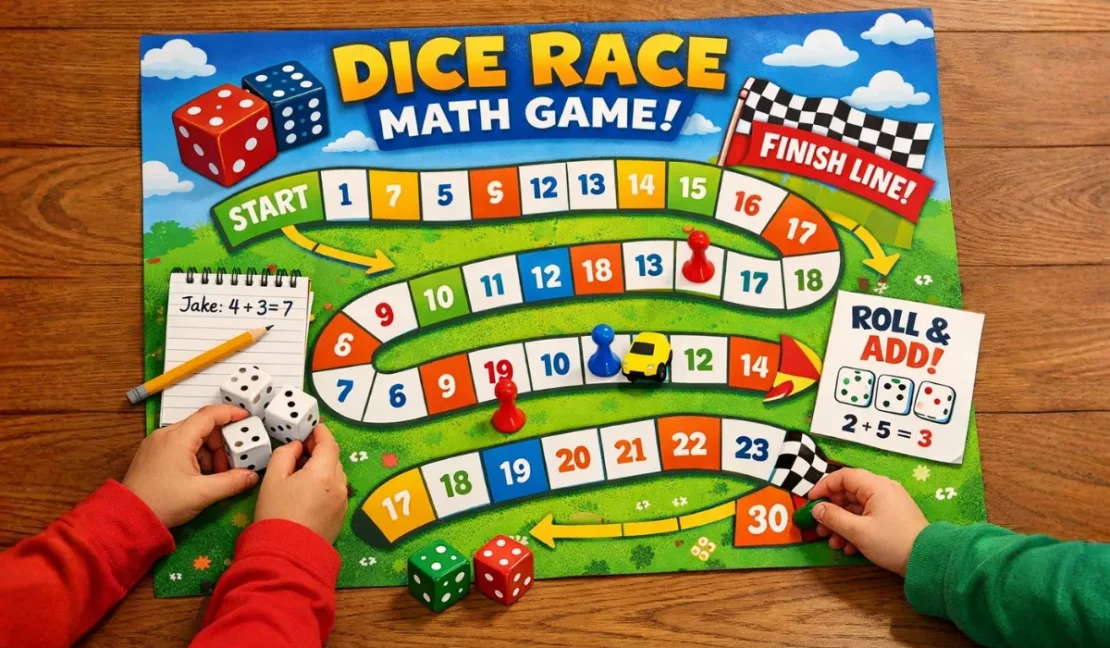
Image Source: Ai
This is probably the simplest math games for kids, but incredibly effective. You need two dice and a finish line, which can be any mark on paper. Each player rolls the dice and adds the numbers together. That’s how many spaces they move forward. First one to the finish line wins. Math games for kids like this build mental addition skills without pressure.
You can modify this game endlessly based on your child’s level. Younger kids might subtract instead of add. Older kids might multiply. You can introduce three dice for bigger numbers. Math games for kids should evolve as your child grows. The beauty of Dice Race is that it adapts beautifully to different ages and abilities.
Game 2: Number Hunt Around the House
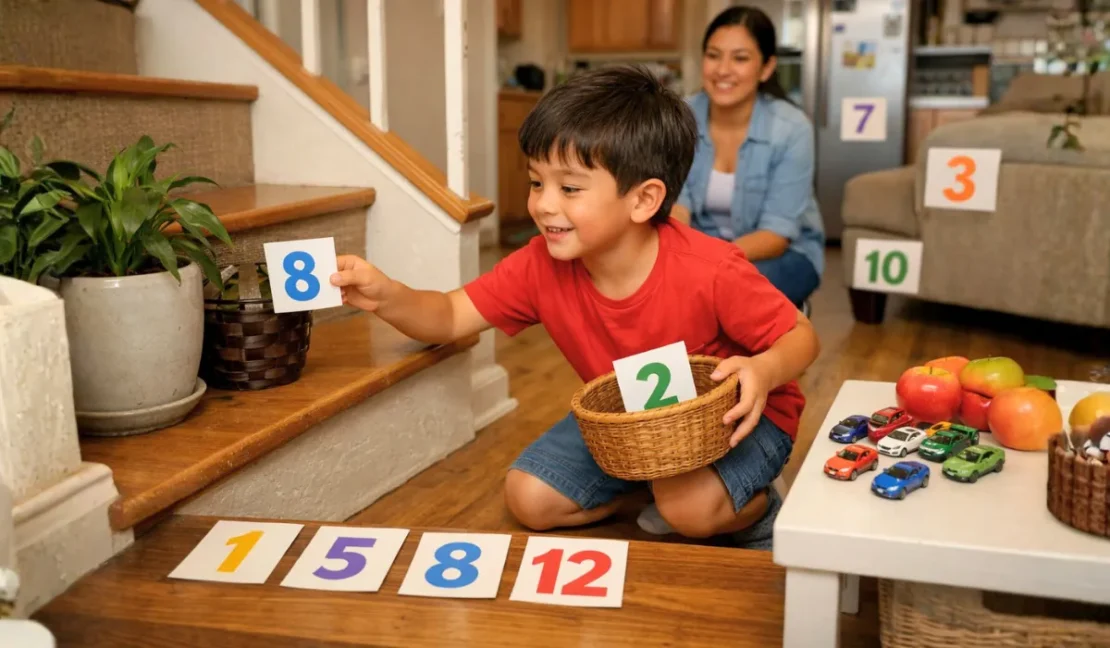
Image Source: Ai
This is one of my favorite math games for kids because it gets them moving and exploring. Hide numbers around your house, on cards or written on paper. Send your child on a treasure hunt to find them. When they find a number, they tell you what it is and count out that many objects. Math games for kids like this develop number recognition and counting skills together naturally.
You can make this more challenging by hiding numbers out of order. Ask your child to arrange them from smallest to largest. Math games for kids that involve movement and discovery keep children engaged for longer periods. They’re learning without feeling like they’re sitting down for a lesson.
Game 3: Coin Sorting and Counting Games
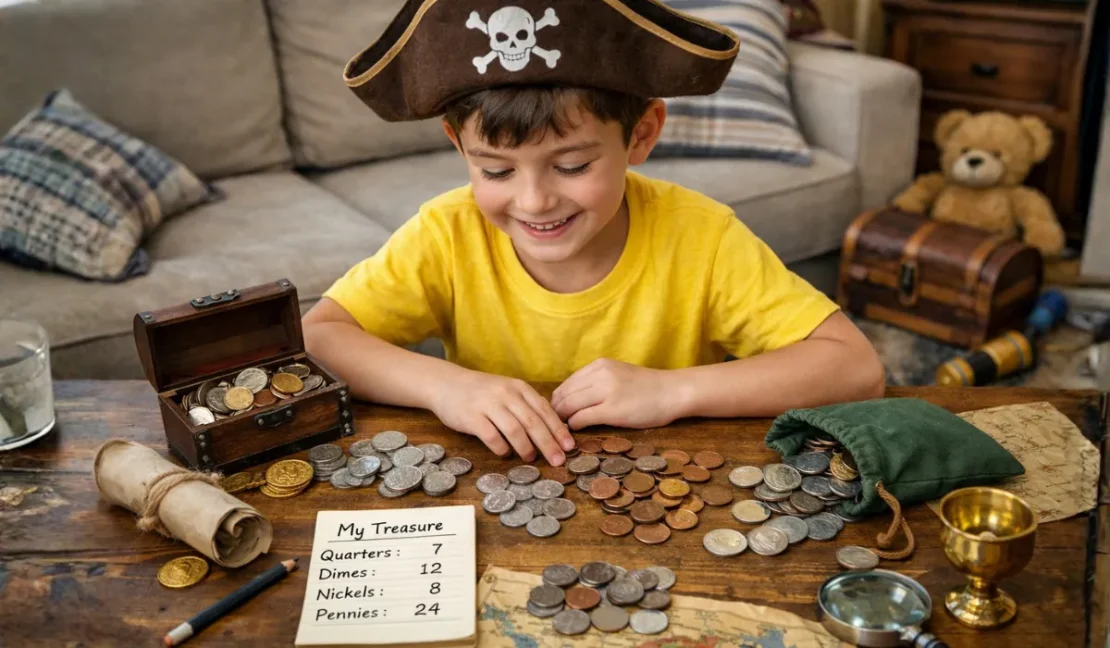
Image Source: Ai
If you have coins at home, you have everything you need for these math games for kids. Give your child a pile of mixed coins. Ask them to sort by type. Then count how many of each coin they have. Math games for kids involving real money teach valuable life skills alongside mathematics. Kids learn coin values while practicing counting and sorting.
Make it more fun by hiding coins around the house like a treasure hunt. Let your child gather them and count their treasure. Math games for kids that involve tangible rewards feel extra special to young learners. They understand they’re learning about real, useful information.
Game 4: Cookie Sharing and Division Games
Bake some cookies or buy some crackers. This becomes a delicious way to explore math games for kids. Ask your child to share cookies equally among family members. How many does each person get? What if there’s one left over? Math games for kids involving food create positive associations with learning. Plus, there’s a tasty reward at the end.
You can extend these math games for kids by asking different scenarios. What if we had more people? Fewer people? More cookies? Math games for kids that use real objects help children understand abstract concepts concretely. They see division and sharing as practical, valuable skills.
Game 5: Domino Pattern and Addition Games
Dominoes are brilliant for math games for kids because they’re inherently mathematical. Each domino shows two groups of dots. Ask your child to count the dots on each side. Then count the total. Math games for kids with dominoes develop addition skills naturally through pattern recognition.
Challenge older kids to match dominoes by total, not by matching sides. If one domino shows 3 dots and 2 dots, find another domino with 5 total dots. Math games for kids like this build deeper number understanding. Kids start seeing relationships between numbers rather than just counting.
Game 6: Card Game Math Adventures
Playing cards offer endless possibilities for math games for kids. The simplest version is comparing cards, where higher number wins. You can add cards together, subtract them, or see who gets closest to a target number. Math games for kids with cards develop quick mental math skills. Kids learn to calculate rapidly without using fingers or paper.
Create variations where kids make pairs that equal specific numbers. If the target is 10, they need to match cards that add to 10. Math games for kids like this build number bonds and relationships. They’re preparing kids for future math without making it feel like studying.
Game 7: Store or Restaurant Pretend Play Games
Pretend play is one of our favorite math games for kids because it’s so naturally engaging. Set up a pretend store or restaurant. Assign prices to items. Let your child play cashier and customer, calculating change and totals. Math games for kids involving role play develop real world math application.
Create menus with items and prices. Ask your child to calculate how much it costs to buy two cookies and a juice. Math games for kids in pretend situations feel like play rather than learning. Kids understand they’re using math to accomplish a meaningful goal in their imaginary world.
Game 8: Measurement and Cooking Games
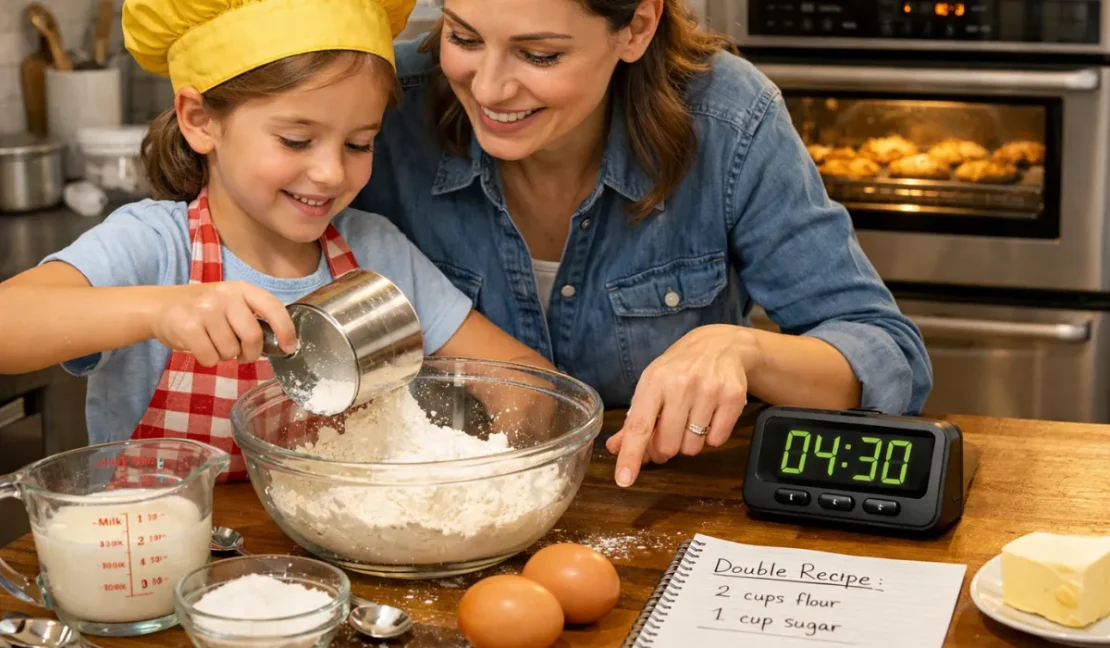
Image Source: Ai
Cooking and baking are naturally perfect math games for kids. Measuring flour, sugar, and liquids teaches fractions and measurement. Ask your child to help double or halve recipes. Math games for kids in the kitchen develop practical skills they’ll use their whole lives. They’re learning real mathematics through accomplishing something meaningful.
Let your child set timers while baking. Ask them to predict when the timer will go off. Math games for kids involving time help develop this important skill. Kids learn that five minutes until it’s ready means waiting. Baking gives them tangible feedback about their predictions.
Game 9: Board Game Night Math Reinforcement
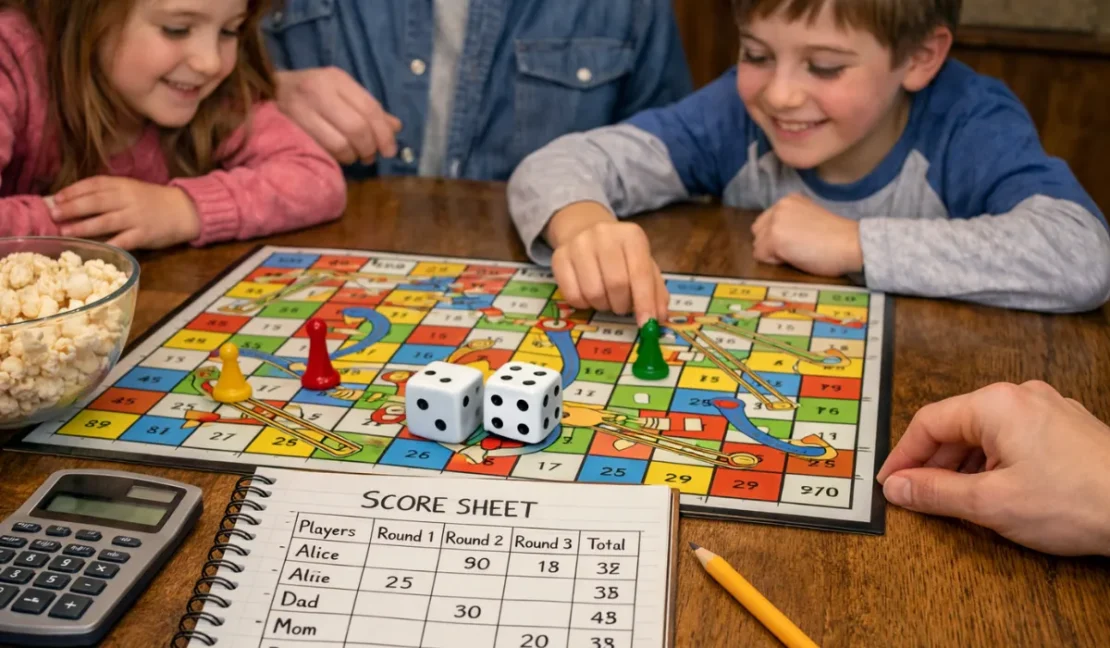
Image Source: Ai
Many commercial board games are actually excellent math games for kids when played thoughtfully. Games like Snakes and Ladders involve counting spaces. Chutes and Ladders requires number recognition. Math games for kids using board games develop skills while entertaining everyone. You’re strengthening math skills during regular family fun.
Keep a notebook beside the board game recording scores if your child is ready. Math games for kids that involve tracking and comparing scores develop additional mathematical thinking. Kids start understanding numbers as data they can analyze and compare.
Game 10: Shape Hunt and Pattern Recognition Games
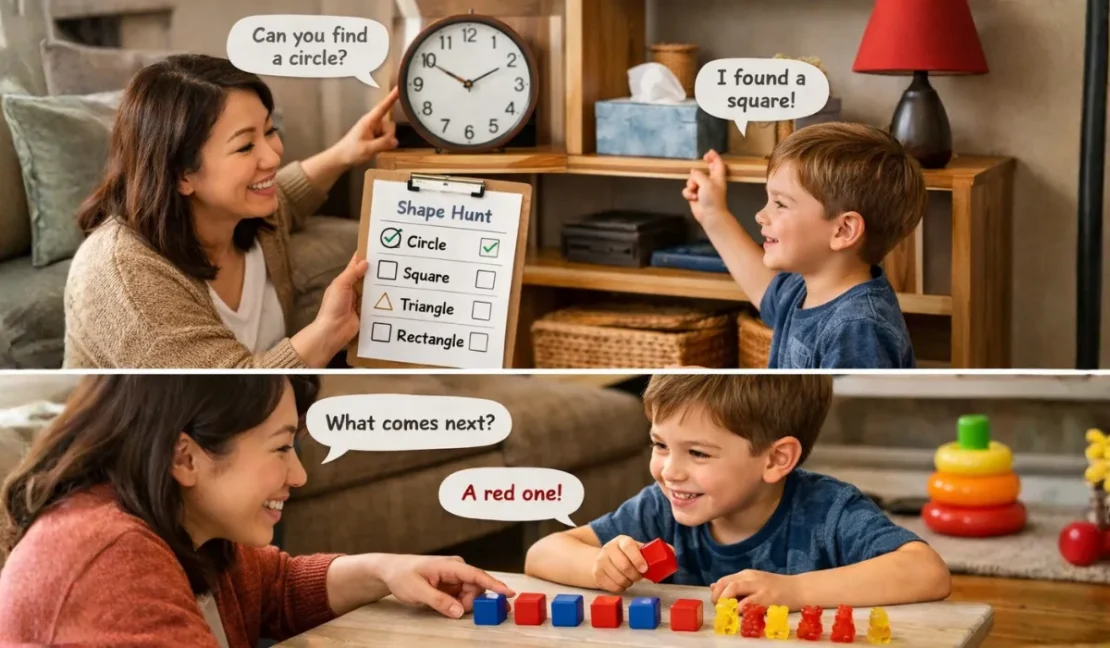
Image Source: Ai
Create math games for kids around shapes you find at home. Challenge your child to find circles, squares, triangles, and rectangles. Talk about where shapes appear in your house. Math games for kids involving shapes develop spatial reasoning and geometry skills. These are often overlooked but absolutely essential mathematical concepts.
Create patterns with toys or snacks for your child to continue. Red, blue, red, blue, red, blue, what comes next? Math games for kids with patterns develop logical thinking. Kids learn to recognize sequences and predict what comes next. This is foundation for algebraic thinking down the road.
Key Ideas for Math Games for Kids:
- Use dice, cards, coins, and household items creatively
- Incorporate movement and physical activity when possible
- Make real world connections to shopping and cooking
- Play during transitions and waiting times
- Adjust difficulty as your child’s skills develop
- Focus on enjoyment rather than correct answers
- Celebrate effort and problem solving attempts
- Play together rather than just observing
- Repeat favorite games without worry of boredom
- Create positive associations with mathematics
Frequently Asked Questions About Math Games for Kids
Q: What age should children start playing math games for kids?
You can start playing simple math games for kids from age two onwards. Toddlers enjoy counting and basic games with repetition. Math games for kids should match developmental stages. Start simple and build complexity as they grow. We begin with number recognition and counting in our Toddler programs.
Q: How long should we play math games for kids each session?
Keep sessions short, especially for younger children. Toddlers might enjoy math games for kids for five to ten minutes. Preschoolers might play for fifteen to twenty minutes. Math games for kids shouldn’t feel like pressure. Stop when your child loses interest. Short frequent sessions work better than long, grueling ones.
Q: Do math games for kids replace formal math instruction?
Math games for kids are wonderfully supplementary rather than replacement. They build foundation and positive associations. Formal instruction teaches specific skills and concepts systematically. Math games for kids plus structured learning create ideal combination. We use both approaches in our programs at Apple Tree.
Q: What if my child gets frustrated with math games for kids?
Frustration signals the game is too challenging. Simplify immediately. Math games for kids should feel achievable with some effort. If your child consistently loses or struggles, adjust rules or complexity. Remember that math games for kids should feel fun, not stressful. Your child’s relationship with math matters more than winning.
Q: How do I encourage my shy child to play math games for kids?
Start with one-on-one games just with you. Math games for kids feel safer with trusted adults first. Play often without pressure. Let your child choose games. Gradually introduce other family members to math games for kids. Shy children often participate more enthusiastically when comfortable and secure.
Q: Can math games for kids help with math anxiety?
Absolutely. Math games for kids create positive emotional associations with mathematics. They show children that math can be fun and achievable. Kids who play math games for kids regularly often have less anxiety about math. They develop confidence approaching numerical challenges. Starting early with math games for kids prevents anxiety from developing.
Making Math Games for Kids Part of Your Family Life
Math games for kids aren’t just educational activities. They’re opportunities to connect with your child while building important skills. They’re moments of laughter, friendly competition, and shared joy around learning. We see children’s faces light up when they realize they’ve solved a problem or won a game. That joy is the whole point of math games for kids.
The wonderful thing about math games for kids is that you control the pace and pressure. Schools sometimes create anxiety around math through testing and grades. Math games for kids at home remain pressure free and joyful. Your child can explore numbers at their own pace. They can make mistakes without judgment. They can celebrate their own progress.
At Apple Tree Pre-School BSD, we incorporate math games for kids throughout our curriculum. We know that play based learning creates confident mathematicians. We’ve watched children who initially feared math become problem solvers who enjoy challenges. We believe math games for kids are some of the best investments parents make in their children’s education.
Our programs at the Educenter BSD Building incorporate Singapore curriculum, which emphasizes concrete learning through play. Math games for kids are central to how we teach from our Toddler programs through Kindergarten. We’ve seen the transformative power of this approach firsthand.
Starting math games for kids at home now builds foundation for school success later. It creates lifelong learners who see mathematics as accessible and enjoyable. It strengthens your relationship with your child through shared play and achievement. Math games for kids are genuinely one of the best things you can do.
Ready to transform math learning at home? Math games for kids can start today with materials you already have. You don’t need special equipment or training. You need enthusiasm and willingness to play together. Our experienced educators at Apple Tree can offer additional ideas and support. Send us a WhatsApp message or call us at +62 888-1800-900 to discuss math games for kids and learning through play.
Come visit our classrooms and watch how we integrate math games for kids into daily learning. See how children explore mathematics with confidence and joy. Register your child in one of our programs and watch their love of math grow. Let’s build mathematicians together through fun, engaging games! 🎲✨💡